Crown thinning, raising, reduction and deadwooding in plain English
Most trimming requests in Columbia fit one of four types. Knowing the words helps you compare estimates.
- Deadwooding removes dead, dying and broken branches. On a big oak, this is the single most useful thing you can do before summer storms.
- Crown thinning removes selected small live branches evenly through the canopy. The tree keeps its shape but lets wind and light through. Done properly, you should struggle to tell it was pruned from across the street.
- Crown raising removes the lowest limbs to clear a roof edge, a driveway, a sidewalk or a sight line at the curb.
- Crown reduction shortens long limbs back to a lateral branch big enough to take over. It is how you reduce the spread of a tree that has outgrown its spot without wrecking it.
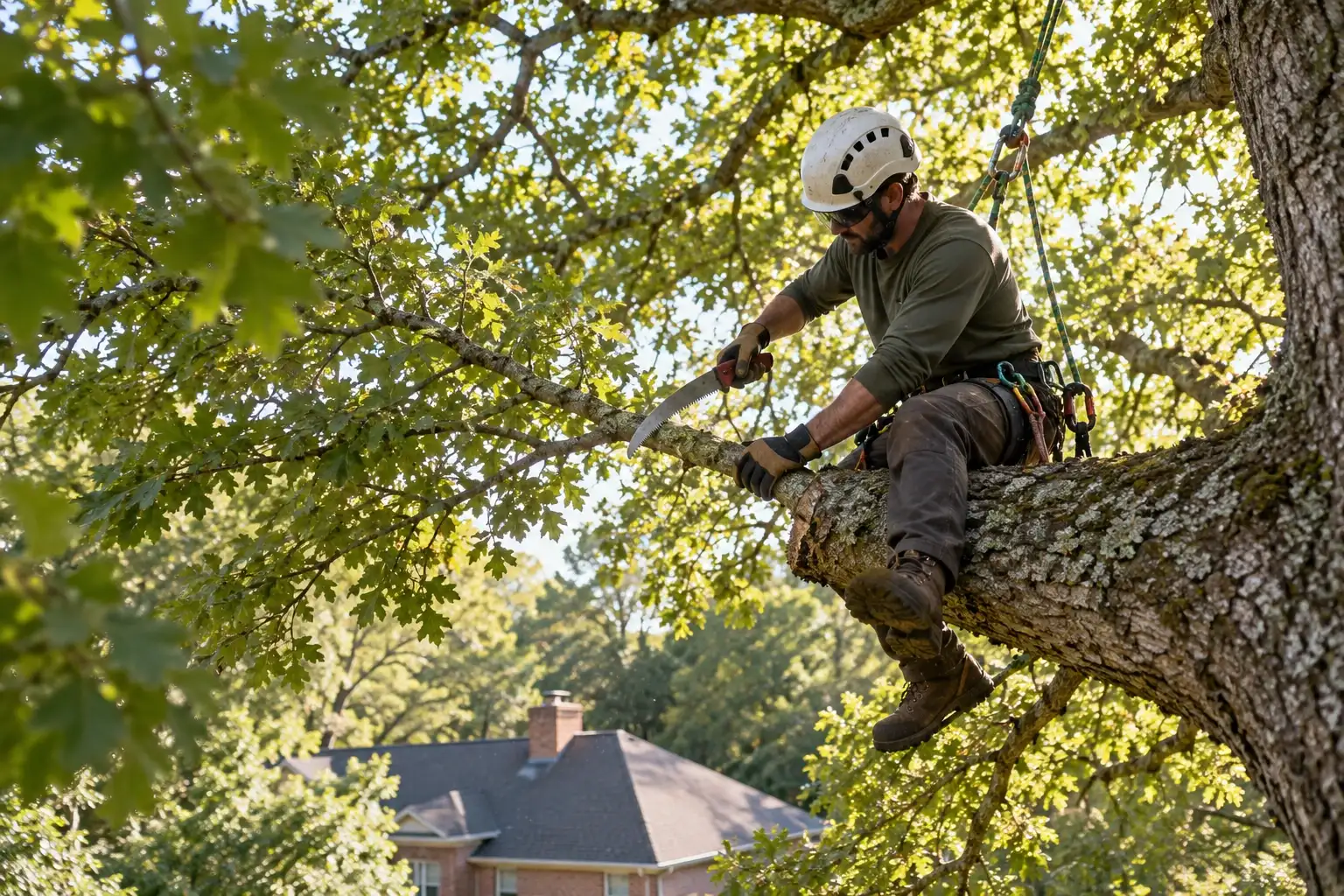
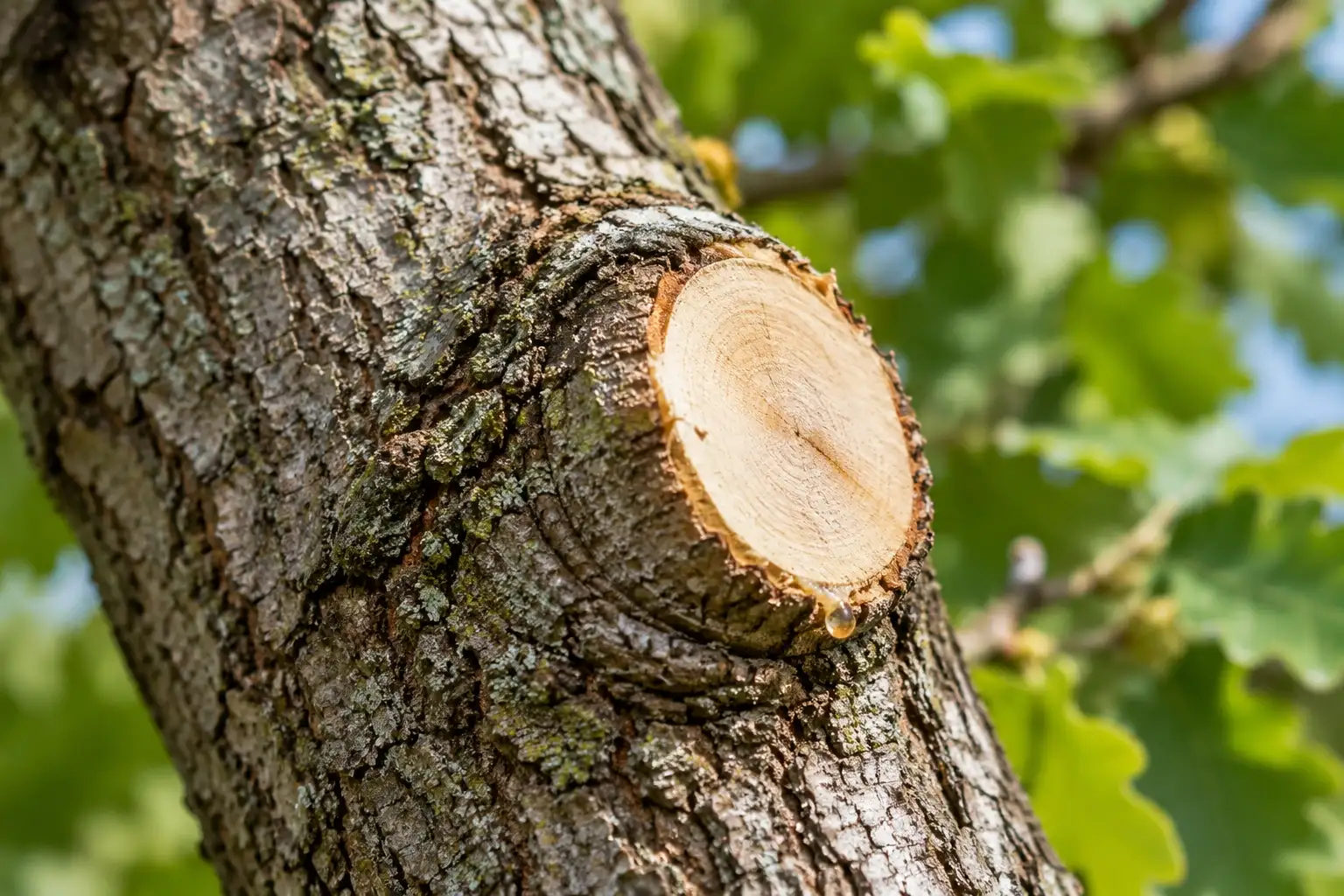
What all four have in common is the ANSI A300 pruning standard: cuts placed just outside the branch collar, no flush cuts, no stubs, no climbing spikes on trees that stay, and no more live wood removed than the objective needs.
Why topping is harmful
Topping is still sold door to door after storms: cutting the main limbs back to stubs to make a tree “safer”. It does the opposite. The stubs cannot seal, so decay moves into the trunk, and the tree pushes out dozens of fast, weakly attached sprouts. In five years you have a taller, denser and more dangerous tree than before, with rot at every cut (ISA, Why topping hurts trees). If a tree is genuinely too big for its spot, the honest options are crown reduction done properly, or removal and replanting.
The same goes for crape myrtles. Cutting them back to the same knuckles every winter is so common in the Midlands it has a name, crape murder. Clemson Extension recommends removing suckers, crossing branches and dead wood instead, and choosing a variety that fits the space (Clemson HGIC).
Tree trimming in Columbia’s soils and trees
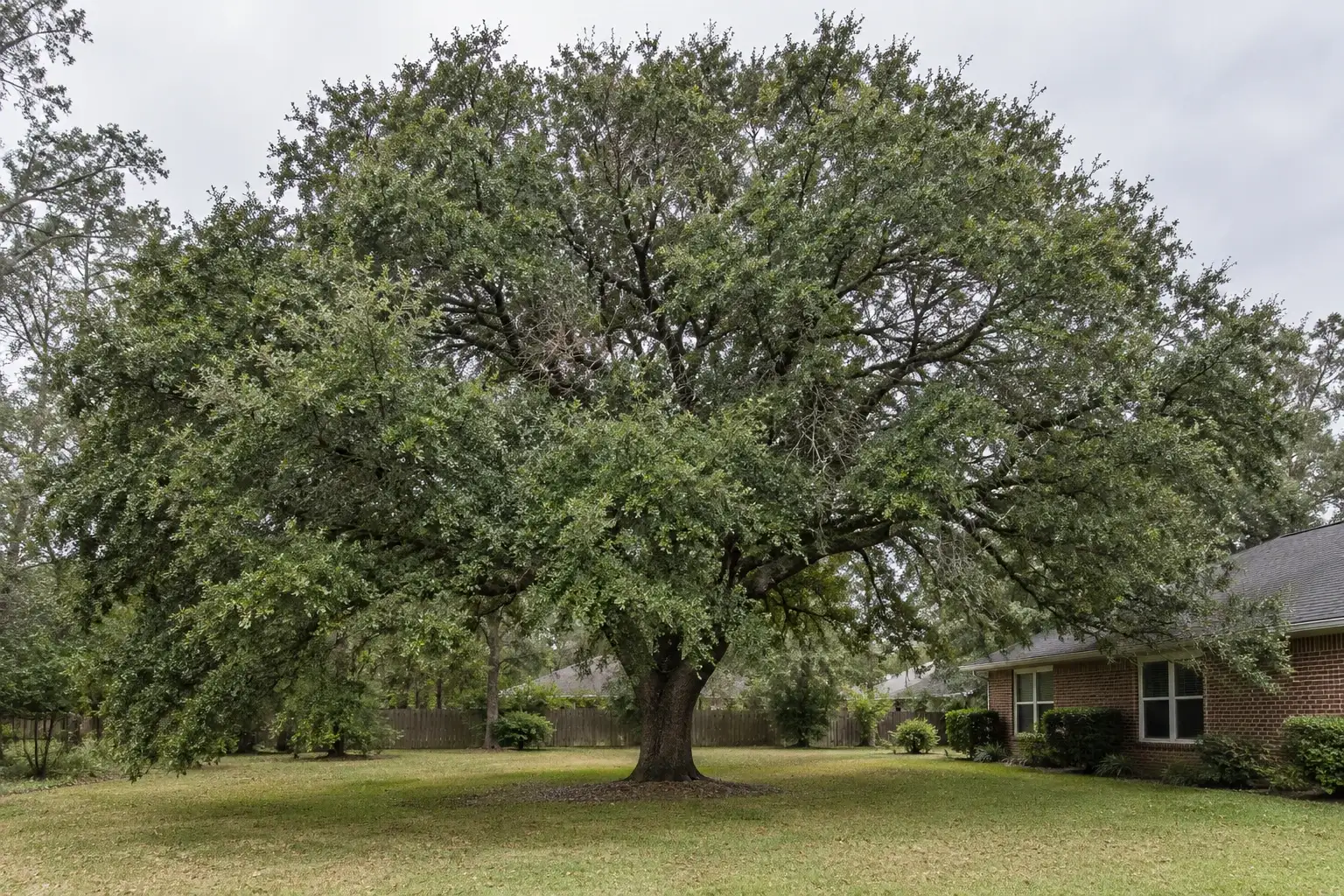
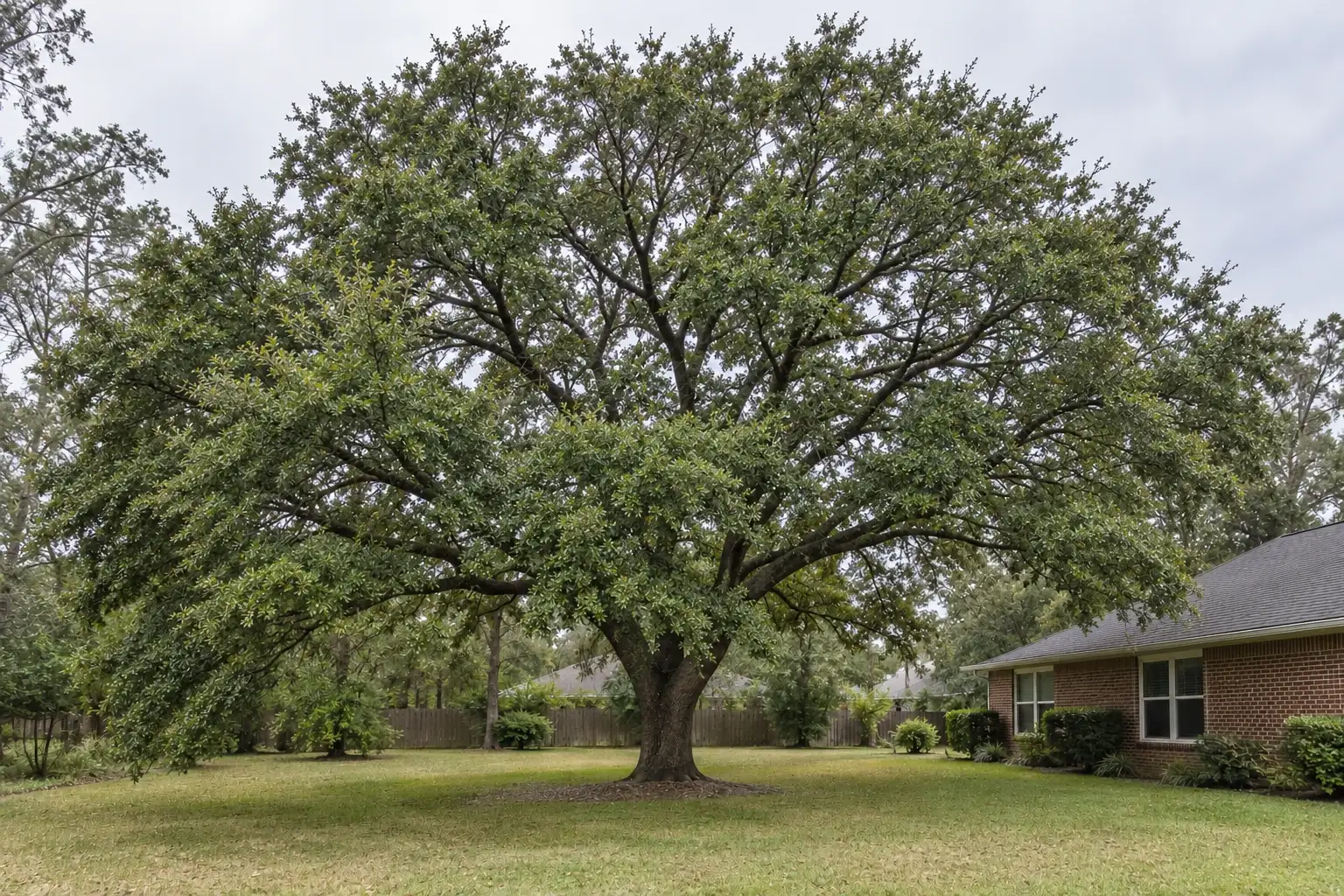
The big shade trees of Columbia, water oak, willow oak, laurel oak, southern red oak and pecan, have long horizontal limbs that reach over roofs. In the older neighborhoods of Shandon, Rosewood, Forest Acres and West Columbia, those limbs were small when the houses were built in the 1940s to 1970s. Now they are the size of trees themselves.
Two local patterns drive most trimming here:
- Storm season. Hurricane season runs June 1 to November 30, and summer thunderstorms bring strong gusts most years. Dead wood and over-long limbs fail first. Thinning and deadwooding in late winter or spring is the cheapest storm insurance there is.
- Water oaks in decline. Water oaks grow fast and age early. An older water oak that keeps dropping limbs may have decay inside, and the right answer may be an arborist assessment rather than another round of trimming.
Pines are usually not “trimmed” the way hardwoods are. Lifting low pine limbs and removing dead branches is fine, but heavy cutting in the crown of a loblolly does not make it safer in wind. If a pine is too close to the house, the honest options are to accept it or remove it.
When to prune oaks
Prune oaks in the dormant season when you can. Late winter cuts seal quickly once spring growth begins, and fewer insects are active to find fresh wounds. Emergency work, like a broken limb hanging over a roof, should not wait for the calendar. The best time to trim guide has a month-by-month plan.
Roof and wire clearance
For roofs, the usual target is to keep branches clear of shingles, chimneys and gutters with room to move in the wind, and to cut back limbs that give squirrels a path onto the house. For wires, the line from the pole to your house (the service drop) can often be cleared by a qualified tree crew, sometimes with the utility dropping the line first. The primary lines along the street are maintained by Dominion Energy, your electric co-op or their contractors. Only utility-qualified line-clearance arborists may work within 10 feet of energized lines (OSHA).
What tree trimming costs
Nationally, most trees cost $430 to $640 to trim. Trees under 30 feet run about $85 to $415, trees 30 to 60 feet about $215 to $790, and trees over 60 feet about $475 to $1,835 (LawnStarter, September 2026). A big Columbia oak with heavy deadwood over a roof sits in the upper band. Several trees done on the same visit usually cost less per tree. The tree trimming cost guide has the details.