How much does tree removal cost in Columbia, SC?
Most single trees in the Columbia area cost $400 to $1,800 to remove, and a typical job lands near $1,100 (HomeBlue, 2026). Nationally, LawnStarter puts the typical range at $385 to $1,070, or roughly $10 to $14 per foot of height (updated October 2026). Columbia sits above the national middle for a simple reason: the Midlands is loblolly country, and an 80-foot pine over a roof is a bigger job than the average American yard tree.
Five things move the price more than anything else:
- Height and trunk diameter. More wood means more cuts, more rigging and more to haul.
- What the tree is over. Open lawn is cheap. A roof, pool, fence, power drop or the neighbor’s carport means every piece is lowered on rope.
- Condition. A dead or hollow tree may not be safe to climb, which can mean a bucket truck or a crane.
- Access. A 36-inch side gate in a Shandon or Rosewood backyard means hand-carrying brush to the street.
- Extras. Stump grinding, full log haul-off and emergency or after-hours work are usually priced separately.
The tree removal cost guide breaks this down by size, with examples and sources.
Sectional removal or felling? It depends on the lot
On a big lot with open lawn on one side, a healthy tree can be felled in one piece. The cutter makes a notch facing the drop zone and a back cut that leaves a hinge of wood to steer the fall. It is fast and cheap, but it needs a clear landing area at least as long as the tree is tall.
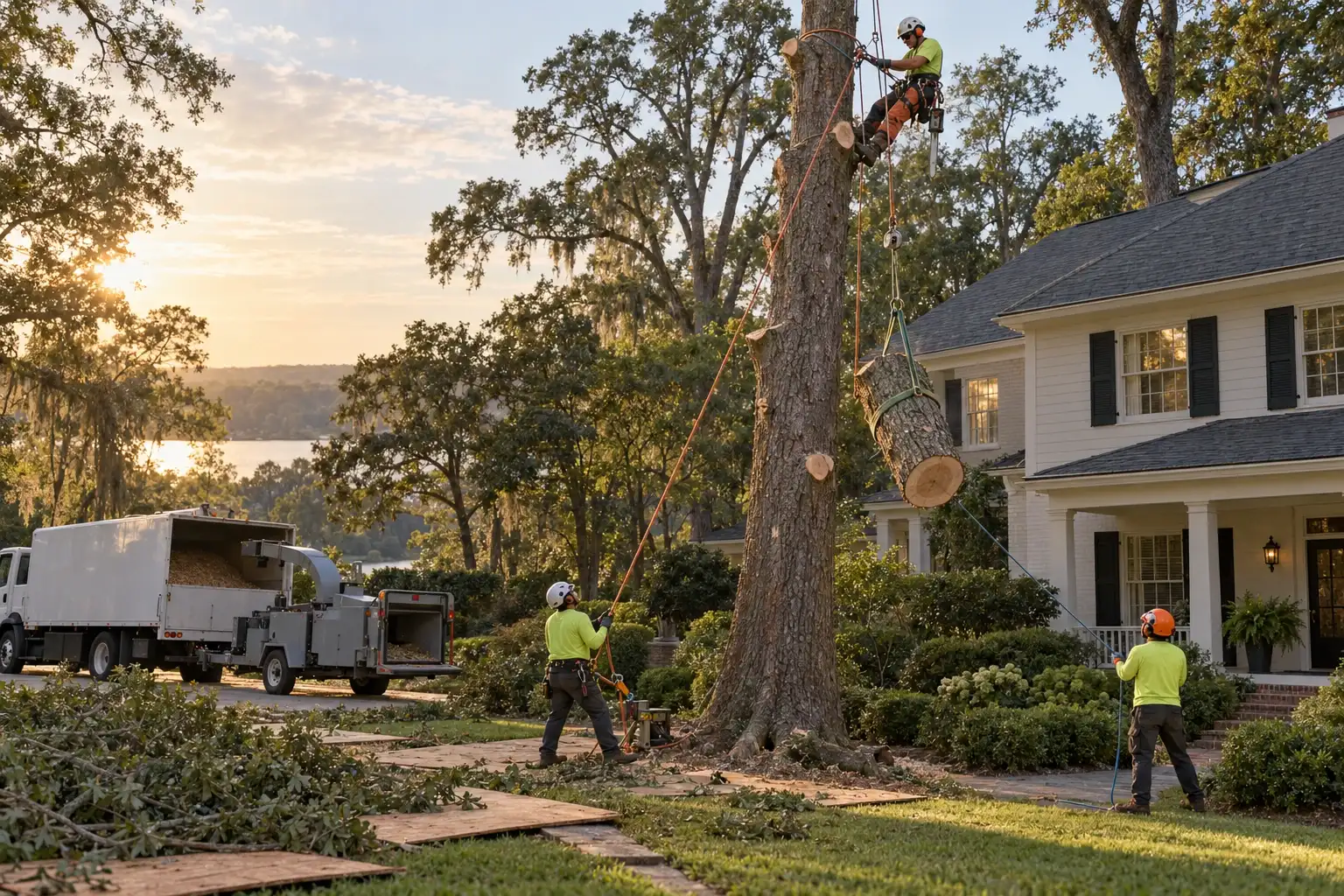
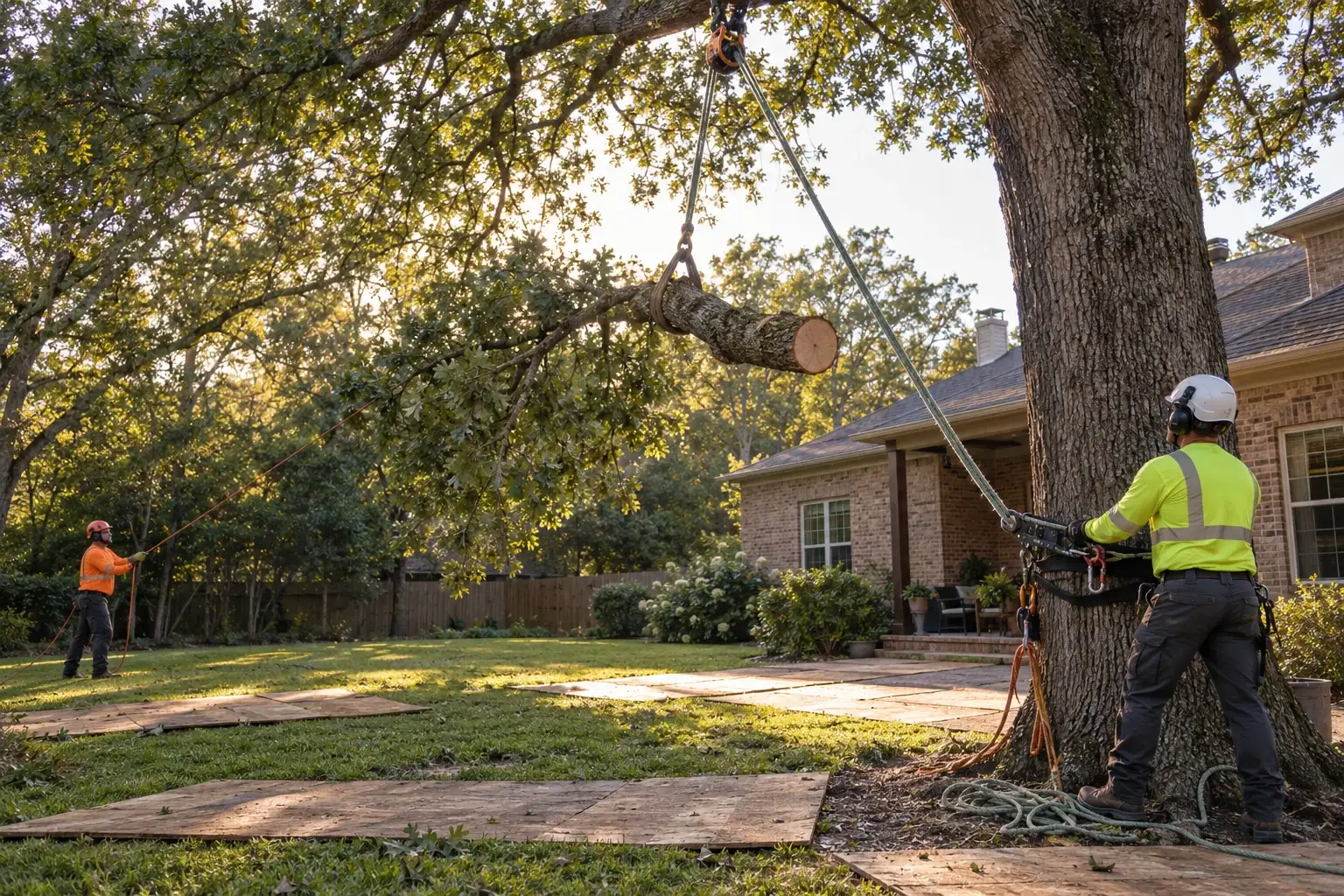
Most Columbia neighborhoods do not have that room. In Shandon, Rosewood, Earlewood and the older parts of West Columbia, lots are narrow and the big oaks were there before the houses. In Seven Oaks and Dentsville, ranch homes sit under water oaks with carports underneath. Here, the tree comes down in sections: the climber removes limbs from the top down, ties off each piece, and the ground crew lowers it on a rope through a rigging block. The trunk is then cut in rounds short enough to lower or drop onto mats.
Sectional removal costs more than felling because it takes more time and more people. It is also the reason a careful crew can take down a 70-foot tree beside a house without touching the gutters.
Water oaks, pines and why timing matters
Two trees make up a large share of removals around Columbia.
Water oaks grow fast and are short-lived for an oak. Older ones often carry heart rot behind healthy-looking leaves, and the first sign can be a large limb on the roof after a summer storm. If an arborist finds significant decay in a water oak near a house, removal before hurricane season (which starts June 1) is usually the sensible call.
Loblolly pines grow 60 to 100 feet tall and are the most common tree on Midlands lots. In saturated red clay north and west of the Fall Line, they tend to tip over with the root plate attached. In the sandy soils south and east of it, they are more likely to snap in high wind. During Hurricane Helene on September 27, 2024, gusts up to 70 mph brought down trees and power lines across Richland and Lexington counties, and more than 200 roads were blocked in Lexington County alone (WIS).
Dead trees should not wait. Dead wood dries, becomes brittle and cannot hold a climber’s rigging. A tree that is a routine climb this spring can need a bucket truck or crane next spring, and that changes the price.
When a crane is cheaper than climbing
A crane sounds expensive, and by the hour it is. But on the right job it can cut a two-day climbing removal down to a few hours, and the total can come out close or even lower. A crane usually makes sense when:
- the tree is dead, hollow or cracked and not safe to climb or rig from;
- a huge oak spreads over the house and there is nowhere to lower large pieces;
- the tree sits in a fenced backyard with no access for a bucket truck, but the crane can reach over the house from the street;
- a storm-damaged tree is resting on a roof and has to be lifted off without doing more damage.
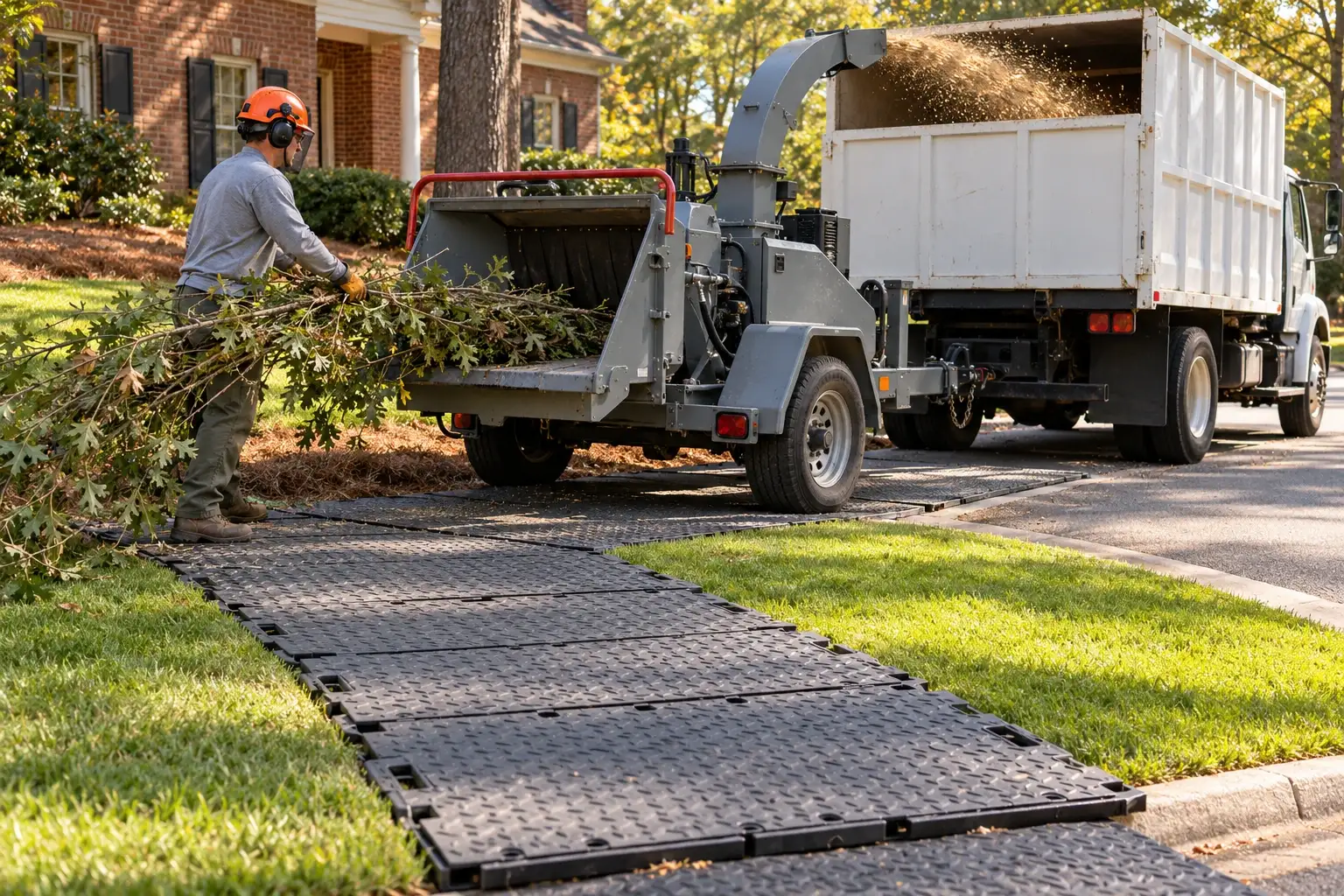
Read more on the crane tree removal page. Crane work is coordinated with a licensed crane operator and set up on mats to protect driveways.
Do you need a permit to remove a tree in Columbia?
For most homeowners inside the City of Columbia, no. The City’s tree removal permit applies to private property but excludes single-family residential lots (City of Columbia Planning & Development). Commercial and development sites can trigger a tree survey and protection plan, and street trees in the right-of-way belong to the city.
Forest Acres is different. A permit is required for trees governed by the city ordinance, even when the owner cuts the tree, and approved removals must be done by a contractor licensed with the City of Forest Acres. A state license alone is not enough (City of Forest Acres). Lakefront lots on Lake Murray, HOAs and other towns have their own rules. The Columbia tree permit guide covers each one.
What a “complete removal” should include
Quotes that look cheap often leave things out. A complete written scope should say:
- which trees come down, and how (felled, sectioned or crane);
- that limbs over structures are lowered, not dropped;
- whether the stump is ground, how deep, and whether the grindings are hauled or left;
- what happens to logs and brush;
- that the lawn will be raked and blown and the street swept;
- who calls SC811 before grinding;
- payment terms, with full payment due after the work is finished.
If a quote does not say it, assume it is not included. That is the easiest way to compare two estimates fairly.