What makes tree work in Lexington different
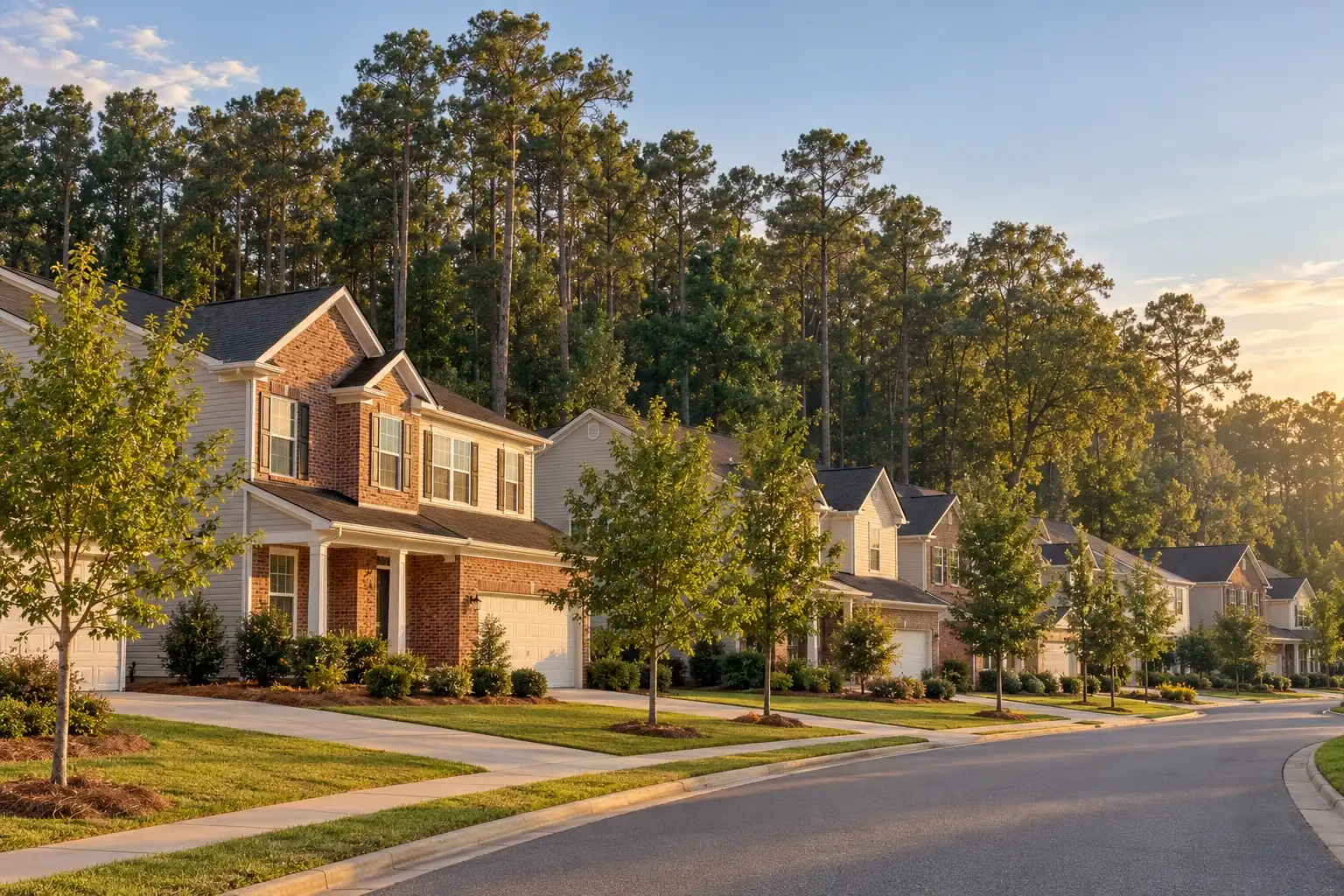
Lexington is the county seat of Lexington County and one of the fastest-growing towns in South Carolina. Drive Corley Mill Road, Sunset Boulevard or South Lake Drive and you see the result: new subdivisions cut out of former farmland and pine stands, with tall loblolly pines left standing behind and between the houses.
That growth shapes most tree calls here. When a lot is cleared for a house, the pines that remain lose the shelter of the woods around them, and digging for the foundation, driveway and utilities cuts into their roots. A pine that stood fine in a forest for forty years is suddenly alone in the wind, with half its roots gone. Two or three years later, it starts to lean, thin out or attract bark beetles.
The ground matters too. Lexington sits south of the Fall Line in mostly sandy soil with pockets of red clay. Sand drains fast, so pines root deeper, but they dry out in hot summers. Where clay pockets hold water, roots stay shallow. Two trees in the same yard can behave differently, which is why a good estimate looks at each tree, not just the street.
Storms in Lexington County
Lexington County took some of the worst of Hurricane Helene on September 27, 2024. More than 200 roads were blocked by fallen trees, and around 43,000 customers in the county lost power (WIS). Most damage came from straight-line wind on saturated ground, not tornadoes. Pines snapped mid-trunk, and oaks in older neighborhoods dropped big limbs.
If you have a pine within striking distance of the house, look up after every storm: new leans, cracks in the soil at the base, pitch tubes on the bark or a thinning crown are all reasons to call before hurricane season, which starts June 1.
Older Lexington: oaks, pecans and big yards
Not all of Lexington is new. Around the Old Mill, Main Street and the older streets off US-1, you find water oaks, willow oaks and pecans that are decades old, over homes built long before the subdivisions. Here the calls are about deadwooding and roof clearance, aging water oaks with decay, and the occasional big limb through a carport roof after a storm.
Lake Murray lots on Lexington’s side
Lexington’s north edge runs up to the southeast side of Lake Murray. Lakefront lots bring their own rules. Dominion Energy owns the land below the 360-foot contour around the lake and manages it under a FERC-approved Shoreline Management Program, so cutting trees on that strip needs Dominion Energy approval first (Lake Murray permitting guidelines). Steep banks and docks also mean many lakefront removals are done by crane or with pieces lowered carefully away from the water.
Local cost notes
Lexington prices sit in the same band as the rest of the Columbia area: most single removals run $400 to $1,800 (HomeBlue, 2026). What pushes a Lexington job up is usually height (80-foot pines are common), a lean toward the house, backyard access through a narrow gate, or a lakefront crane set-up. Newer subdivisions with good street access and open backyards tend to be on the easier end. See the tree removal cost guide for more.