Richland County · Sandhills by Fort Jackson

Tree Service in Northeast Columbia, SC

  • Free written estimates
  • Photo quotes from your phone

Updated

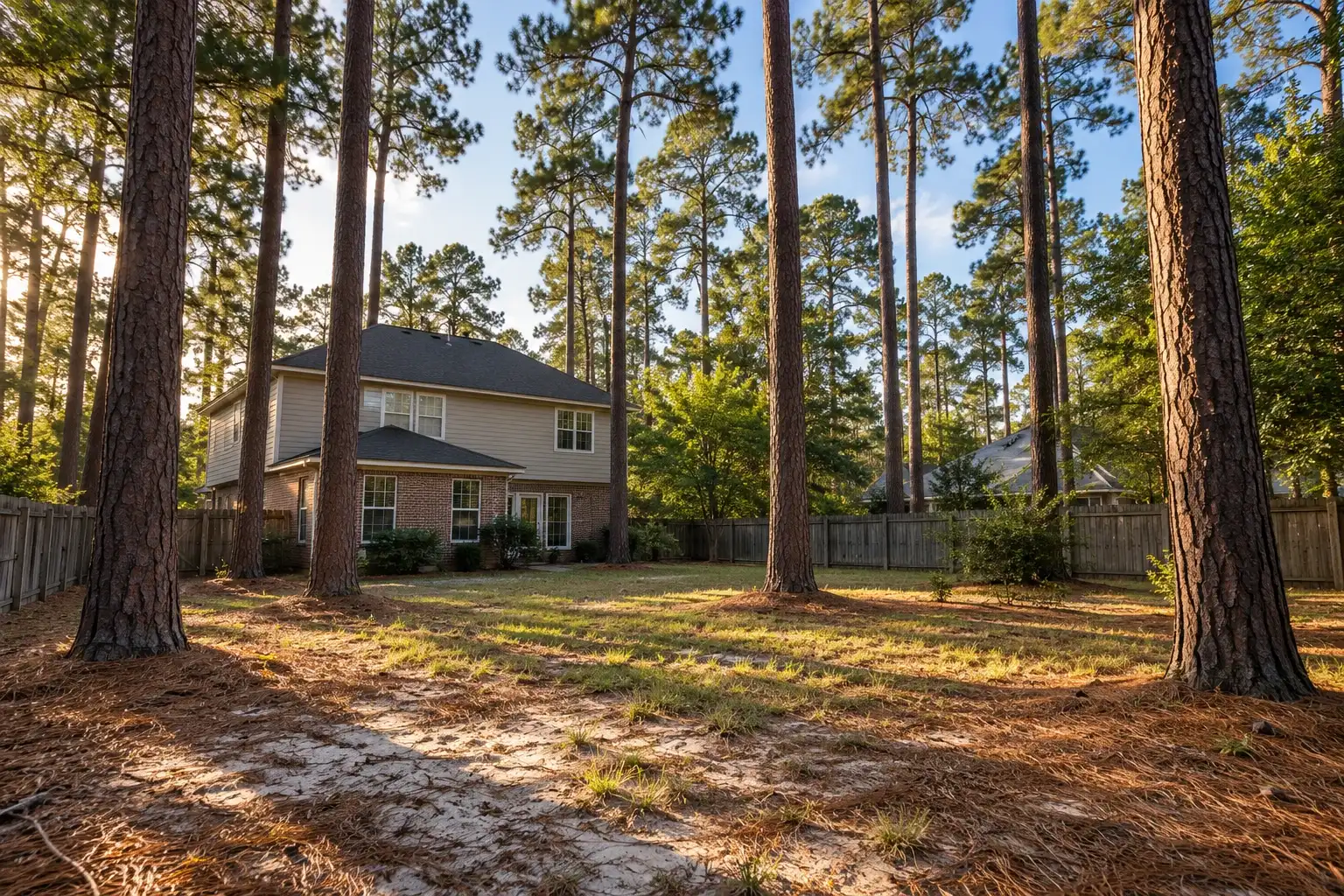
Backyard of tall pines on sandy ground behind a two-story home
The short answer

Tree service in Northeast Columbia, SC focuses on tall loblolly pines in sandy Sandhills yards around Killian Road, Clemson Road, Lake Carolina and Spring Valley: pines snapping or leaning in storms, beetle-killed pines after dry summers, and stump grinding. Whether a permit applies depends on whether the address is in the city or Richland County.

What makes tree work in Northeast Columbia different

Northeast Columbia is the fast-growing stretch of Richland County between Two Notch Road and Fort Jackson, around Killian Road, Clemson Road, Hard Scrabble Road and Polo Road. It is home to big planned communities such as Lake Carolina, Wildewood and The Summit, established neighborhoods like Spring Valley, and shopping at the Village at Sandhill.

It is also squarely in the Sandhills. The soil is sand, the creeks run through pine woods, and Sesquicentennial State Park and the training lands of Fort Jackson show what the area looked like before the subdivisions: tall pines over sandy ground.

Tall pines over houses

When these neighborhoods were built, many lots kept their loblolly pines. Today those pines are 70 to 100 feet tall, often within a tree-length of two-story homes. They are the most common Northeast Columbia call.

On sand, pines root deeper than on the wet clay of Irmo or Chapin, so they uproot less often. But tall pines on sand are prone to snapping or bending in high wind, especially when they are stressed by drought or weakened by beetles. A pine that has developed a new lean after a storm, or a crown that is thinner than its neighbors, deserves a closer look.

Beetles after dry summers

Sandy yards dry out fast. After a hot, dry summer, stressed pines attract Ips engraver beetles and southern pine beetles, which can produce four to six generations a year in South Carolina (Clemson HGIC). One pine turning red-brown in a row of green ones is a warning for the others. Remove the infested tree promptly, get the wood off the property, and check the neighbors.

City or county?

Northeast Columbia addresses are a patchwork of City of Columbia and unincorporated Richland County. That matters for permits. Inside the city, the tree removal permit applies to private property but excludes single-family residential lots (City of Columbia). County addresses follow Richland County rules. On top of that, communities such as Lake Carolina have HOA rules that can require approval to remove trees. When in doubt, check your tax bill for the jurisdiction and your covenants for the HOA rules.

Stumps and sweetgums

Sand makes stump grinding fast, but roots in sand run long. Pine roots and especially sweetgum roots can spread well beyond the stump, and sweetgums are known for root suckers that sprout across a lawn after removal. Grinding deeper and chasing the main surface roots keeps regrowth down.

Local cost notes

Most single removals in the Columbia area cost about $400 to $1,800, with a typical job near $1,100 (HomeBlue, 2026). Tall pines close to two-story houses, lowered piece by piece, are at the upper end. Good street access in newer subdivisions helps. See the tree removal cost guide.
Permits and rules

Tree permits and rules in Northeast Columbia

Northeast Columbia is a patchwork. Addresses inside the City of Columbia fall under the city's tree removal permit, which excludes single-family residential lots. Addresses in unincorporated Richland County follow county rules, and many subdivisions, such as Lake Carolina, have HOA tree rules.

We have not confirmed the current rule for every Northeast Columbia address. Before removing a tree, check with the City of Columbia or Richland County, depending on the address, and your HOA, your HOA if you have one, and read the Midlands permit guide.

Source: City of Columbia Planning & Development, Tree removal permit · checked Nov 2026

Neighborhoods and roads we cover

Main roads: Killian Rd · Clemson Rd · Two Notch Rd (US-1) · Hard Scrabble Rd · Polo Rd. Landmarks: Village at Sandhill · Sesquicentennial State Park · Fort Jackson · Lake Carolina.

Killian Road, Columbia, SC Open in Google Maps
Common calls

Typical tree calls in Northeast Columbia

These are scenarios, not past jobs: the situations Northeast Columbia homeowners most often ask about.

Scenario 1

Two tall pines over a two-story house

A home in a Clemson Road subdivision has two 80-foot loblollies within 15 feet of the back wall. One has a slight new lean after a storm. Both are taken down in sections, and the stumps ground in the sandy soil.

Scenario 2

A pine dying after a dry summer

One pine in a row along the back fence in Spring Valley turns red-brown in late summer, with pitch tubes on the bark. It is removed quickly and the neighboring pines are checked for early signs.

Scenario 3

Sweetgum suckers after a removal

A sweetgum was cut down last year, and now suckers are popping up across the lawn. The stump and main surface roots are ground deeper, and the remaining sprouts are cut as they appear.

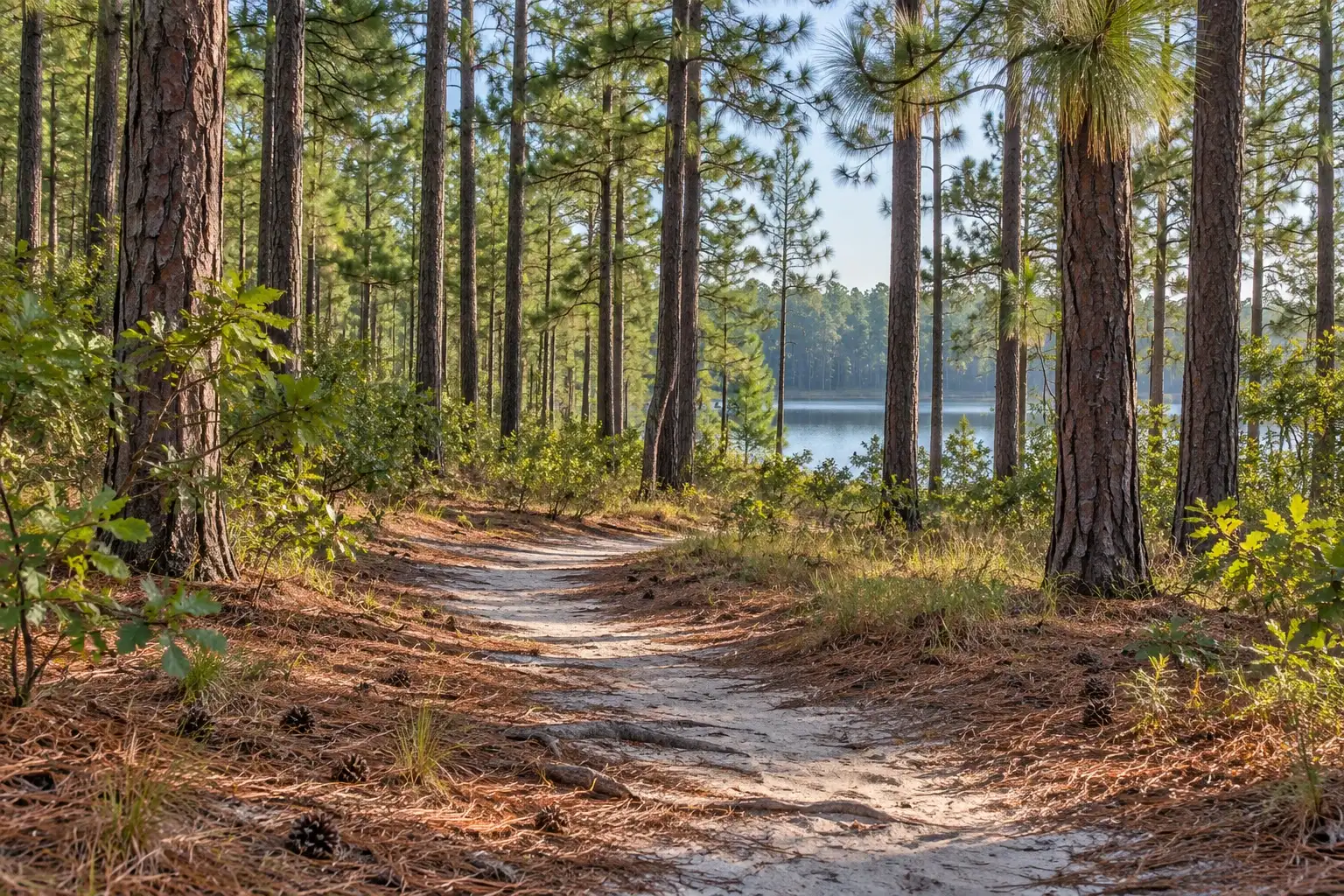
Sandy trail through pines with a lake glimpsed beyond
A sandy trail through pines with a lake beyond, typical of Northeast Columbia's Sandhills landscape.

Tree service questions in Northeast Columbia

Do I need a permit to remove a tree in Northeast Columbia?

It depends on the address. Inside the City of Columbia, the tree removal permit excludes single-family residential lots. Unincorporated Richland County addresses follow county rules. Many Northeast Columbia subdivisions also have HOA rules, so check your covenants before removing a tree.

Why do pines snap in Northeast Columbia storms?

Northeast Columbia is on Sandhills sand. Pines there root deeper than on clay, so they uproot less often, but tall pines, especially stressed or beetle-damaged ones, tend to snap or bend in high wind instead.

Why do sweetgum sprouts keep coming up after removal?

Sweetgum spreads root suckers, and roots left in the ground after a removal can keep sprouting for a season or two. Grinding the stump deeper, grinding main surface roots and cutting sprouts as they appear weakens them.

How much does pine removal cost in Northeast Columbia?

Most single tree removals in the Columbia area run about $400 to $1,800, with a typical job near $1,100 (HomeBlue, 2026). Tall pines close to two-story houses, lowered in sections, sit toward the upper end. Several pines on one visit cost less per tree.

Who can remove two tall pines behind my house off Clemson Road?

Send photos of both pines, the house and the backyard access through the free estimate form. Tall pines near houses are usually taken down in sections, and the sandy soil makes stump grinding quick.

Free estimates · Columbia, SC

Get a written tree estimate in Northeast Columbia

Send two or three photos and your ZIP code. You'll hear back within one business day with a written estimate: what will be done, how it will be done, and what it costs.

Call now Free estimate Text