Why a crane can be safer than climbing
In a normal sectional removal, a climber ties into the tree, cuts a piece, and the ground crew lowers it on a rope that runs through a block anchored higher in the same tree. That works beautifully on a healthy tree. It does not work when the tree itself is the problem.
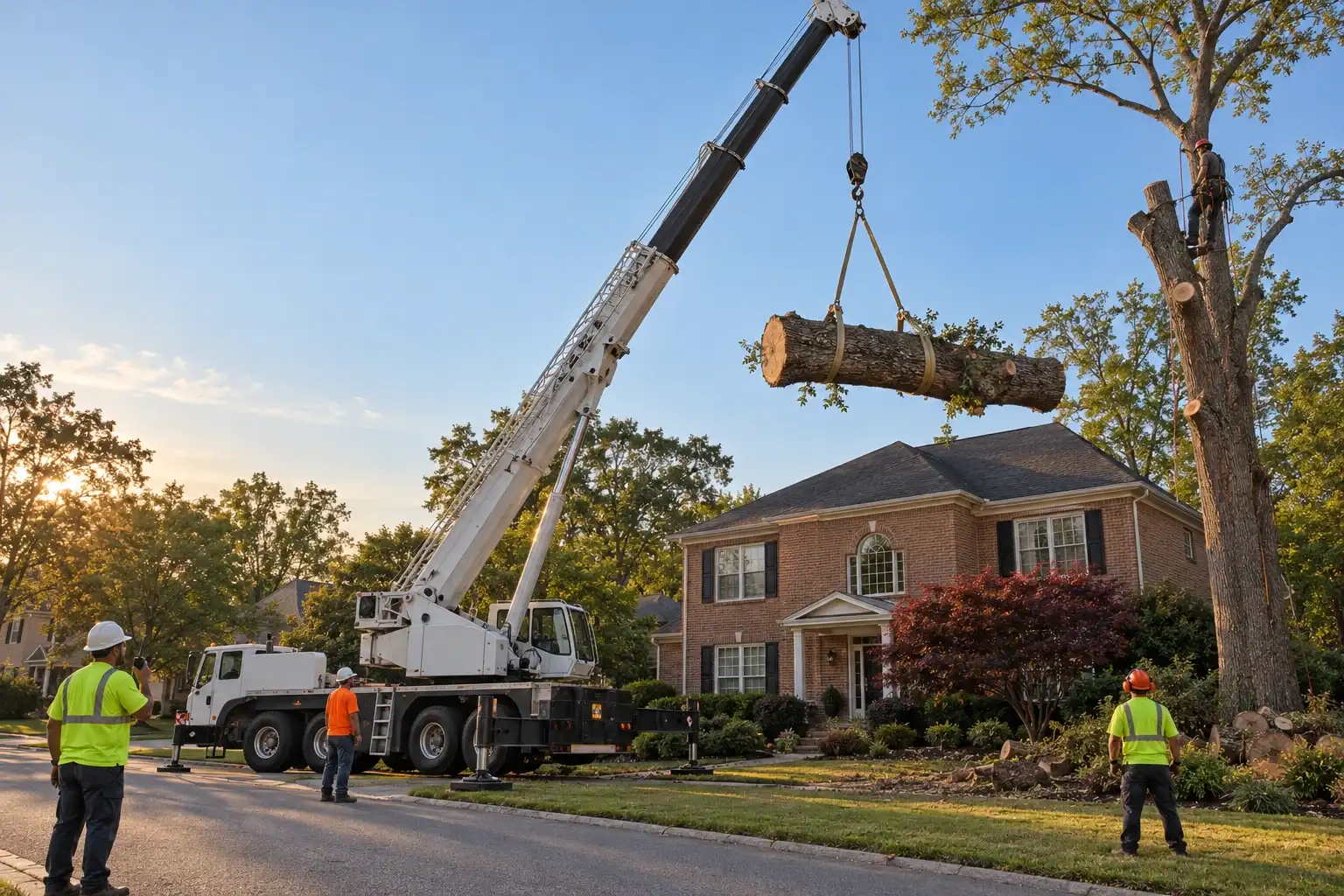
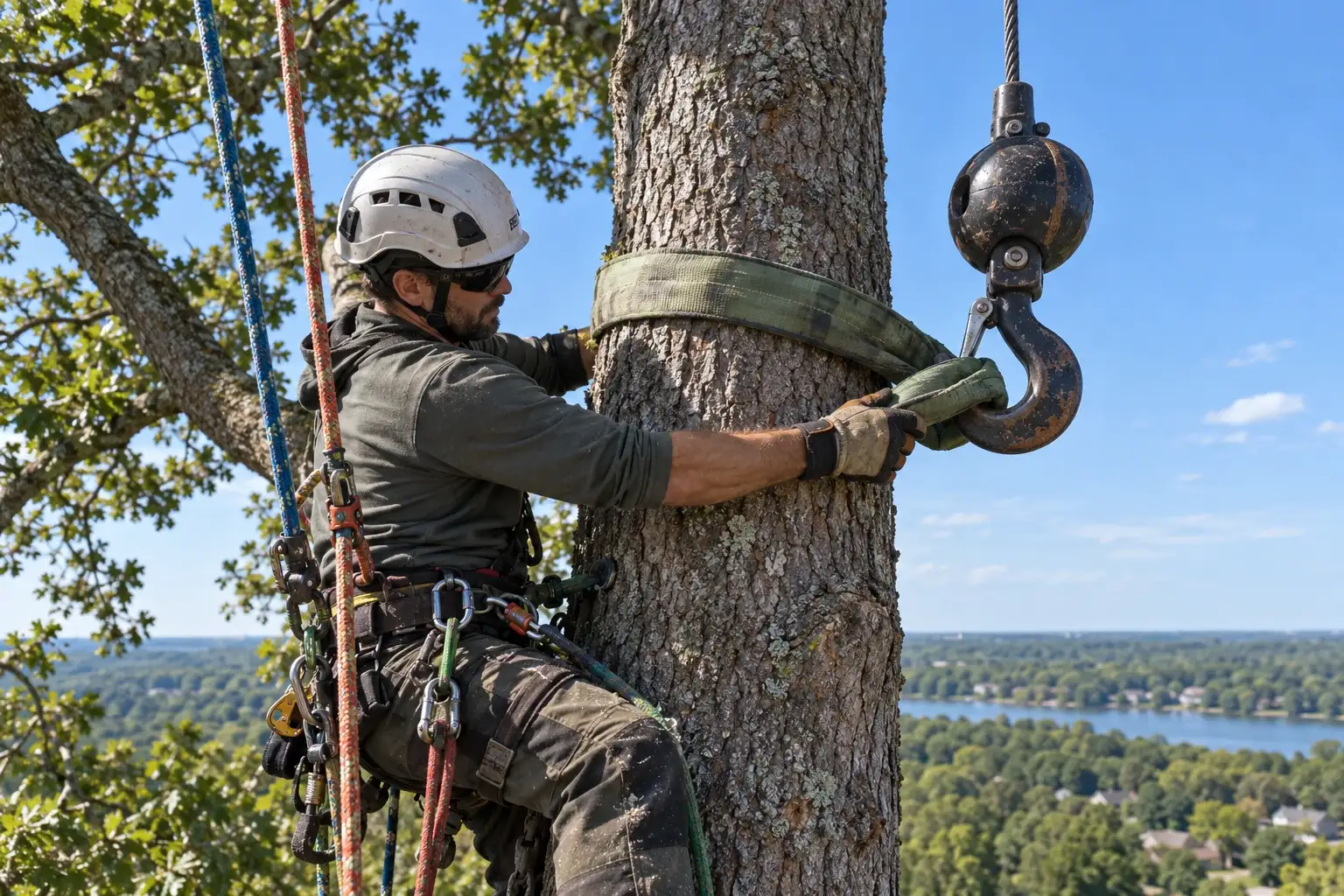
A dead tree dries out and loses strength. Limbs that look solid can snap under the shock load of a lowering rope, and the trunk may not safely hold the climber. A hollow or decayed tree can fail at the decay point. A storm-damaged tree may be twisted, cracked and under tension. In each case, a crane removes the guesswork: the piece is held by the crane before it is cut, so nothing depends on the tree’s strength.
Cranes are also faster. A big oak over a house that takes two days to rig down limb by limb can often be removed in a few hours by crane. Less time on site means less risk, less disruption and sometimes a similar total cost.
Crane work in tree care follows strict planning. Each piece is cut to a weight the crane can hold at that reach, the operator and crew communicate on every lift, and nobody stands under a suspended load (OSHA, Tree care).
Crane set-up: access, mats and wires
Most residential crane jobs around Columbia set up in the street or on the driveway. Outriggers extend to stabilize the crane and sit on crane mats that spread the load, protecting concrete and keeping the crane level on soft ground. North of the Fall Line, in Irmo, Chapin and the Dutch Fork, red clay can turn soft after rain, so mats and a careful choice of set-up spot matter even more.
Overhead wires are the other big factor. Service drops and street lines limit where the crane can swing, and the utility may need to drop or cover a line first.
Lake Murray and tight-lot scenarios
Crane removal is common in three Midlands settings:
- Lake Murray lots in Chapin, Lexington and Irmo, where tall pines lean toward docks and boathouses on steep banks. Pieces can be flown up to the street instead of dropped down the slope. Shoreline trees below the 360-foot contour sit on Dominion Energy project land, so lakefront removals need Dominion Energy approval first.
- Older neighborhoods in Forest Acres, Shandon and Seven Oaks, where huge oaks grew up around houses and fences fill every side yard.
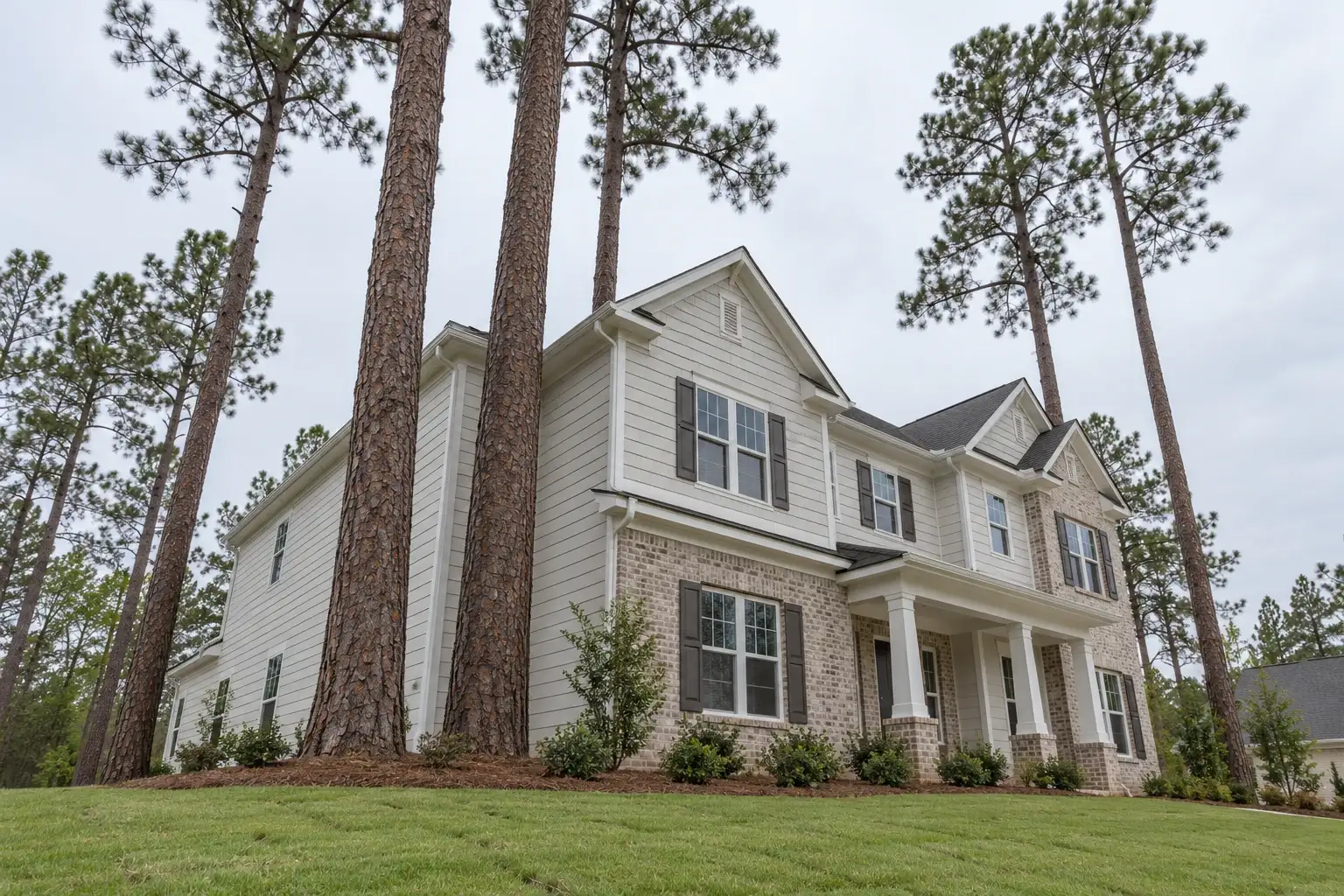
- New subdivisions in Lexington and Blythewood, where pines were left a few feet from new foundations.
What crane tree removal costs
Crane jobs are priced by the job, based on the tree, the crane size needed for the reach and weight, the time on site and the cleanup. Around Columbia, most standard tree removals run $400 to $1,800 (HomeBlue, 2026); crane removals of large trees over houses sit above that range. When a tree could be done either way, a good estimate compares climbing and crane so you can see the trade-off. See the tree removal cost guide.
Questions to ask before a crane job
Before you approve crane work, ask who operates the crane and how the lift is planned, where the crane will set up and on what mats, whether the street needs permission or traffic control, and what happens if the weather turns. A clear written plan is the sign of a careful crew.