What makes tree work in Blythewood different
Blythewood, about 19 miles north of downtown Columbia along I-77, is changing fast. The arrival of the Scout Motors plant and steady subdivision growth around Langford Road, Wilson Boulevard (US-21) and Blythewood Road have turned wooded land into homesites. Most tree calls here trace back to that growth.
The town sits on the transition between the Piedmont and the Sandhills: red clay to the west and toward Fairfield County, sandier ground to the east toward Fort Jackson. Two lots a mile apart can have very different soil, which changes how trees root, how they fail and how easily equipment can reach them.
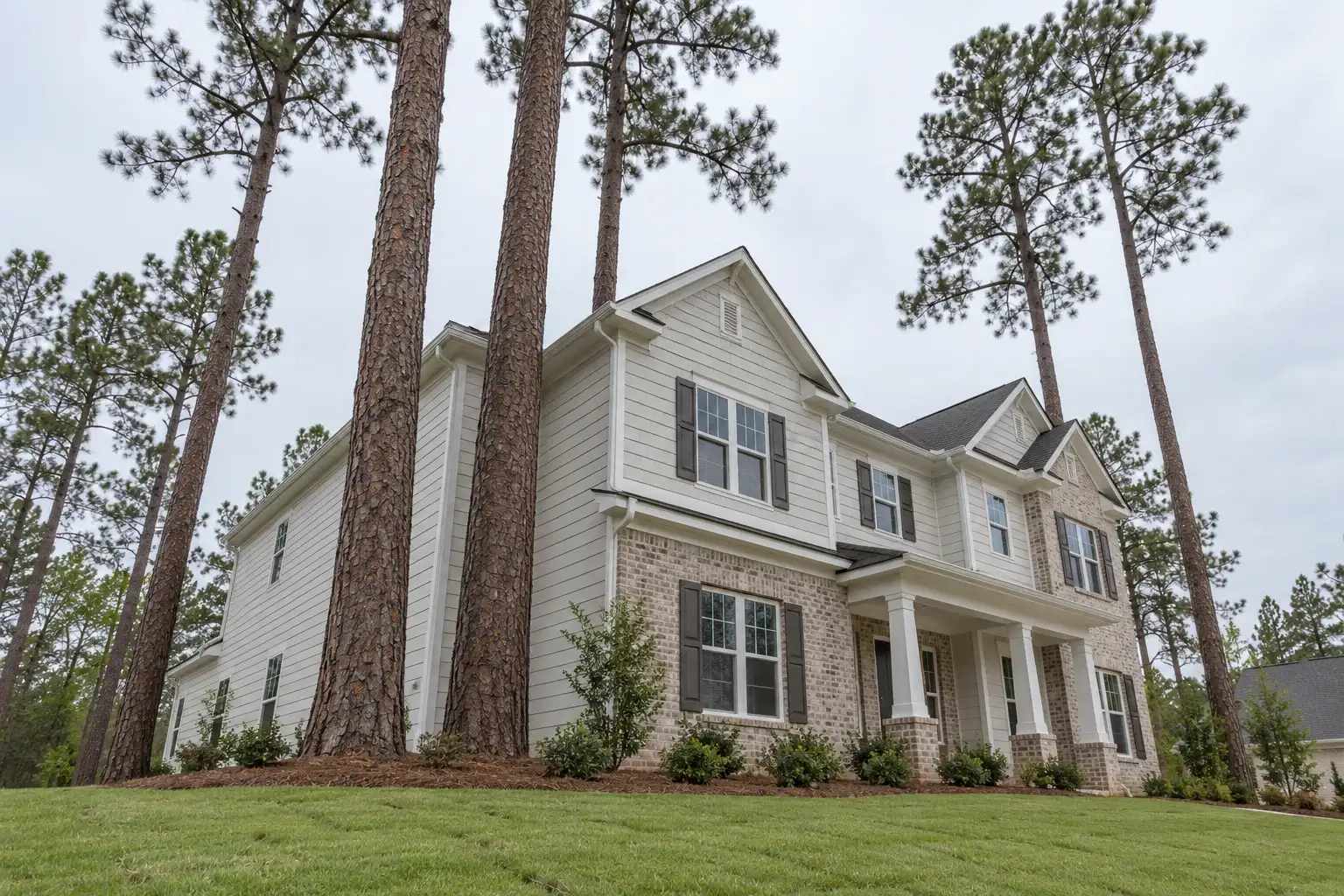
Pines left too close to new houses
The single most common Blythewood call is a loblolly pine left standing a few feet from a new foundation. It looks like a nice mature tree to keep. But when the lot was cleared, three things happened to it:
- Its neighbors were removed, so it now faces wind alone after growing up sheltered in the woods.
- Its roots were cut by the foundation, driveway, utility trenches and grading.
- The soil was compacted by heavy equipment, starving the remaining roots of air and water.
Two to five years later, the crown thins, the tree leans, or bark beetles move in. By then it is often over the roof. If you have pines within striking distance of a new house, a check before hurricane season is worth it.
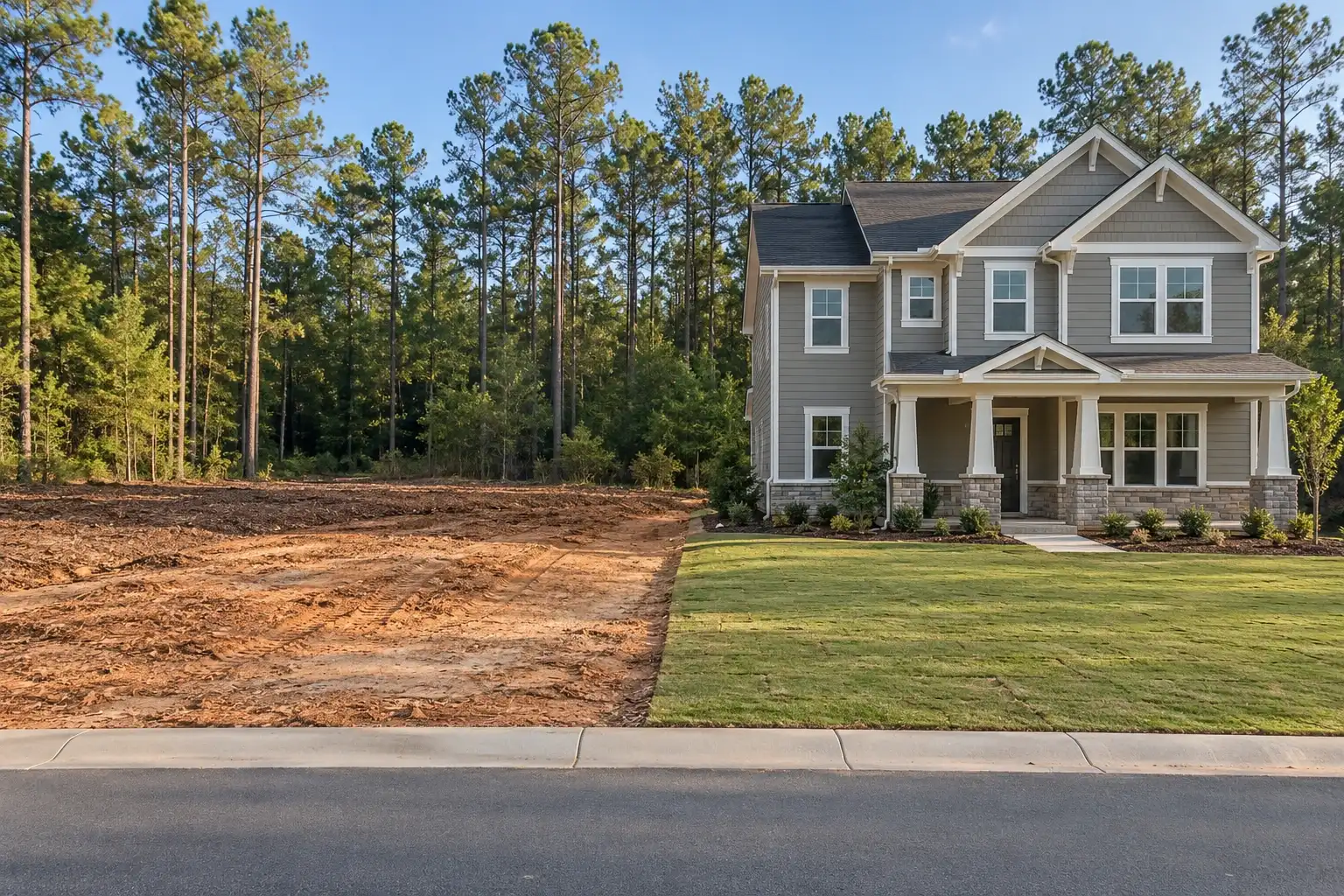
Lot clearing and construction
For homesites and back lots, forestry mulching clears underbrush and small trees and leaves a protective mulch layer on the soil, with keeper trees flagged and saved. Larger trees are felled and their stumps ground where the house pad, driveway or septic field will go. On the clay side of town, keeping soil covered matters, because bare red clay washes off in summer storms. Larger projects may need approval from the town or county and erosion control.
Stumps left behind
Builders often leave stumps cut at different heights across a new yard. Stump grinding takes them below grade, and hauling the grindings and adding topsoil gets the ground ready for sod. In Blythewood’s sandier areas, grinding goes quickly; on clay, a little slower.
Local cost notes
Most single removals in the Columbia area cost about $400 to $1,800, and Columbia-area stump removal averages about $309 per stump (HomeAdvisor). Blythewood’s newer lots often have good access, which helps; pines very close to houses, which must be lowered in sections, push prices up. Clearing is priced per job after a walk-through. See the land clearing page.