Land clearing · Columbia, Lexington & Blythewood

Land Clearing & Forestry Mulching in Columbia, SC

  • Free written estimates
  • Photo quotes from your phone

Updated

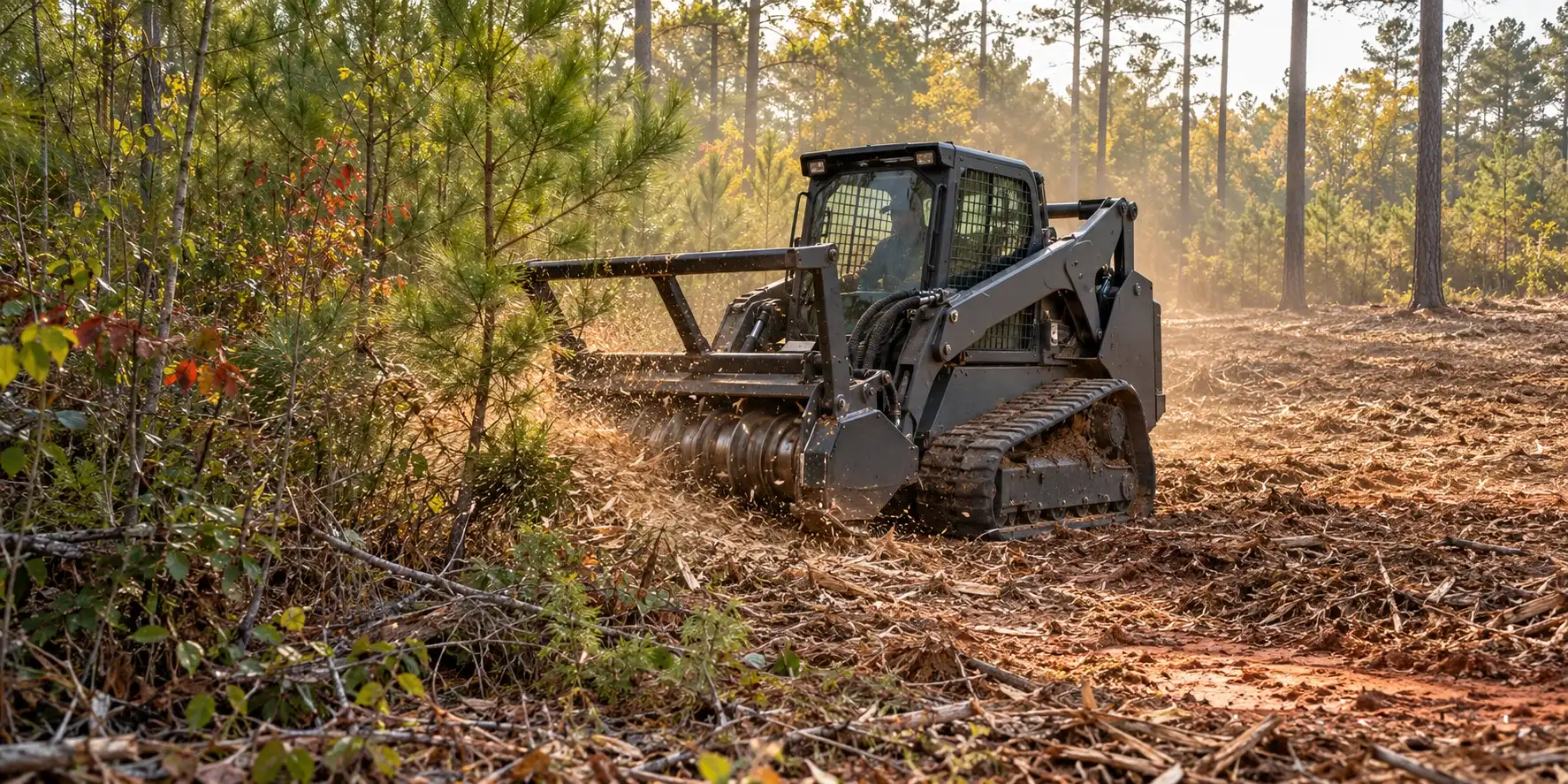
Tracked forestry mulcher clearing underbrush and small pines on a wooded lot
The short answer

Land clearing in Columbia and Lexington, SC usually means forestry mulching: a tracked machine grinds underbrush and small trees into mulch where they stand, leaving keeper trees and protecting the soil. It is faster and cleaner than push-and-burn for most residential lots. Price depends on acreage, density and tree size.

  • Best method for lotsForestry mulchingNo burn piles, soil stays covered
  • Keeper treesFlagged firstYou choose what stays
  • Before clearingCheck permitsCity, county or HOA
  • Priced byAcre & densityPlus large trees to fell
Signs

When land clearing makes sense

Clearing is not only for builders. These are the common requests around the Midlands.

  • A lot for a new home

    Underbrush and small pines cleared for a house pad, driveway and septic field, with the best trees kept.

  • Overgrown backyards

    Privet, wax myrtle, sweetgum saplings and vines that have swallowed the back half of a lot.

  • Fence lines and pasture edges

    Brush and saplings cleared along fences in Gilbert, Pelion and other rural areas.

  • Views and firebreaks

    Thinning underbrush for a view, for wildfire defensible space, or to open woods for walking.

  • Trails, paths and utility runs

    Clearing a strip for a driveway, a power or water line, or a walking trail.

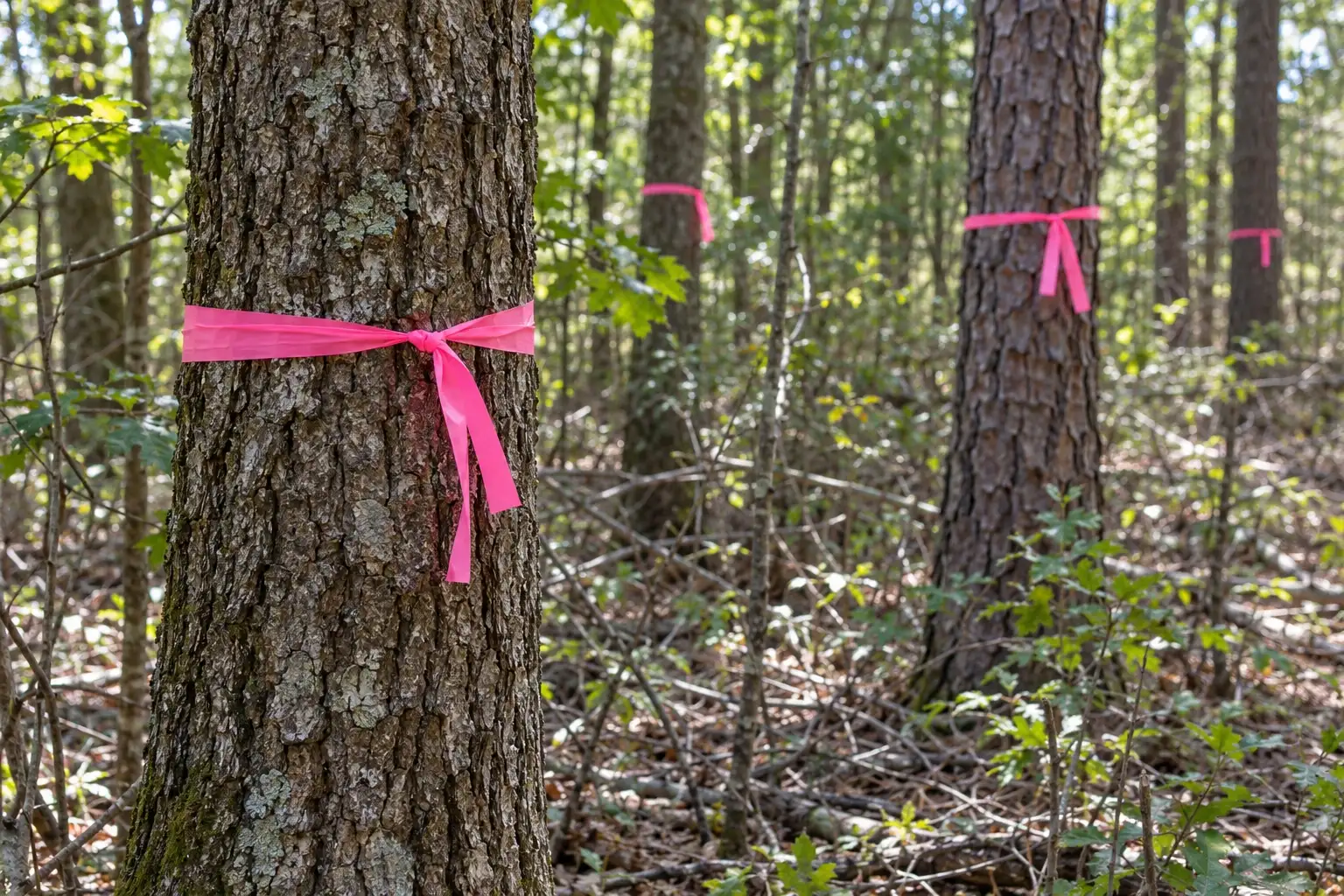
Trees wrapped with pink flagging tape to keep during land clearing
Trees wrapped in pink flagging stay; everything else in the clearing zone goes.
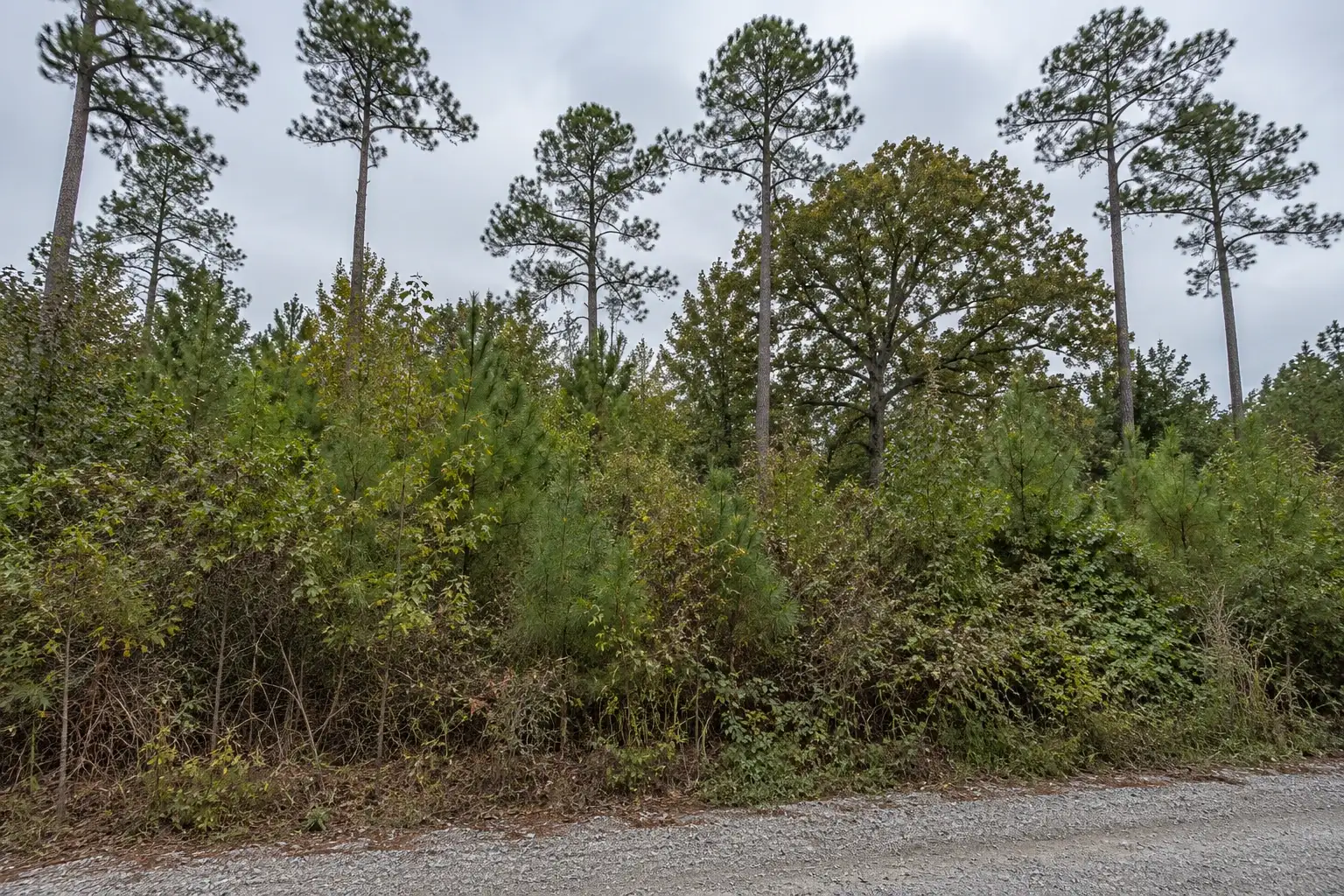
Overgrown lot thick with underbrush beneath tall pinesBefore
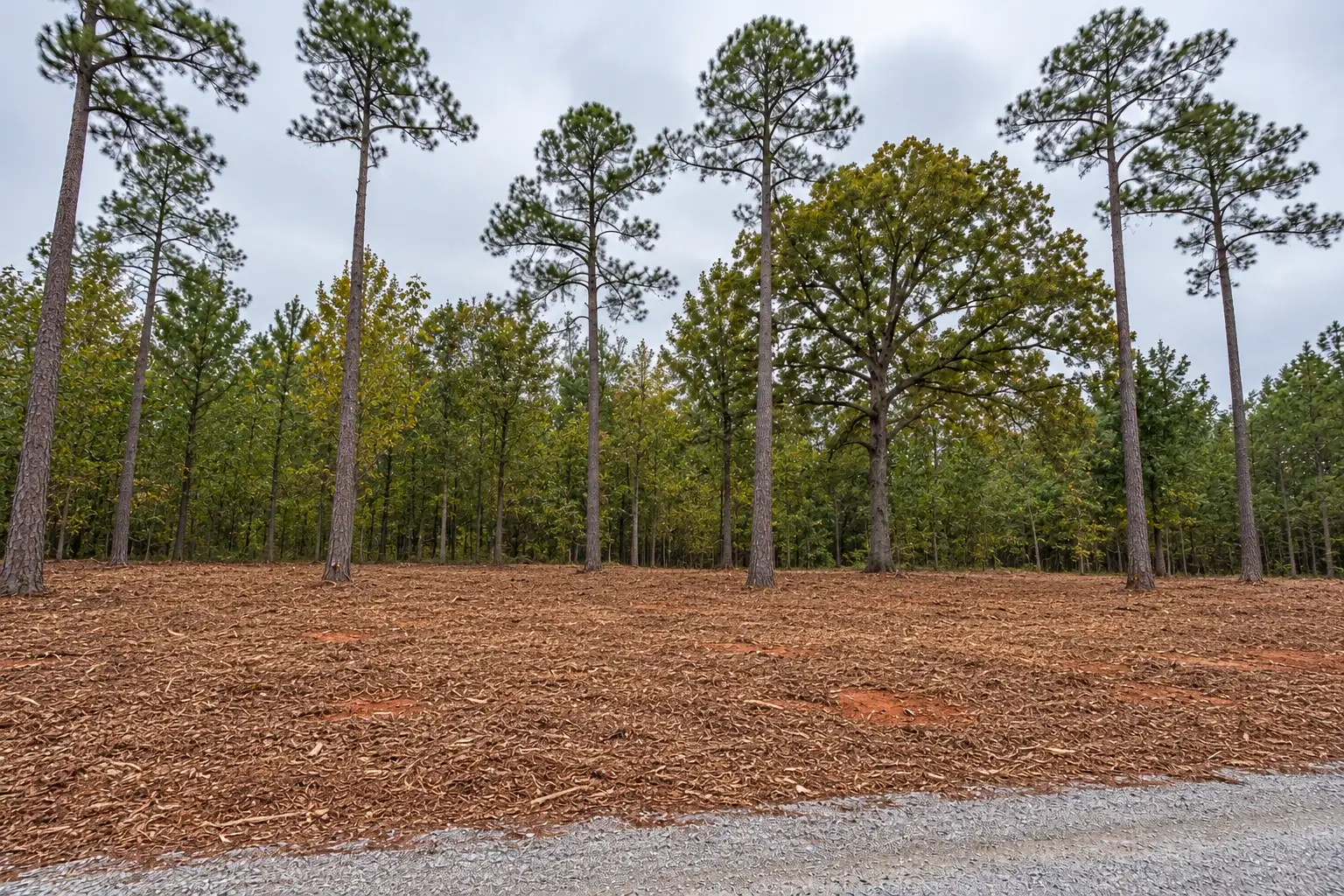
The same lot after forestry mulching, open ground with tall pines left standingAfter
A wooded lot before and after forestry mulching, with the tall pines kept.
How it's done

How a lot is cleared

Good clearing starts with a walk-through, not a machine.

  1. Walk the lot and flag keepers

    You and the estimator walk the property and flag the trees to keep, the clearing limits, wet areas and anything buried.

  2. Check permits and erosion control

    Development sites, buffers along streams and HOA lots can have rules. Larger disturbed areas need erosion and sediment controls such as silt fence.

  3. Mulch underbrush and small trees

    A tracked forestry mulcher grinds brush and trees up to several inches thick into a mulch layer that stays on the ground to protect the soil.

  4. Fell larger trees

    Trees too big for the mulcher are felled, cut and hauled or left as logs, and their stumps ground if needed.

  5. Final pass

    The mulch layer is evened out, and edges along keeper trees, fences and the street are cleaned up.

Lot clearing for new builds around Columbia

Building is everywhere around the Midlands. Blythewood is growing fast around the new Scout Motors plant, Lexington keeps adding subdivisions on former farms and pine stands, and Gilbert and Pelion are turning pasture into homesites. Most of those lots start as a tangle of loblolly pine, sweetgum, privet and vines.

A good clearing plan answers three questions before a machine shows up: what stays, where the soil goes, and what happens to the wood. The answer to the first one matters most. Pines that look fine in a wooded lot are often left standing six to ten feet from a new foundation. Once the surrounding trees are gone, those pines are suddenly exposed to wind they never grew up with, and their roots were cut when the foundation was dug. That is a common call two or three years later.

Forestry mulching vs push-and-burn

Forestry mulching Push, pile and burn
Equipment One tracked mulcher Bulldozer or excavator
Debris Ground into mulch, left on site Piled, burned or hauled
Soil Stays covered, less erosion Disturbed and exposed
Stumps Left at ground level Pulled out
Best for Homesites, views, fence lines, firebreaks Building pads, roads, full grading

For most residential work, forestry mulching is the better option. The mulch layer holds the soil in place on slopes, suppresses regrowth for a while and breaks down over time. Push-and-burn makes sense when you need bare dirt for grading, and burning brings its own rules: outside city and town limits, South Carolina law requires notifying the SC Forestry Commission, and local ordinances can restrict or ban burning.

Erosion, silt fence and red clay

On Piedmont red clay north of the Fall Line, bare soil washes fast. One heavy summer storm can carry clay into the street, a neighbor’s yard or a creek. Larger disturbed areas need erosion and sediment control, such as silt fence along the low side, mulch or seed on bare ground, and construction entrances, and development projects may need a stormwater permit. Even when nothing is required, keeping the ground covered is cheap insurance.

On Sandhills sand to the south and east, erosion is less dramatic but wind and loose sand matter, and sandy lots dry out quickly, so leaving the mulch layer helps new grass get started.

Land clearing in Lexington County

Lexington County has seen some of the fastest growth in the state, and clearing requests there range from a single overgrown backyard to multi-acre homesites along US-1 and US-378. Before clearing for anything larger than a backyard, check with Lexington County Community Development, or with the Town of Lexington if you are inside town limits, about land disturbance, buffers and tree protection rules for your project. HOAs in newer subdivisions often have their own approval process for removing trees.

What drives the price

Land clearing is priced by the job, not by a fixed rate:

  • Acreage and density. Light underbrush clears far faster than thick young pine or mature woods.
  • Tree size. Trees too big for the mulcher need felling, cutting and hauling, and maybe stump grinding.
  • Slope and soil. Steep lake lots, wet ground and sticky clay slow everything down.
  • Debris handling. Mulched in place is cheapest; hauling logs and brush adds cost.
  • Access. A tracked mulcher needs a way in from the road.

A walk-through with you to flag keepers and limits is the best way to get a firm price.

After clearing: what comes next

Once a lot is cleared, plan the next step before weeds return: grade and seed bare areas, keep the mulch layer where you are not building, and water any keeper trees through the first summer, since clearing changes how much sun and wind they get.
Before the crew arrives

How to get ready for the work day

  • Mark property lines clearly; a recent survey with pins helps.

  • Flag the trees you want to keep, or plan to walk the lot with the estimator.

  • Check with your HOA, town or county about permits for your lot.

  • Note septic fields, wells and any buried lines; SC811 locates public utilities.

  • Tell neighbors when the work will happen; mulchers are loud.

Land Clearing questions

How much does land clearing cost per acre?

It depends on how dense the growth is, how big the trees are, the slope and access, and whether debris is mulched in place or hauled. Light underbrush clears for far less per acre than mature woods. A walk-through gives a firm price; photos and a plat or map are enough for a ballpark.

Do I need a permit to clear land in Columbia or Lexington County?

Sometimes. Clearing for development, near streams or wetlands, or above certain disturbed-area sizes can need city or county approval and stormwater or erosion control. HOAs often have their own rules. Check with your planning office before clearing, especially on commercial or subdivision land.

What is the difference between forestry mulching and grubbing?

Forestry mulching grinds trees and brush into mulch that stays on the ground, leaving the soil and stumps in place. Grubbing pulls out stumps and roots with an excavator and usually hauls or burns the debris. Mulching is cleaner and protects the soil; grubbing is needed where a slab or foundation goes.

Can you leave selected trees when clearing a lot?

Yes. Keeper trees are flagged before work starts and protected during clearing. Healthy hardwoods and well-spaced pines are usually worth keeping, but pines left very close to a new house are a common regret in storm season.

Can I burn the brush from land clearing?

Outside city and town limits, South Carolina law requires notifying the SC Forestry Commission before burning yard debris; inside town limits, local ordinances apply, and burning bans can be declared in dry weather. Forestry mulching avoids burning entirely, which is one reason it is popular on residential lots.

Who can clear a wooded half-acre lot for a new house in Blythewood this month?

Send the lot address or a plat, a few photos and your clearing limits through the free estimate form. A walk-through to flag keeper trees comes first, then a written price for mulching, felling and any stump grinding the house pad needs.

Free estimates · Columbia, SC

Get a clear, written price for your trees

Send two or three photos and your ZIP code. You'll hear back within one business day with a written estimate: what will be done, how it will be done, and what it costs.

Call now Free estimate Text