Storm cleanup · After the wind

Storm Damage Tree Cleanup in Columbia, SC

  • Free written estimates
  • Photo quotes from your phone

Updated

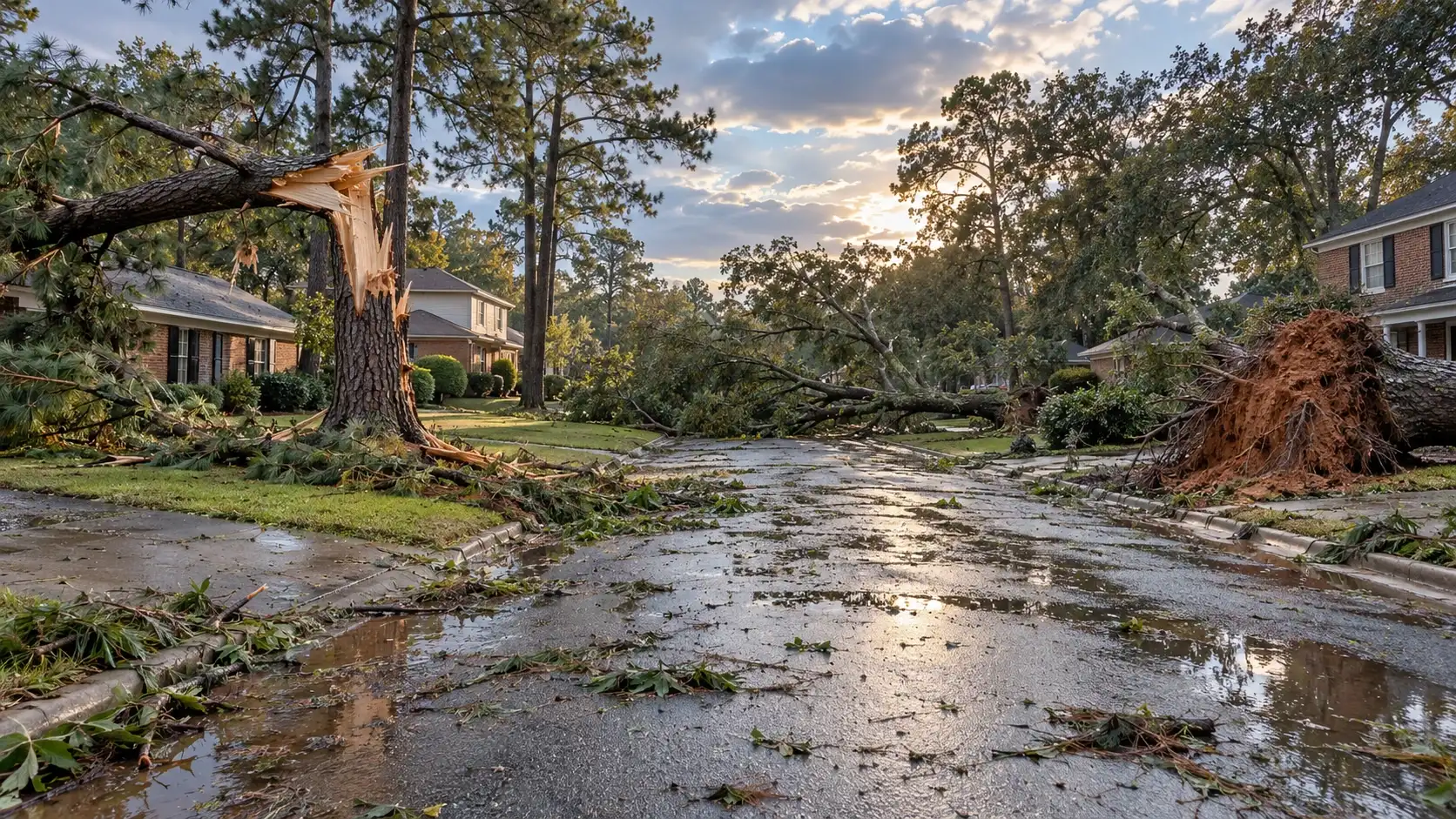
Neighborhood street after a storm with fallen trees and limbs across yards
The short answer

Storm damage tree cleanup in Columbia, SC covers fallen trees, split trunks, hanging limbs and debris haul-off after hurricanes and thunderstorms. Dangerous hanging limbs come down first, then debris is chipped and hauled or stacked for county pickup. Photograph the damage for insurance before work starts, and get a written price.

  • Hurricane seasonJun 1 – Nov 30Plus summer thunderstorms
  • Helene gustsUp to 70 mphMidlands, 27 Sep 2024 (WIS)
  • Most dangerousHanging limbsRemoved before anything else
  • DebrisHaul-off or curbYour choice, priced separately
Signs

Storm damage that needs a professional

Picking up sticks is a weekend job. These are not.

  • Hanging or lodged limbs

    Broken limbs caught high in the canopy (widowmakers) can fall at any time, often days later in a light breeze.

  • Split trunks and torn unions

    Trees that split at a V-shaped crotch, common in Bradford pears and multi-stem oaks, rarely heal and keep tearing.

  • Uprooted trees with lifted root plates

    A tree that tipped with its roots attached can still move. The root plate can snap back upright when the trunk is cut.

  • Trees leaning on other trees

    Hung-up trees are under enormous tension and are among the most dangerous things to cut.

  • Limbs on wires or roofs

    Anything touching a line is the utility's job first. Anything on a roof needs to come off without dropping.

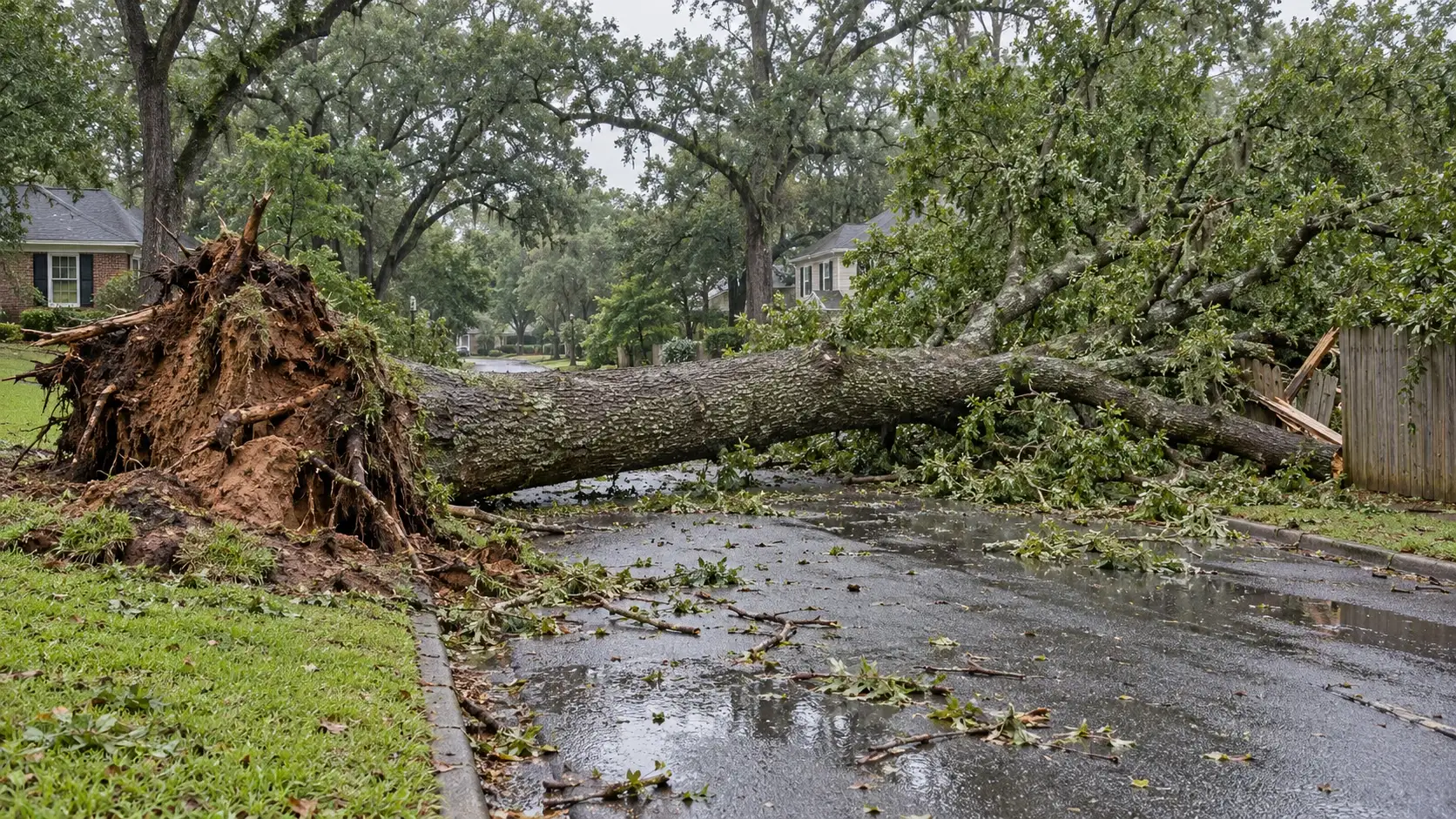
Uprooted oak lying across a wet residential street after a storm
An uprooted oak across a residential street after a storm.
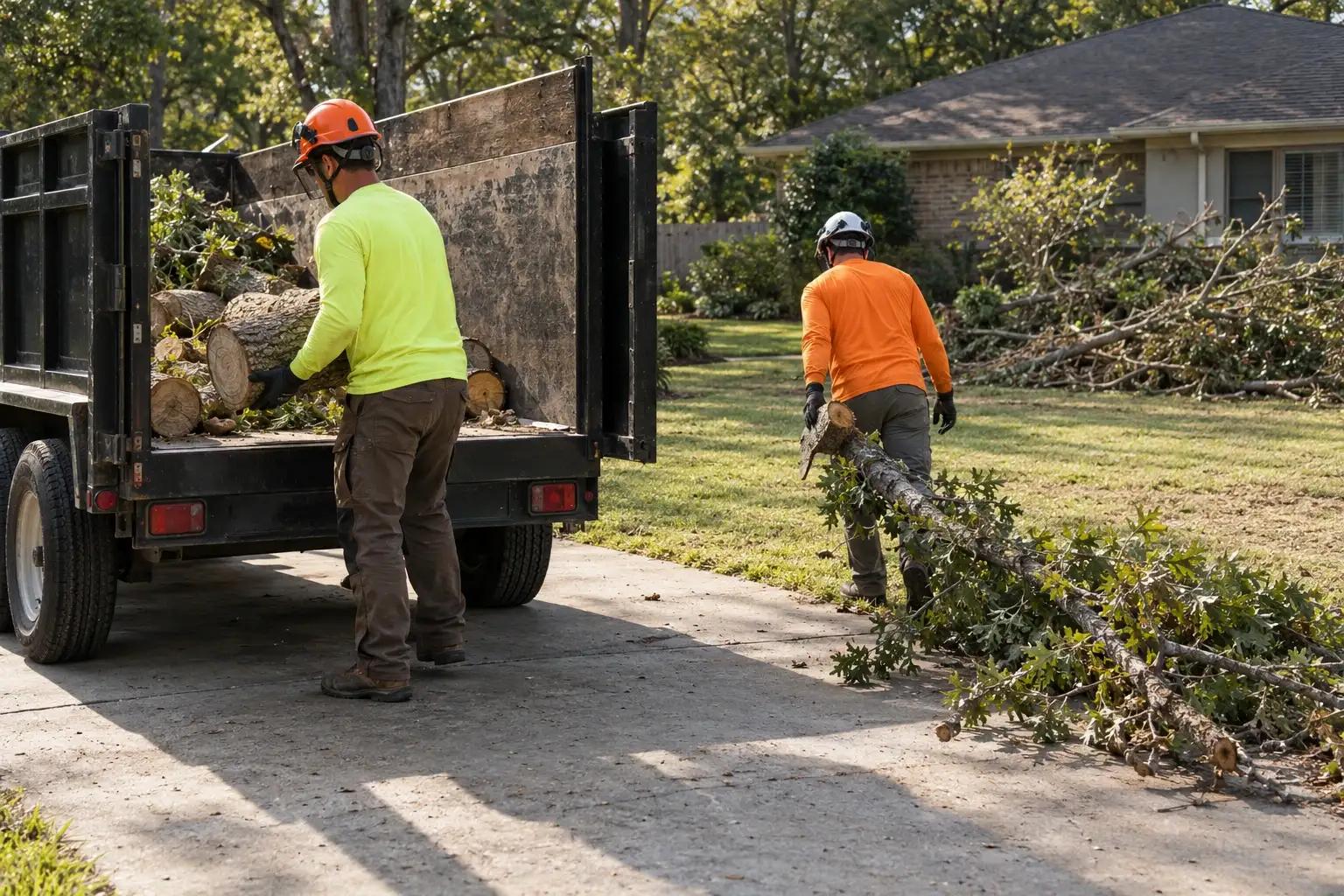
Workers loading storm-damaged limbs and logs into a dump trailer
Storm debris loaded into a trailer for haul-off.
How it's done

How storm cleanup is handled

After a storm, the order of work is about risk, not convenience.

  1. Walk the property for hazards

    Downed lines, hanging limbs, cracked trunks and trees leaning on the house are found and flagged before any cutting.

  2. Remove what can fall

    Hanging limbs and split leaders over doors, walkways and roofs come down first, usually from a bucket truck or by a climber on a separate tie-in.

  3. Cut tension out safely

    Trees that are bent, hung up or uprooted are cut in a planned order to release tension slowly, keeping everyone clear of the spring-back.

  4. Clear access

    Driveways, walkways and gates are opened up so you can get in and out.

  5. Debris: haul or stack

    Brush is chipped and logs hauled, or cut to length and stacked at the curb if you plan to use county debris collection.

Hurricane Helene and Midlands storm damage

Most years, Columbia’s tree damage comes from summer thunderstorms: a burst of straight-line wind, a few oaks down, a lot of limbs in yards. Every few years, something bigger arrives. On September 27, 2024, Hurricane Helene crossed the Midlands with gusts up to 70 mph. Numerous trees and power lines came down across Richland and Lexington counties, more than 200 roads were blocked in Lexington County, and around 75,000 customers lost power across the two counties (WIS). In Forest Acres, officials called it the most trees down that people could remember (Carolina News & Reporter).

The National Weather Service confirmed some tornadoes, but most of the Midlands damage came from straight-line winds acting on trees rooted in soaked ground. That is the pattern to plan for: days of rain, then wind.

Hanging limbs: the hidden danger after a storm

The most dangerous thing in a yard after a storm is often not the tree on the ground. It is the broken limb still up in the canopy. Arborists call them hangers or widowmakers: limbs that snapped but did not fall, caught on other branches. They can come down days later in a light breeze, onto someone raking underneath.

If you see a broken limb hanging over a door, a driveway, a play area or a walkway, keep people away from the area under it until it is removed. Removing hangers safely means getting above or beside them, with a bucket truck or a climber tied into a separate, sound part of the tree.

Debris: haul-off vs curbside county pickup

After major storms, the City of Columbia, Richland County and Lexington County often run storm debris collection, with rules about where and how debris is placed: usually at the curb, not in the street, and separated from other trash. It is free but can take weeks to reach your street after a big event.

Your options:

  • Full haul-off. Brush chipped, logs loaded and hauled. Fastest and cleanest, priced separately.
  • Cut and stack at the curb. Logs cut to manageable lengths and stacked for county pickup. Cheaper.
  • Keep the wood. Firewood rounds stacked where you want them, brush chipped into mulch.

Check your city or county’s announcements for current debris rules before choosing the curb option.

Storm chasers: warning signs

After every big storm, crews arrive from out of state. Many do honest work. Some do not, and homeowners under stress are easy targets. Be careful with anyone who:

  • knocks on your door and pressures you to sign today;
  • demands cash, or full payment, before work starts;
  • will not put the price and scope in writing;
  • cannot produce a certificate of insurance sent from the insurer;
  • offers to “handle your insurance claim” or asks you to sign over your benefits;
  • has no local phone number, address or reviews.

A written estimate, a certificate of insurance and payment after the work is done protect you, storm or no storm.

Before the next storm

The cheapest storm cleanup is the one you avoid. Before June 1 each year, look up into your trees:

  • dead limbs and dead trees near the house;
  • splits and V-shaped unions with bark pinched inside;
  • trees that started leaning, with soil cracks at the base;
  • pines with thin, browning crowns after a dry summer.

Removing deadwood and hazard trees in spring costs far less than an emergency crane after a storm, and crews are easy to book. The dead and hazardous tree page covers what to look for.

Before the crew arrives

How to get ready for the work day

  • Photograph all damage before anything is cut or moved.

  • Keep everyone away from hanging limbs, uprooted trees and anything touching wires.

  • Check your homeowners policy for debris removal limits.

  • Find out whether your city or county is running storm debris pickup, and its rules.

  • Ask for a written estimate and a certificate of insurance, even after a storm.

Storm Damage Cleanup questions

Who pays for storm damage tree cleanup?

If a tree falls on a covered structure, such as the house, garage or fence, homeowners insurance usually pays for removal, often with a per-tree limit. Trees that fall without hitting a structure are usually the owner's cost. If a neighbor's tree falls on your house, your own insurer normally handles it first.

Should I wait for the adjuster before cleaning up?

Call your insurer and ask, but you are expected to prevent further damage. Removing a tree from the roof and tarping should not wait for the adjuster. Photograph and video everything before work starts and keep every receipt.

Do you haul away storm debris?

Debris can be chipped and hauled away, or cut to length and stacked at the curb if your city or county is running storm debris collection. Hauling is priced separately. Curb pickup is cheaper but can take weeks after a big storm, and it has size and placement rules.

How do I spot a storm chaser?

Be careful with crews that knock on doors, demand cash up front, will not give a written estimate or certificate of insurance, pressure you to sign today, or offer to deal with your insurance company for you. Check that the company has a local phone number and a real presence before work starts.

Is it safe to cut up a fallen tree myself?

Small limbs on open ground, yes, with care. Anything bent under tension, hung up in another tree, uprooted with the roots attached, near a wire or on a structure is not a DIY job. Chainsaw injuries spike after storms.

How soon after a storm can a crew come?

It depends on the storm. After a big one, every crew in the Midlands is booked, and trees on occupied houses and blocked driveways go first. You are told honestly when someone can get there when you call.

Who can clear hanging limbs and a split oak in my Lexington yard after this week's storm?

Send photos of the hanging limbs, the split and what is beneath them through the free estimate form, or call if they are over a door or walkway. Hanging limbs are cleared first, then the split oak is assessed: some can be cabled, most split trunks need removal.

Free estimates · Columbia, SC

Get a clear, written price for your trees

Send two or three photos and your ZIP code. You'll hear back within one business day with a written estimate: what will be done, how it will be done, and what it costs.

Call now Free estimate Text