Timing matters in pruning. The same cut made in February and in July can have very different effects on a tree’s health, its flowers and how fast the wound seals. Here is a practical calendar for Columbia and the Midlands, where winters are short and mild and summers are long and hot.
The short rule
- Late winter (dormant season): most shade trees, oaks, maples, crape myrtles and fruit trees.
- Right after bloom: spring-flowering trees and shrubs (dogwood, redbud, flowering cherry, azaleas).
- Any time: dead, broken, hanging or rubbing limbs, and anything that is a safety hazard.
- Before June 1: a deadwood and clearance check on big trees near the house, ahead of hurricane season.
Why late winter works best
Clemson Extension recommends pruning most trees during the dormant season (Clemson HGIC). In the Midlands that usually means late December through early March. Three reasons:
- Faster sealing. Cuts made just before spring growth seal over quickly once the tree starts growing.
- Better visibility. Without leaves, the branch structure, crossing limbs and dead wood are easy to see.
- Less stress. The tree is not spending energy on leaves and heat, and many insects and diseases are less active.
Month-by-month calendar for the Midlands
| Month | What to prune | Notes |
|---|---|---|
| January | Oaks, maples, most shade trees | Prime dormant-season work |
| February | Crape myrtles, shade trees, fruit trees | Best month for crape myrtles in most years |
| Early March | Finish dormant pruning before buds break | Midlands springs come early |
| Late March–April | Spring-flowering trees, after they bloom | Dogwood, redbud, flowering cherry |
| May | Deadwood and clearance check | Get ahead of storm season |
| June–August | Dead, broken and hanging limbs only | Light work; avoid heavy pruning in heat |
| September | Storm cleanup as needed | Peak hurricane months |
| October–November | Planning, assessments, removals | Good time for estimates and scheduling |
| December | Begin dormant pruning | Once leaves have dropped |
Oaks
Prune oaks, the Midlands’ big shade trees, in the dormant season whenever possible. Water oaks, willow oaks, laurel oaks and southern red oaks over roofs usually need deadwooding and roof clearance every three to five years when mature, and structural pruning every two to three years when young. Emergency removal of a broken or hanging limb should not wait for winter.
Crape myrtles and crape murder
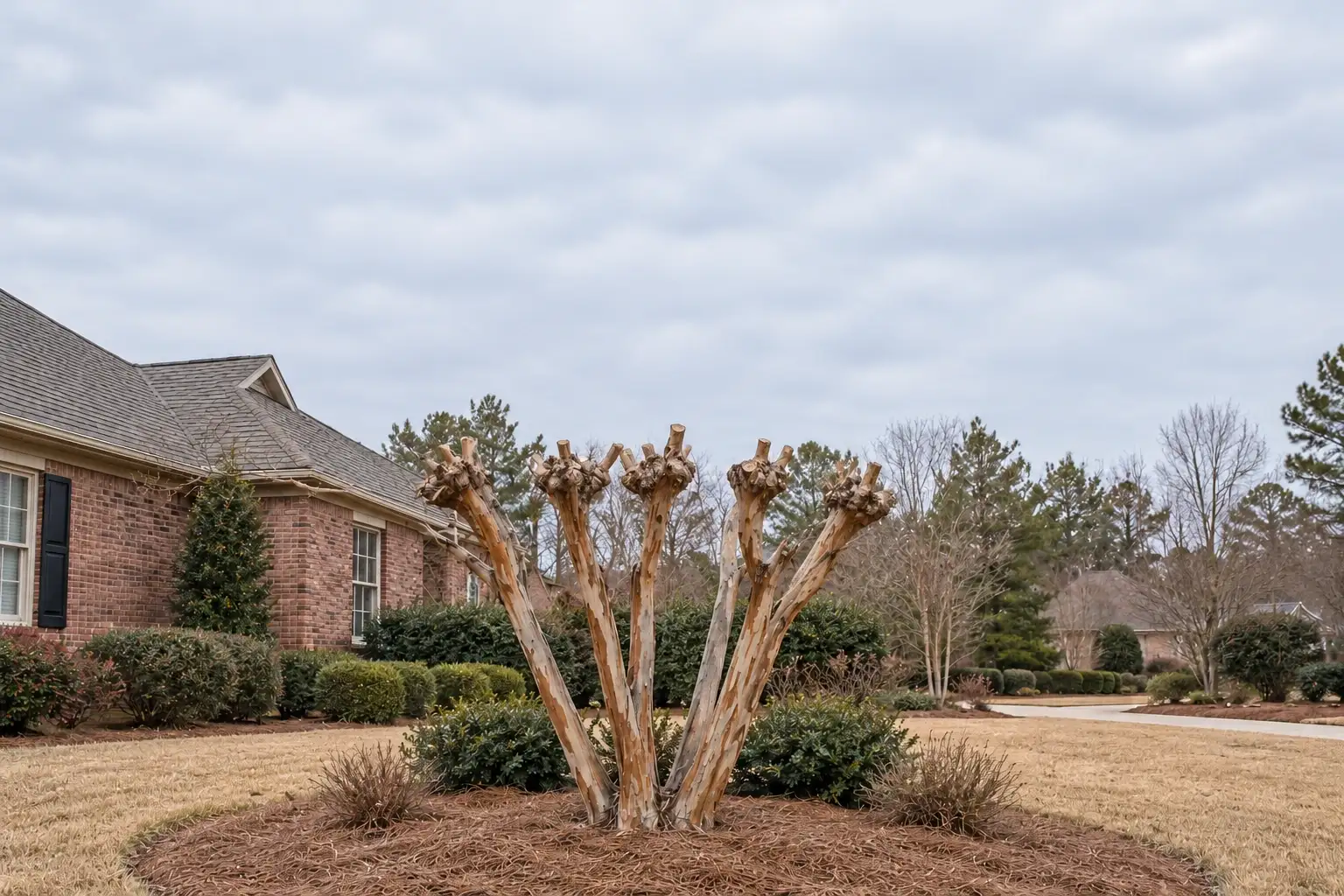
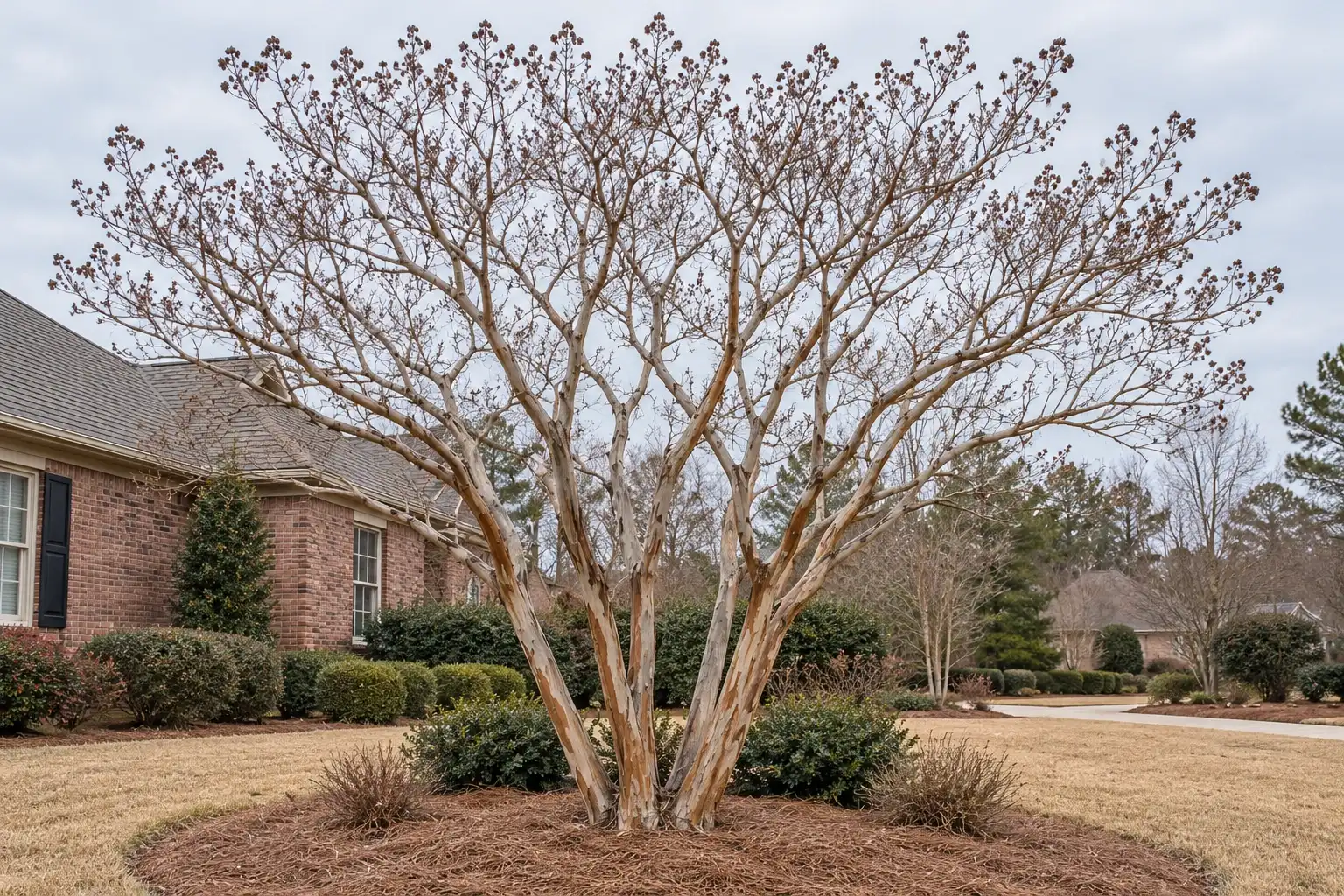
Crape myrtles are everywhere in Columbia, and so is crape murder: cutting them back to the same knobby stubs every winter. It makes them look tidy for a few weeks and then sprout a mass of thin, weak shoots that flop under the weight of their flowers. Over time it weakens the plant.
Clemson Extension recommends a lighter approach in late winter (Clemson HGIC):
- remove suckers at the base;
- take out crossing, rubbing and inward-growing branches;
- remove dead wood and old seed heads within reach;
- if the tree is too big for its spot, choose a smaller variety rather than cutting it down every year.
Flowering trees
Dogwood, redbud, flowering cherry and other spring bloomers set next year’s flower buds during the summer. Pruning them in winter cuts off the flowers. Prune them right after they finish blooming in spring.
Pines
Pines need little routine pruning. Removing dead branches and lifting low limbs can be done any time, ideally in the cooler months. Heavy crown pruning on pines does not make them safer in wind; if a pine is too close to the house, removal is usually the honest option.
Storm-season deadwooding: before June 1
Atlantic hurricane season runs June 1 to November 30, and Midlands summers bring strong thunderstorms. Dead and hanging limbs are the first to fail. A spring walk around the big trees near your house, followed by deadwooding and roof clearance where needed, is the best value in tree care. Hurricane Helene in September 2024 showed how much damage falling trees and limbs can do across Richland and Lexington counties.
Exceptions: prune right away
Some things should not wait for the calendar:
- broken or hanging limbs over a house, driveway, play area or walkway;
- limbs on or against the roof;
- branches touching service lines (call the utility for lines along the street);
- storm damage that leaves torn bark and split limbs.
Never top a tree
Whatever the season, topping, cutting large limbs back to stubs at an arbitrary height, is harmful. It causes decay and weak sprouts and makes a tree more dangerous over time (ISA). Good pruning follows the ANSI A300 standard. See tree trimming in Columbia and the tree trimming cost guide.
Not sure what your trees need this season? Send photos of the trees and what worries you through the free estimate form.