A tree on your house is frightening, and the first few minutes are when people get hurt. Here is the order that keeps your family safe, protects your insurance claim and gets the tree off the roof as quickly as possible.
1. Get everyone safe
- Move everyone out of the rooms under the tree and away from cracked or sagging ceilings and walls.
- Do not go on the roof or into the attic under the tree. A tree resting on a house is loaded in ways that are hard to predict, and it can shift.
- Call 911 if anyone is hurt or trapped, if there is a fire, or if you smell gas.
- If it is safe to reach the breaker panel, switch off power to the damaged part of the house. If water is coming in near outlets or the panel, do not touch it.
2. Treat every wire as live
If the tree brought down a power line, or is touching one, stay well back: downed lines can be live even when they look dead, and they can energize the tree, a fence or a puddle. Call Dominion Energy or your electric cooperative to report it. Only utility-qualified line-clearance crews may work within 10 feet of energized lines (OSHA). No tree crew should touch the tree until the utility has made the line safe.
3. Document everything
Before anything is moved, take photos and video from safe spots:
- the whole tree and how it is lying on the house;
- the roof, gutters and siding from several angles;
- inside damage: ceilings, walls, floors, water stains;
- the stump or root plate, which shows whether the tree was healthy;
- damaged cars, fences, sheds and anything else.
These photos matter more than anything else for your claim.
4. Call your insurer
Open a claim right away. Ask:
- whether they want an adjuster to see the tree before removal, or whether you should prevent further damage first;
- what your policy covers for tree removal (many policies cap this per tree);
- whether they cover temporary repairs like tarping and additional living expenses if you cannot stay in the house.
Write down the claim number, the name of the person you spoke with and what they told you.
5. Get the tree off and the roof tarped
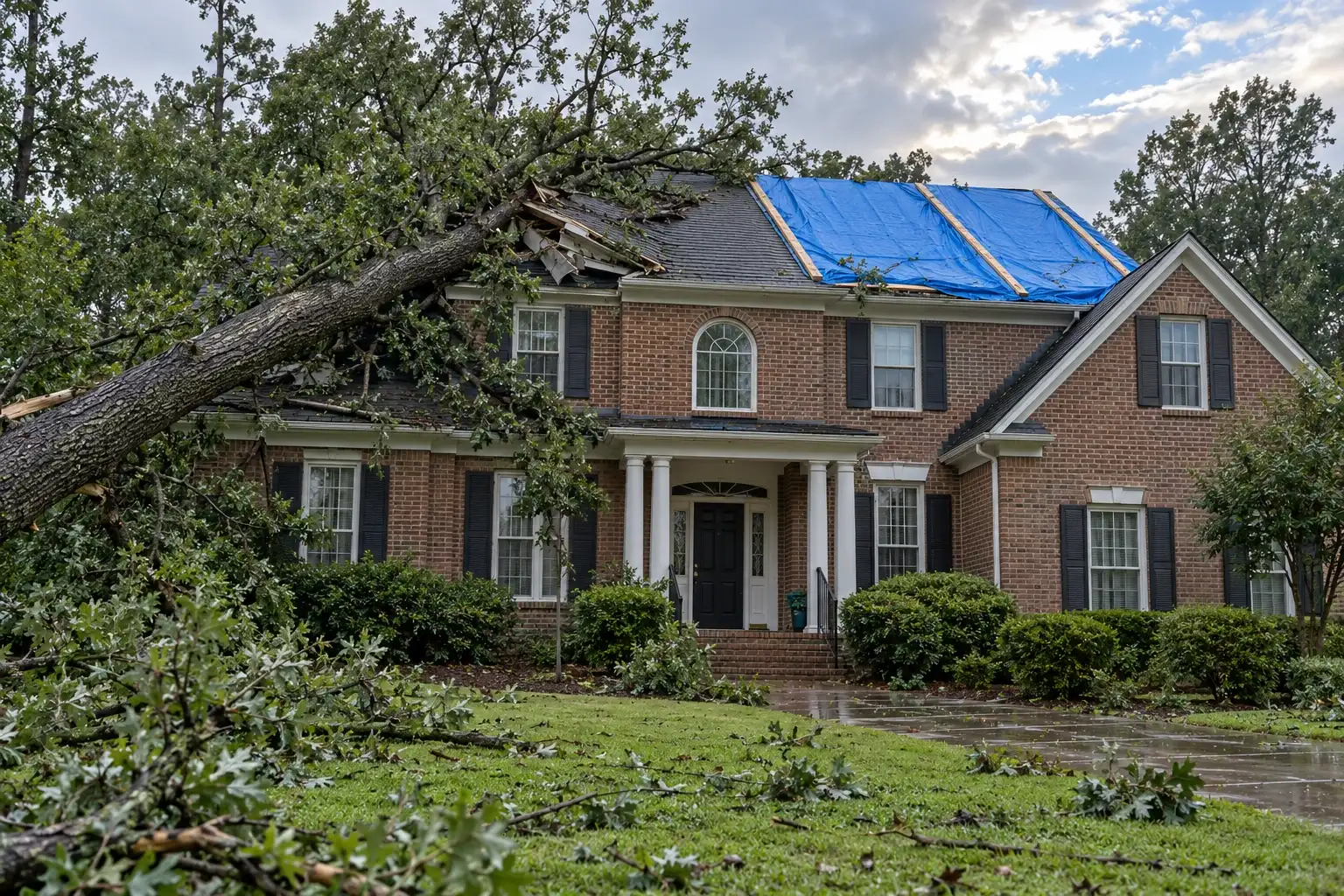
A tree on a roof is a job for a professional crew, often with a crane. The work goes in this order: make the scene safe, cut the tree free in a planned order, lift the weight off without dropping it back on the house, then tarp the roof so rain stays out until your roofer can make permanent repairs. See emergency tree service.
Even in an emergency, ask for the price in writing before work starts, and a certificate of insurance. Be wary of door-knockers who demand cash up front or ask you to sign over your insurance claim.
Who pays?
In general terms (not legal advice):
- Your tree, your house, covered event (wind, lightning, ice): your homeowners insurance usually pays for repairs and often tree removal from the structure, subject to your deductible and limits.
- Neighbor’s healthy tree on your house: usually still your own insurer, because the storm caused it, not the neighbor.
- A tree that was dead or obviously hazardous: if the owner knew or should have known, they may be found negligent, and their insurer may be responsible. See whose tree is it.
- A tree that fell without hitting anything: removal is usually the owner’s cost.
Keep every receipt
Keep receipts for emergency tree removal, tarping, temporary repairs, hotel stays and meals if you had to leave, and anything you bought to protect the house. Note dates and times. Insurers reimburse what you can document.
What Helene taught Midlands homeowners
On September 27, 2024, Hurricane Helene crossed the Midlands with gusts up to 70 mph. Trees and power lines came down across Richland and Lexington counties, more than 200 roads were blocked in Lexington County, and around 75,000 customers lost power across the two counties (WIS). Tree crews and roofers were booked for weeks.
Two lessons: the trees that hit houses were often big trees close to the house on saturated ground, and the homeowners who had dead trees and heavy limbs dealt with before storm season avoided the worst. A spring check of the biggest trees near your house is the cheapest insurance there is. See dead and hazardous trees.