Why dead trees get more expensive the longer they stand
A tree that dies this spring is, for a while, almost as solid as a living one. Over the following months, the wood dries, checks and cracks. Fungi move in. Limbs that would have held a climber’s rope become brittle and snap without warning.
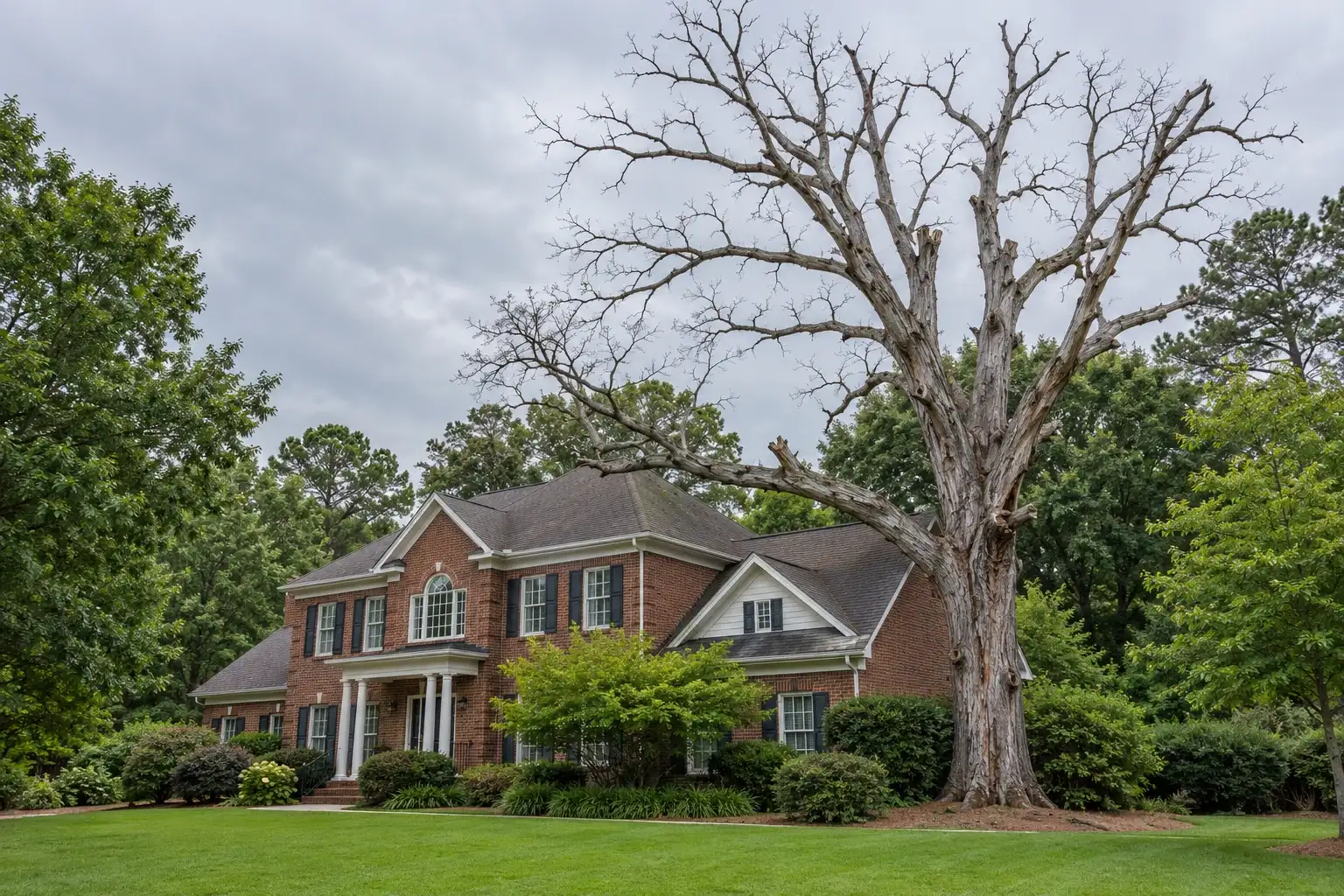
That changes how the tree can be removed. A dead tree that a climber could safely take down in its first few months may, a year later, need a bucket truck or a crane holding each piece, because the tree itself cannot be trusted. More equipment means a higher price, and in the meantime dead limbs keep falling on whatever is underneath. Around Columbia, most standard removals run $400 to $1,800 (HomeBlue, 2026); a brittle dead tree over a house usually costs more.
The most common hazard trees around Columbia
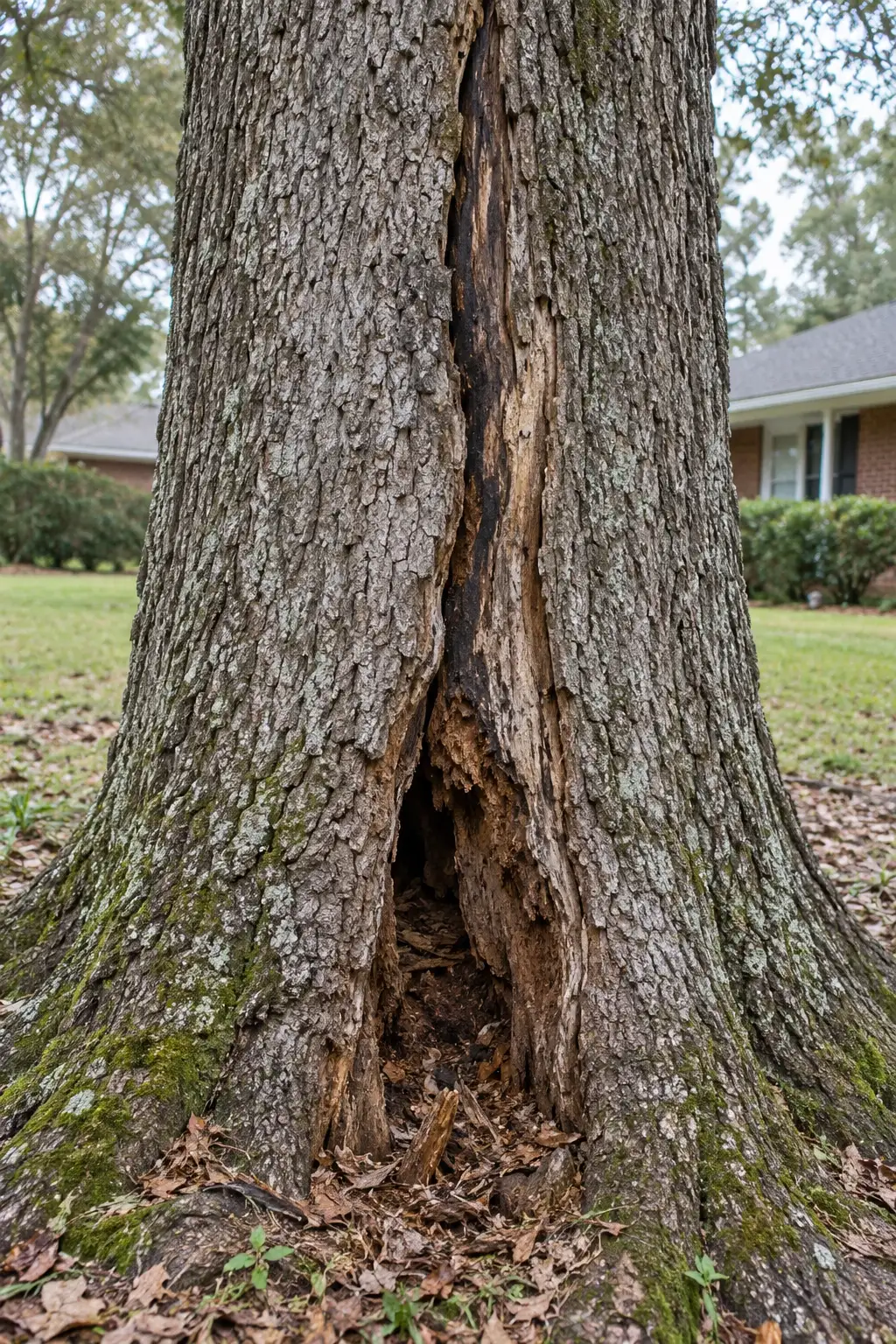
- Water oaks. Fast-growing and short-lived for an oak, they often develop heart rot. Conks at the base, dead limbs high in the crown and cavities are the warning signs.
- Laurel and willow oaks in decline. Big street trees that lose large limbs as they age.
- Oaks with hypoxylon canker. Bark sloughing off to reveal a crusty grey to black layer on badly stressed oaks. The wood beneath can become brittle quickly (Clemson HGIC).
- Beetle-killed pines. Southern pine beetles can produce four to six generations a year in South Carolina (Clemson HGIC). A pine with a red-brown crown is dead and should come down before it dries out further.
- Bradford pears. Weak, V-shaped unions split in storms, often in half.
- Trees damaged by construction. Root cuts from trenching or grading can kill a tree slowly over two to five years.
The scratch test and other quick checks
You do not need special tools to spot most problems:
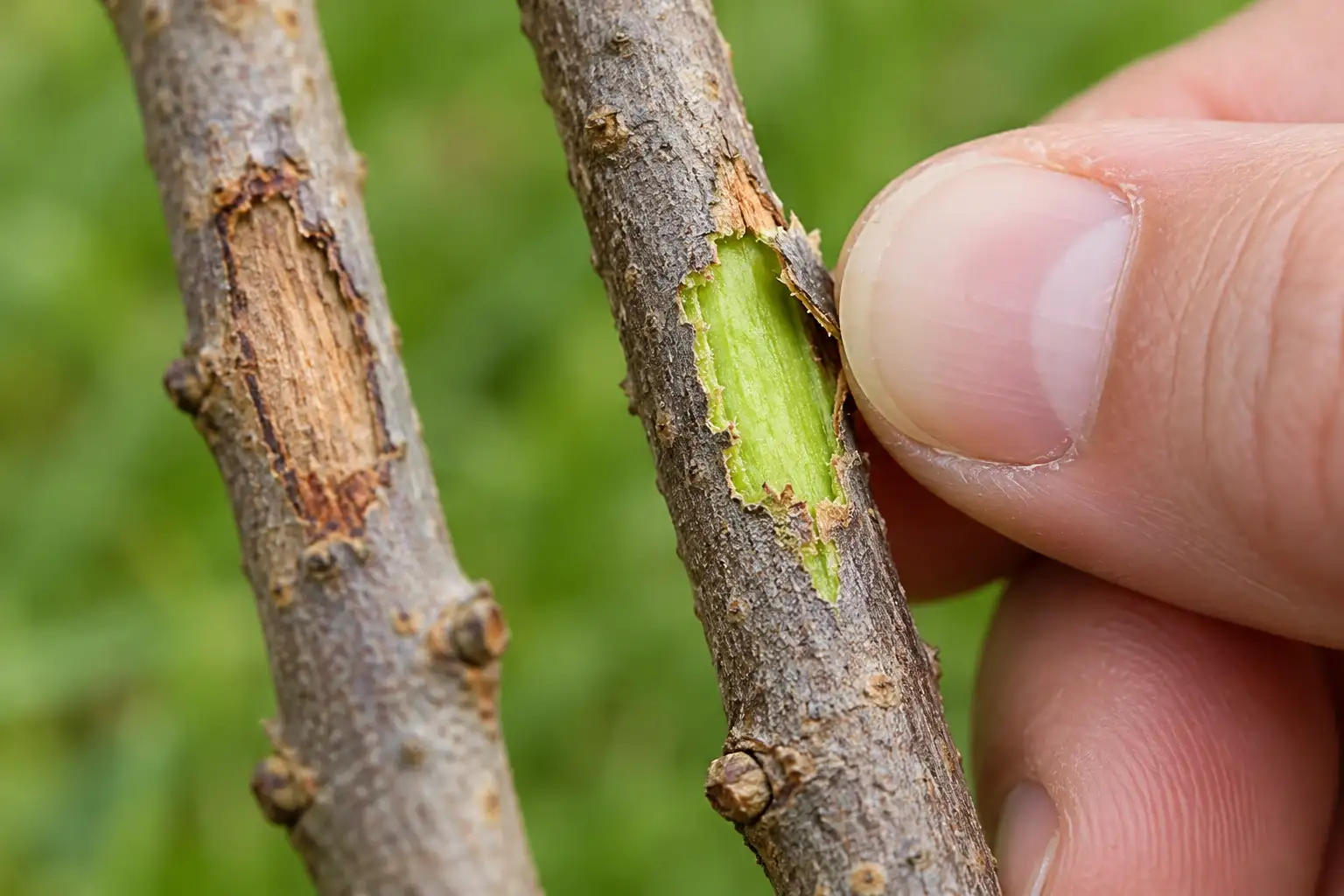
- Scratch test. Scrape a twig with a thumbnail. Green and moist means alive; brown and dry means dead. Test several branches on different sides.
- Bend test. Living twigs bend; dead twigs snap.
- Bark check. Bark falling away in sheets, especially with sawdust or holes underneath, is a bad sign.
- Base check. Mushrooms, conks, soft wood, cavities and cracked or heaving soil at the root flare.
- Crown check. Compare the tree with its neighbors in summer. Thin, small or yellowing leaves and bare branches at the top suggest decline.
The full checklist is in Is my tree dead? 9 signs to check.
Liability if it falls on a neighbor
Who pays when a tree falls depends largely on whether the tree was healthy. When a healthy tree falls in a storm, insurers generally treat it as an act of nature, and each owner’s own policy handles damage to their property. When a tree was dead, dying or obviously hazardous and the owner knew or should have known, the owner can be found negligent and held responsible for the damage.
The practical lesson: if you suspect a tree is hazardous, act, and keep a record (photos, estimates, emails to your neighbor). Whose tree is it? explains how this works in South Carolina. This is general information, not legal advice.
When removal is not the only answer
Not every flaw means removal. A tree with one weak union can be cabled and braced. Dead limbs on an otherwise healthy oak can be pruned out. Small, contained decay can be monitored. An arborist assessment gives you a clear verdict when you are unsure.