Columbia is pine country. Loblolly pines tower over yards from Lexington to Elgin, and when they start dying, bark beetles are usually involved. Here is how to recognize the three beetles that cause most of the trouble, what you can do, and when removal is the right call.
The three beetles
Clemson’s Home & Garden Information Center describes three bark beetles that attack pines in urban settings (Clemson HGIC):
| Beetle | What it attacks | What you see |
|---|---|---|
| Southern pine beetle | Mid and upper trunk; can kill healthy pines when numbers are high | Many small pitch tubes, S-shaped galleries under bark, fast crown fade |
| Ips engraver beetles | Stressed or dying pines, often tops and branches first | Reddish boring dust, fewer pitch tubes, tops dying first |
| Black turpentine beetle | Lower trunk, usually below 8 feet | Large pitch tubes near the base, often after root damage |
The southern pine beetle is the most destructive. In South Carolina it can complete four to six generations a year, and when populations build, even healthy pines may not survive the attack.
Signs to look for
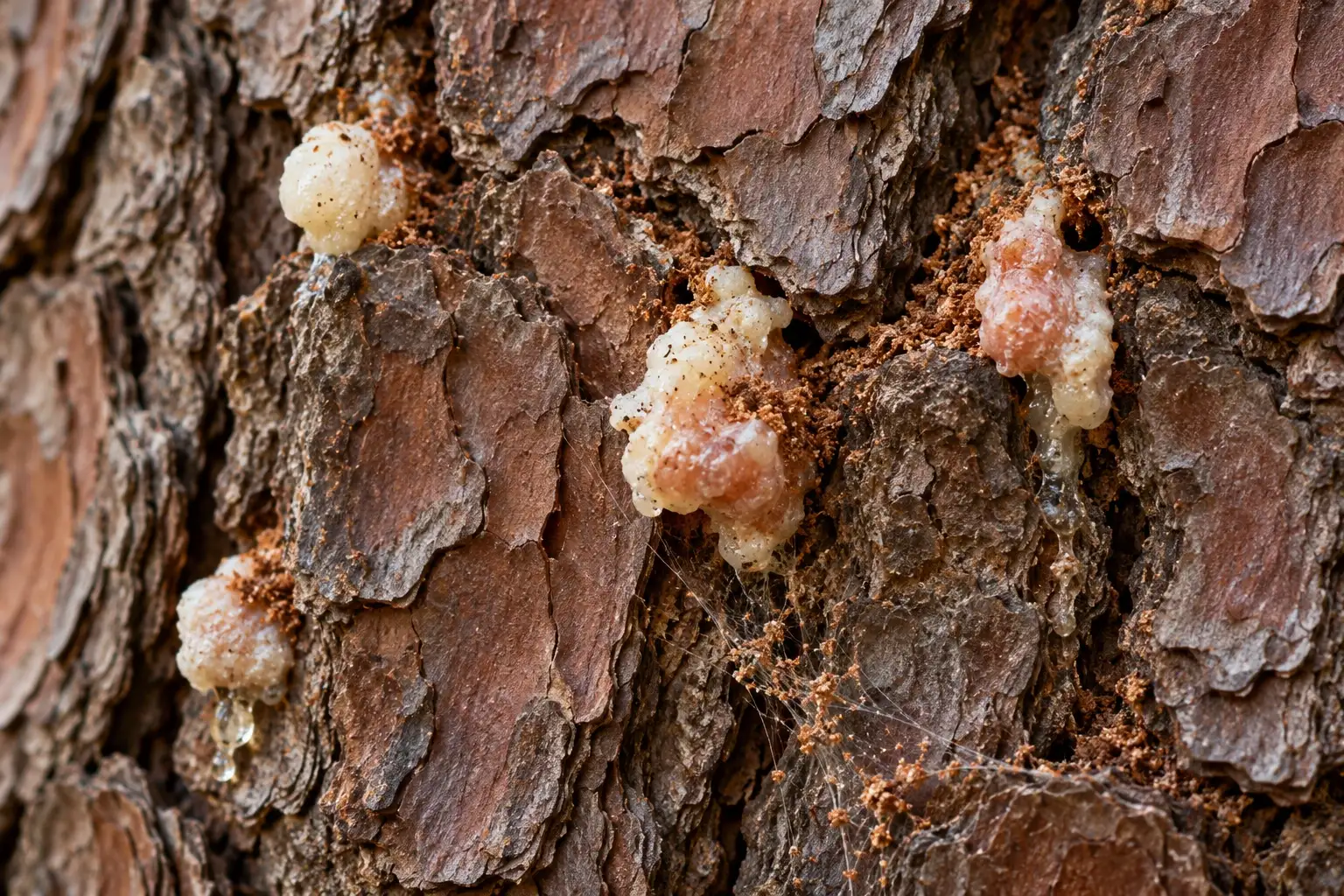
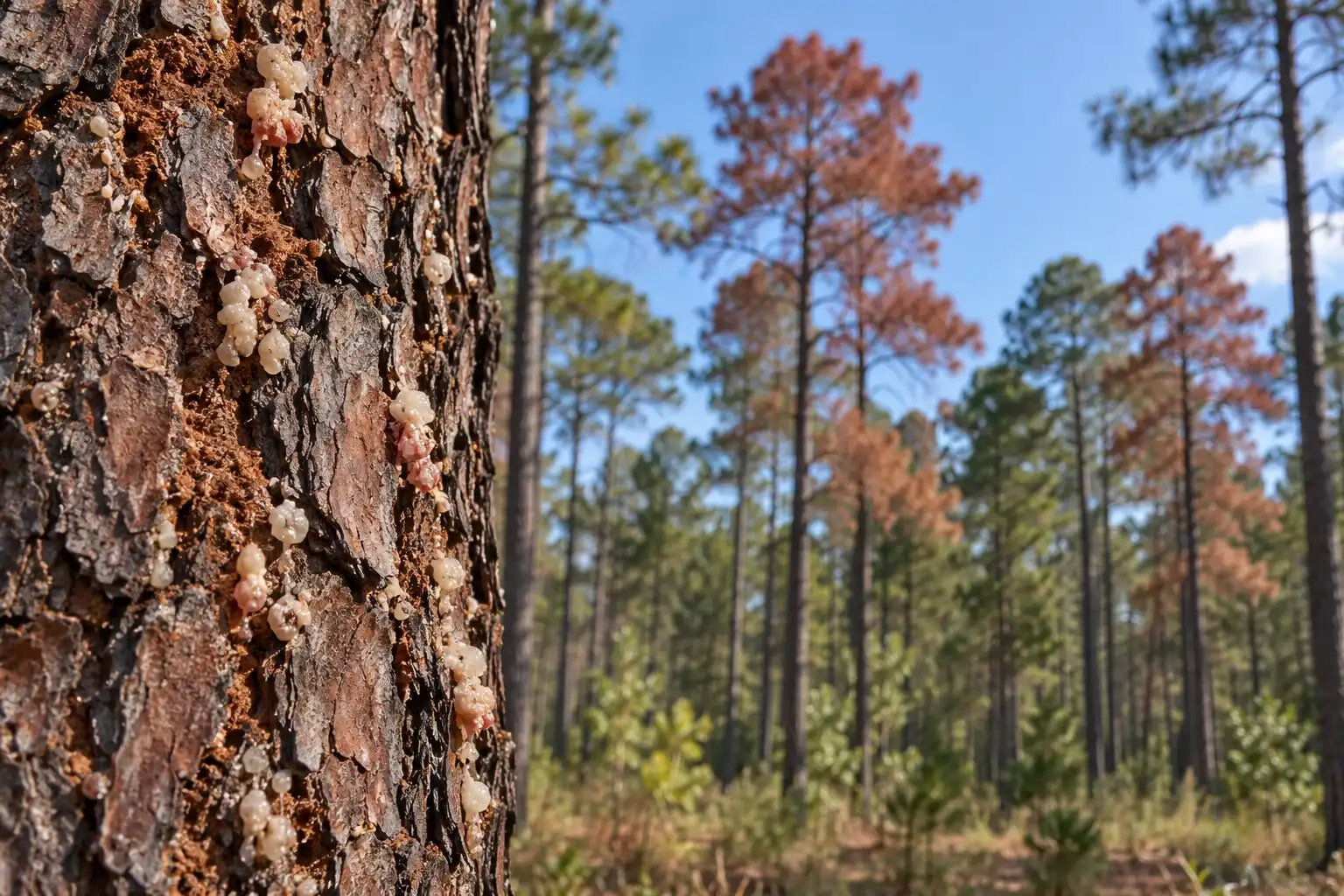
- Pitch tubes. Popcorn-sized lumps of resin, white to reddish, on the bark where beetles bored in. Healthy trees push resin out to fight the beetles.
- Boring dust. Reddish-brown sawdust in bark crevices, spider webs and around the base.
- Small exit holes. Like shotgun pellet holes in the bark, after beetles leave.
- Crown color change. Needles fade from green to yellow-green, then red-brown, then fall. Once red, the tree is dead.
- Clusters. Several pines dying together, or the problem spreading tree to tree.
Why beetles strike after dry summers
Pines defend themselves with resin. A well-watered pine can push out attacking beetles; a drought-stressed pine cannot. That is why beetle problems around Columbia often follow hot, dry summers, especially in the sandy Sandhills soils of Northeast Columbia, Elgin, Gilbert and Lexington, which dry out fast. After the extremely dry summer of 2019, the USDA Forest Service reported increased Ips beetle activity in Lexington, Richland and other South Carolina counties (USDA Forest Service).
Other stresses invite beetles too: lightning strikes, root damage from construction or grading, storm damage and soil compaction.
What to do if you see signs
Act quickly
Beetle problems move fast in summer. A tree that shows pitch tubes in June can be dead by August, with a new generation of beetles moving to its neighbors.
Remove infested trees promptly
Removing infested pines, and getting the wood off the property or processed so beetles cannot emerge and spread, is the main control recommended for homeowners. Do not stack infested logs as firewood next to healthy pines. See pine tree removal.
Check the neighbors
When one pine is infested, look closely at the pines around it for early pitch tubes and boring dust. An arborist visit can sort out which trees are infested and which are healthy.
Consider protecting high-value pines
Preventive insecticide applications to the bark of individual high-value pines can help in some cases, but they must be applied correctly, at the right time, by a licensed applicator. In South Carolina, commercial pesticide application is regulated by the Clemson University Department of Pesticide Regulation.
Prevention: keep pines healthy
- Water during droughts. A slow, deep soak under the drip line every week or two in dry spells helps pines on sandy soil.
- Protect roots. Keep trenching, grading, vehicles and construction off the root zone.
- Mulch, do not pile. A thin layer of pine straw over the root zone helps; soil piled against the trunk does not.
- Thin crowded pines on larger lots so the remaining trees have room and water.
- Remove struck and damaged pines before they draw beetles.
When to call
Call when you see pitch tubes or boring dust on a pine near your house, when a crown starts changing color, or when pines start dying in a cluster. Dead pines become brittle quickly and get harder and more expensive to remove the longer they stand. See the tree removal cost guide.
Pine beetles around the Midlands
Beetle activity varies from year to year, but the pattern around Columbia is consistent. After hot, dry summers, homeowners in the sandy Sandhills neighborhoods of Northeast Columbia, Elgin, Gilbert and parts of Lexington are the first to see pines browning, often one tree in a row along a back fence, then its neighbors. In Irmo, Chapin and Seven Oaks, on red clay, beetles more often follow root damage from construction or storm stress. Lightning-struck pines anywhere draw beetles within weeks.
Lake Murray lots add a complication: pines on Dominion Energy project land below the 360-foot contour need Dominion Energy approval before they are cut, even when they are infested. Start that conversation early.