The first ten minutes: safety before anything else
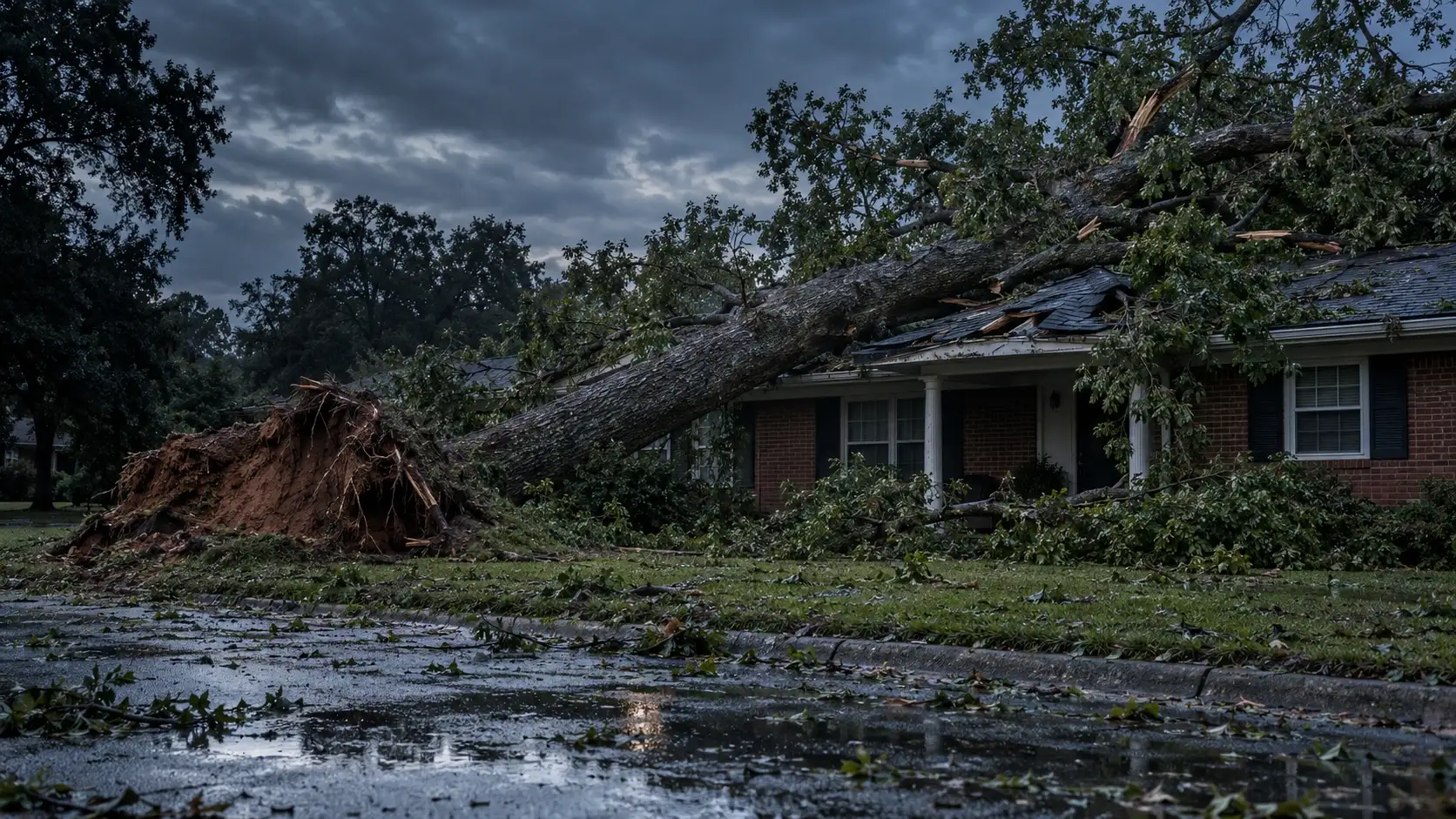
When a tree comes down on a house, the most dangerous mistakes happen in the first few minutes: someone climbs onto the roof to look, or walks under the trunk to check the car. Three steps, in this order:
- Get people out of harm’s way. Move everyone to the far side of the house, away from rooms under the tree and from cracked or sagging ceilings.
- Treat every wire as live. Stay well back from any downed or sagging line, and from anything touching it, including the tree, a fence or a puddle. Call Dominion Energy or your electric co-op to report it. Only utility-qualified line-clearance crews may work within 10 feet of energized lines (OSHA).
- Document, then call. Take photos and video from a safe spot, call your insurer to open a claim, then call for emergency tree removal.
If someone is hurt or trapped, or there is a fire or a gas smell, call 911 first.
Tree on house, car, driveway or fence
Every emergency is different, but the order of work is the same: make it safe, take the weight off, protect the house, then finish.
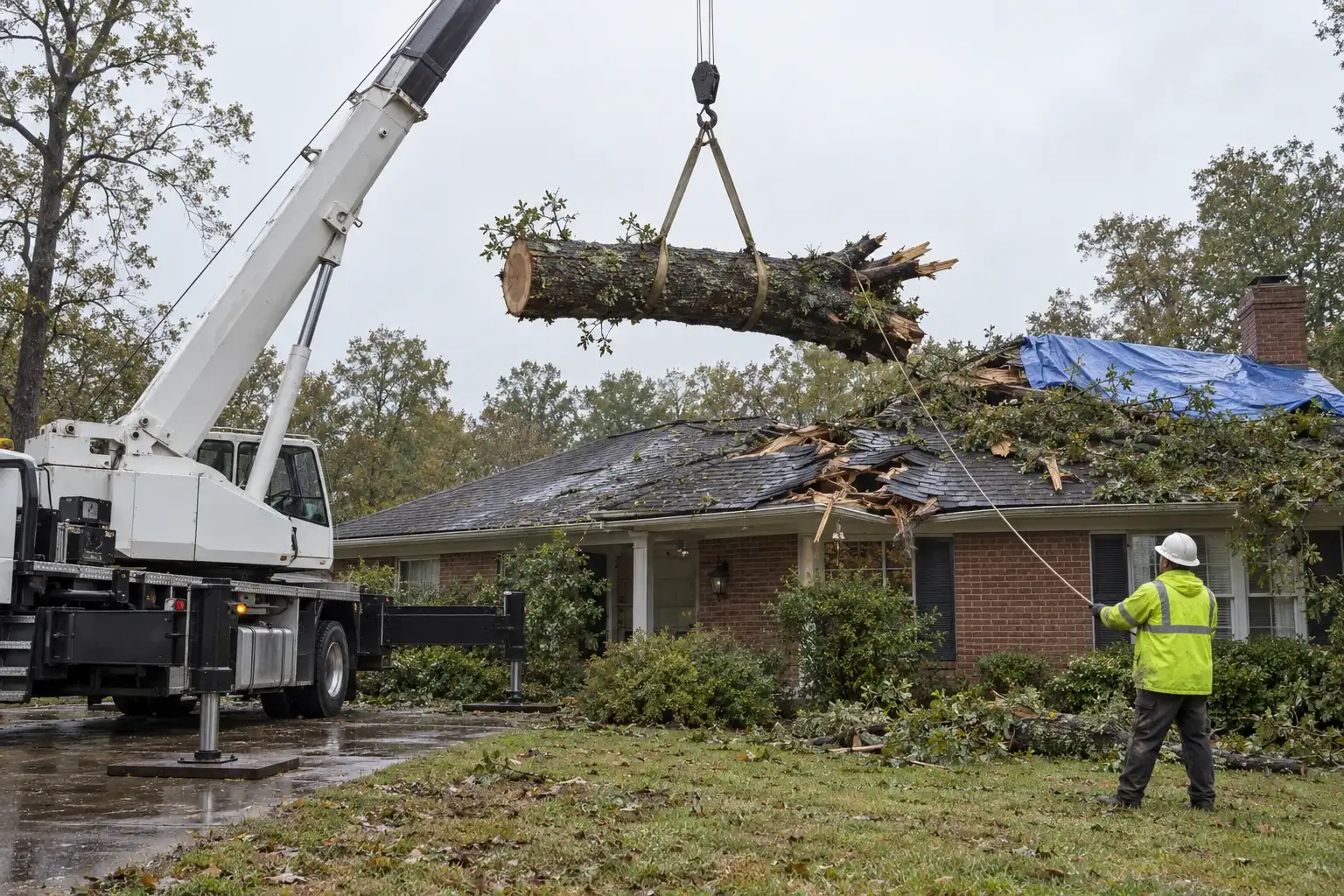
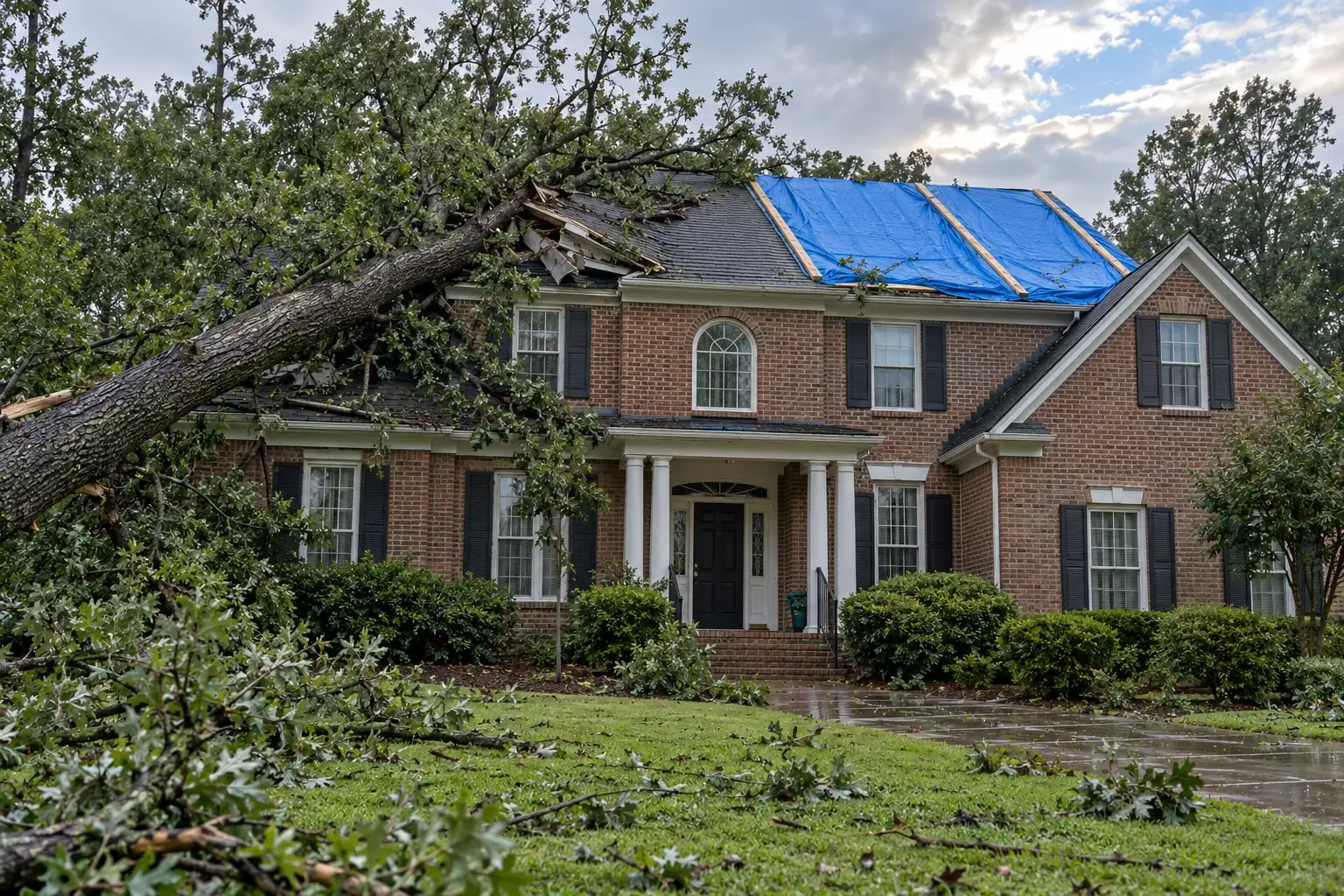
- On a roof. The crew studies how the tree is resting before cutting anything. Limbs under tension are cut in a planned order, and the heavy pieces are lifted off by rope, bucket truck or crane, so the roof does not take a second impact. Then the roof is tarped.
- On a car or carport. Cars are left where they are until the tree is cut free from above. Pulling a car out from under a loaded trunk can bring the whole thing down.
- Across the driveway or street. The fastest job: cut a lane, then clear the rest. In a neighborhood street, the city or county may also be clearing the right-of-way; your crew handles what is on your property.
- On a fence. Fences are usually lower priority, but a tree on a shared fence can involve your neighbor’s insurer. See whose tree is it.
What Hurricane Helene taught the Midlands
On September 27, 2024, Hurricane Helene crossed the Midlands with gusts up to 70 mph. Trees and power lines came down across Richland and Lexington counties. More than 200 roads were blocked in Lexington County, and at one point about 75,000 customers were without power across the two counties (30,648 in Richland and 43,396 in Lexington) (WIS). Forest Acres officials described it as the most trees down that people in the town could remember (Carolina News & Reporter).
Two lessons stand out. First, most damage came from straight-line wind, not tornadoes: big, healthy-looking oaks and pines failed because the ground was saturated. Second, emergency crews were booked for weeks. Homeowners who had dead trees and heavy limbs removed before the storm avoided the worst of it.
Insurance: what to photograph and keep
Insurers want to see what happened before anything was moved. Photograph:
- the whole tree and where it landed, from several angles;
- the roof and any interior damage (ceilings, walls, water);
- the stump, broken trunk or lifted root plate, which shows whether the tree was healthy;
- damaged cars, fences and outbuildings.
Keep receipts for emergency removal, tarping, temporary repairs and any hotel stays. Many policies cover removal of a tree that hits a covered structure, often with a per-tree limit. The tree-on-your-house guide walks through the claim.
Storm chasers and emergency pricing
After big storms, out-of-area crews go door to door. Many do honest work; some do not. Warning signs: pressure to sign on the spot, cash-only payment demanded up front, no written estimate, no certificate of insurance, and offers to “handle the insurance” by signing over your claim. A reputable crew gives you a written price before work starts, even in an emergency.
Response time
How fast a crew can arrive depends on the storm. After a single tree falls on a calm night, it can be hours. After a hurricane, every crew in the Midlands is busy and priority goes to trees on occupied homes and blocked access. When you call, you are told honestly when someone can get there.