What makes tree work in Gilbert different
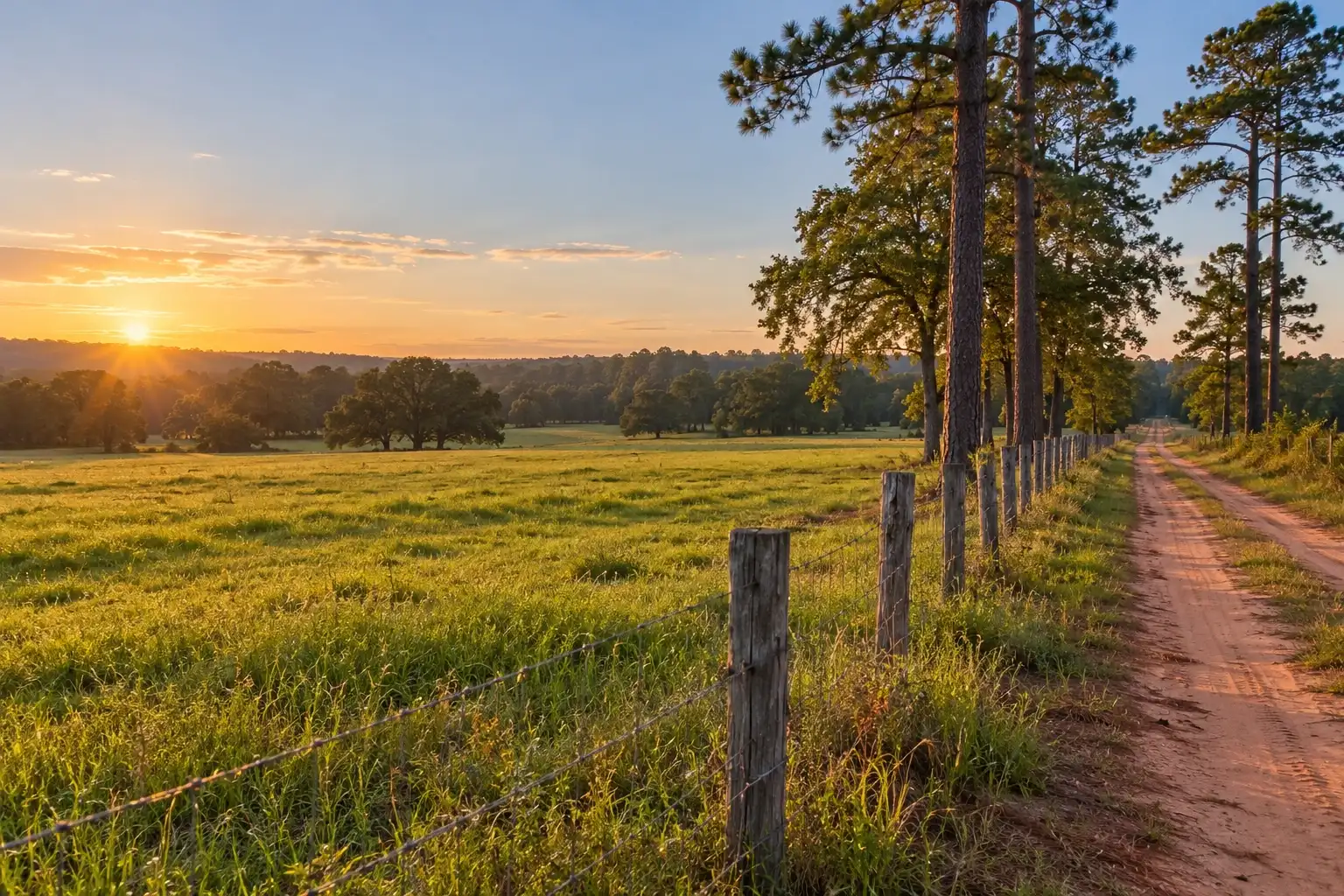
Gilbert is a small town in western Lexington County, about 24 miles from downtown Columbia along US-1 (Augusta Highway), surrounded by farms, orchards, pasture and pine woods. It is known for peaches, and the Lexington County Peach Festival is held here each summer. Lake Murray’s south side lies to the north.
That rural setting changes the kind of tree work people need. Instead of one oak over a ranch roof, Gilbert calls are more often about land: overgrown fence lines, pasture edges closing in, homesites on wooded acreage, and storm-damaged pines across fields.
Sandhills sand and good access
Most of Gilbert sits on Sandhills sand south of the Fall Line, with clay in some low spots. Sand drains fast, so ground is usually firm enough for tracked machines most of the year. That makes forestry mulching and large removals efficient here, and stump grinding quick. The flip side is drought: pines on sand dry out in hot summers and can attract bark beetles.
Fence lines and pasture edges
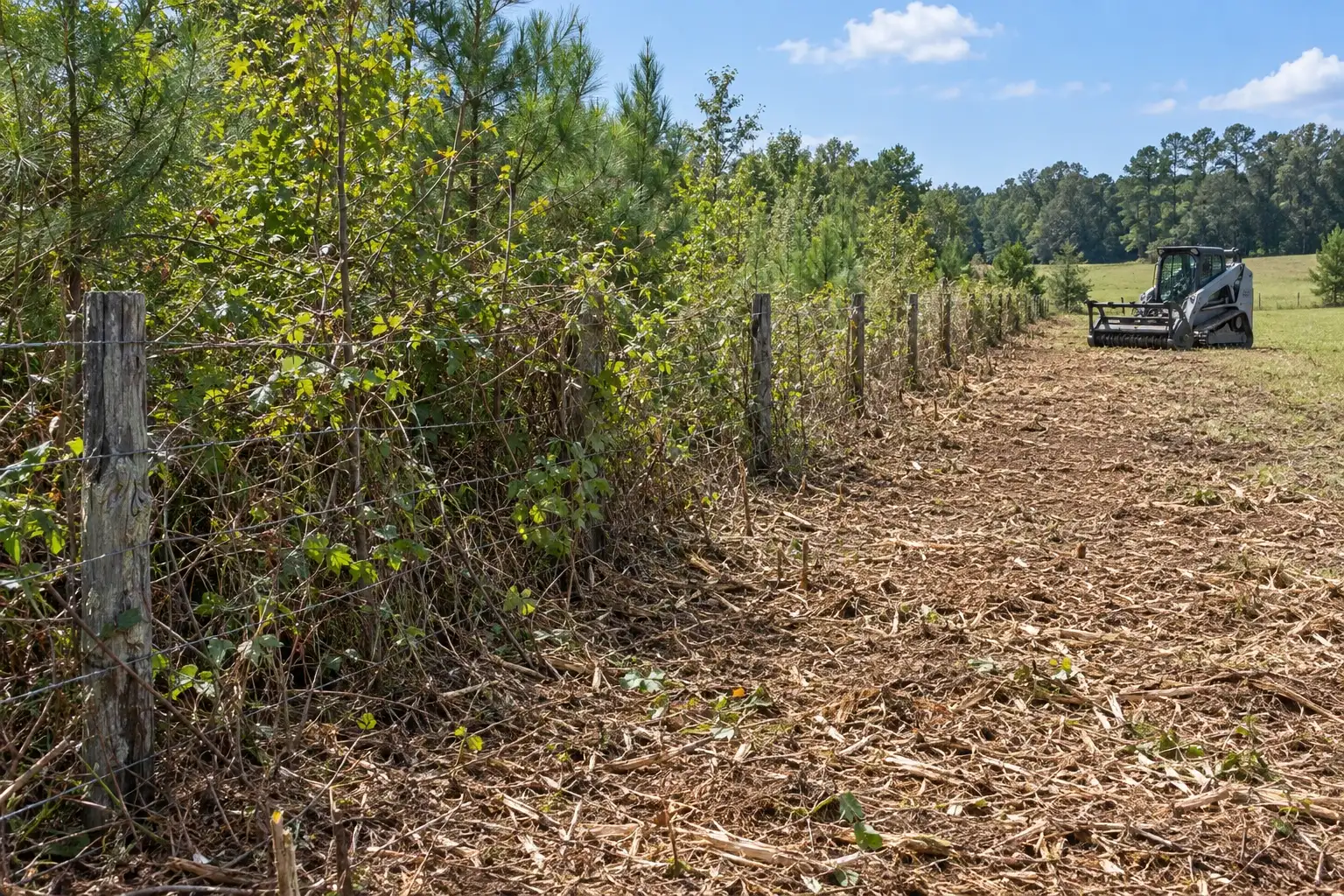
Left alone, pasture edges in the Midlands close in fast. Sweetgum and loblolly seedlings, privet, wax myrtle and vines march into the field from the woods, and fence lines disappear under brush. A forestry mulcher clears a strip along the fence without pulling the posts, grinding brush and saplings into a mulch layer that slows regrowth. Larger trees along the line are felled and cut, and stumps ground so the line can be mowed.
Homesites on acreage
Gilbert is growing, with families building on wooded parcels off US-1 and the rural routes around town. Good homesite clearing starts with a walk-through: flag the keeper trees, mark the house pad, driveway and septic field, and decide what happens to the wood. Pines left very close to the new house are a common regret in storm season, so it pays to think about wind exposure before the trees around them are gone.
Burning vs mulching
Many rural landowners have burned brush for generations. Outside city and town limits, South Carolina law requires notifying the SC Forestry Commission before burning yard debris, along with precautions such as a firebreak; inside town limits, local ordinances apply (SC Forestry Commission). Forestry mulching avoids burning entirely, leaves the soil covered and is often faster overall.
Local cost notes
Larger rural jobs are priced by the job after a walk-through, based on acreage, density, tree sizes and debris handling. Single tree removals near homes run in the normal Columbia-area range of about $400 to $1,800. Good access on firm, sandy ground helps keep Gilbert jobs efficient. See the land clearing page.