Pine removal · Loblolly country

Pine Tree Removal in Columbia, SC

  • Free written estimates
  • Photo quotes from your phone

Updated

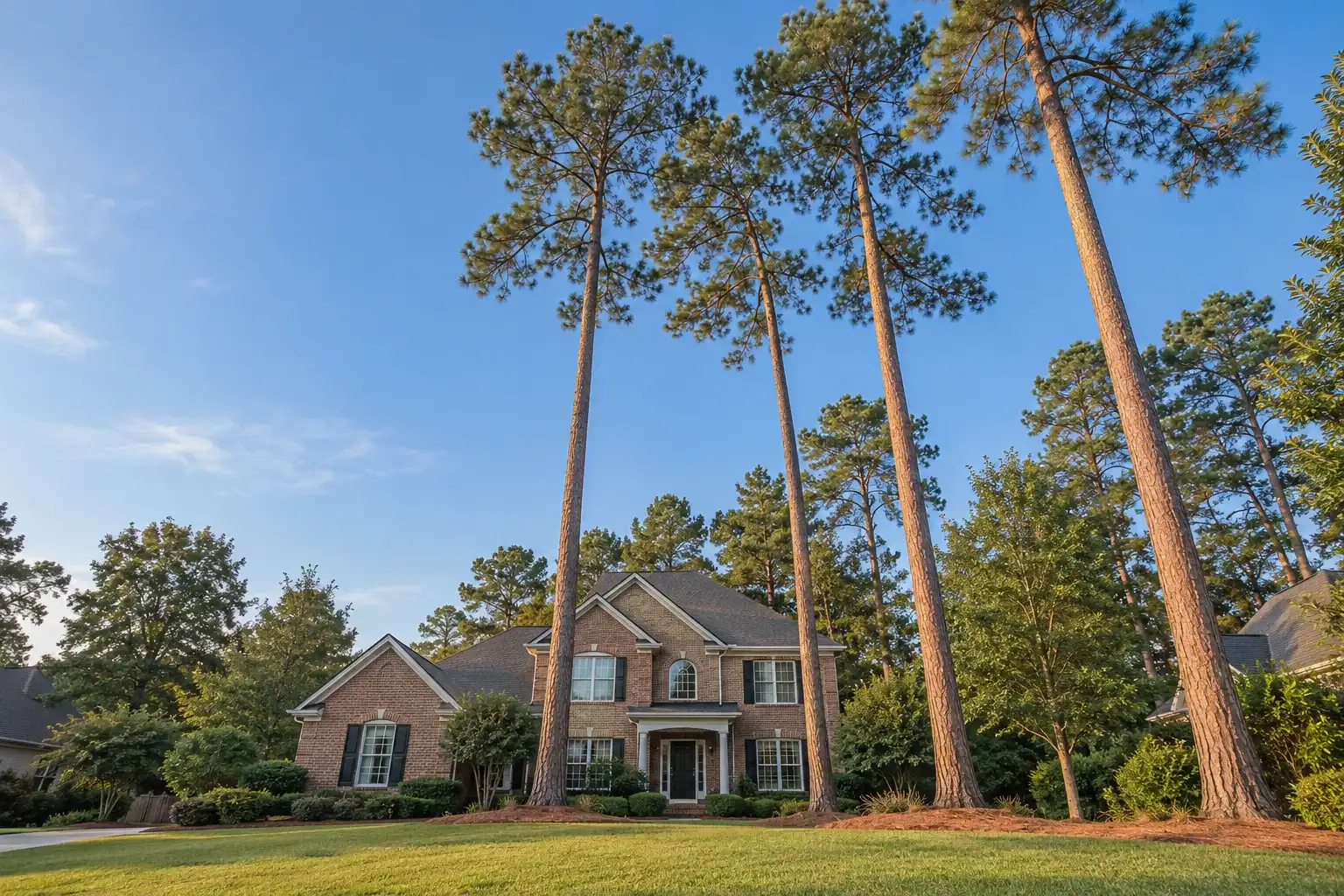
Very tall loblolly pines towering over a two-story home
The short answer

Pine tree removal in Columbia, SC usually means tall loblolly pines, 60 to 100 feet, near houses. They are taken down in sections on ropes or by crane, and priced mainly by height, lean and what they hang over. Pines with pitch tubes or browning crowns should come out quickly, before bark beetles spread to nearby pines.

  • Typical loblolly60–100 ftThe Midlands yard pine
  • Beetle generations4–6 a yearSouthern pine beetle in SC (Clemson HGIC)
  • Priced byHeight & leanPlus what it is over
  • Beetle-killed pinesRemove promptlyBefore beetles move on
Signs

When a pine should come down

Pines do not recover the way hardwoods can. These signs usually mean removal.

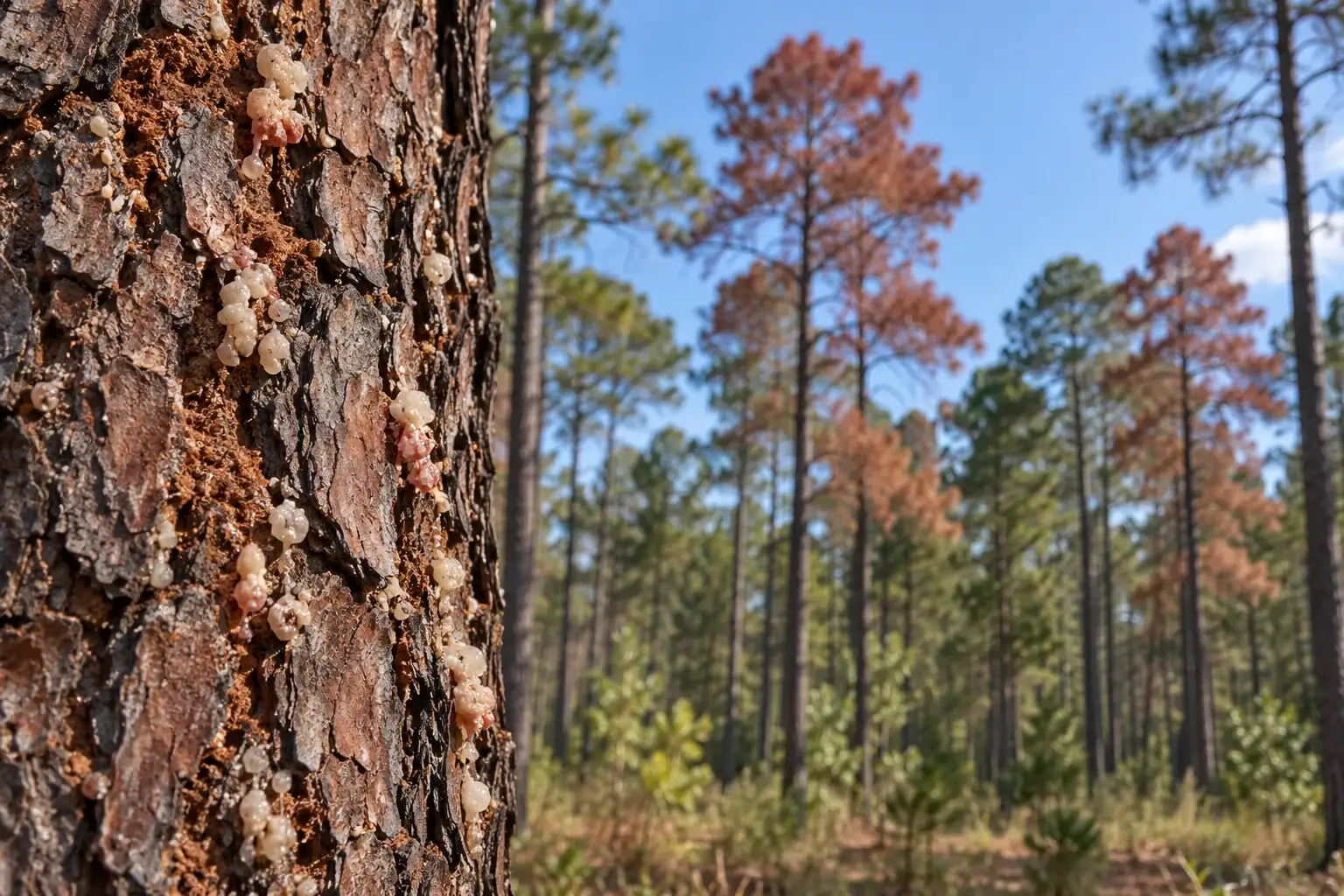
  • Pitch tubes and boring dust

    Small blobs of resin on the bark and reddish dust in bark crevices or at the base mean bark beetles are inside.

  • A crown fading to red-brown

    Needles turning yellow-green, then red-brown. By then the tree is dead, and beetles may already have left for neighbors.

  • A new or growing lean

    Especially with cracked soil or a raised root plate on the far side after heavy rain.

  • Lightning strike

    A spiral strip of bark blown off down the trunk. Struck pines often draw beetles and die within months.

  • Too close to the house

    Pines within a few feet of foundations, over bedrooms or overhanging the roof heavily.

  • Thin, sparse crowns after drought

    Sandy Sandhills yards dry out fast. Badly stressed pines are beetle magnets.

Pines with red-brown crowns among green pines, with pitch on the bark in front
Red-brown crowns among green pines: these trees are dead, and their neighbors are at risk.
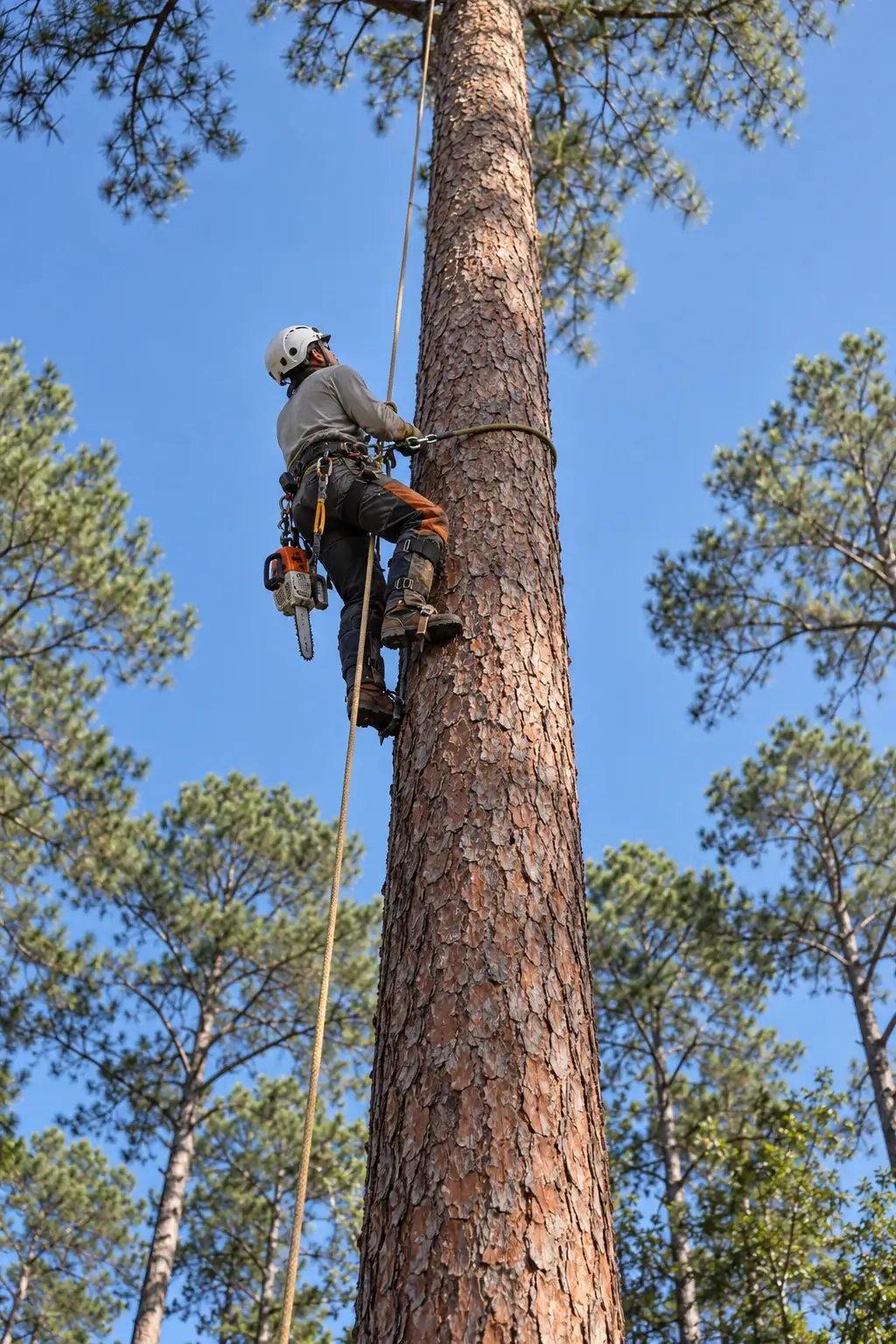
Climber working high on the trunk of a tall pine
Tall pines are usually climbed and taken down from the top in sections.
How it's done

How tall pines are removed near houses

Pines are tall and straight, which makes them easier to plan than spreading oaks, but heavier and higher than most people expect.

  1. Check the tree and the lean

    Height, lean, any beetle damage and the condition of the wood decide whether the pine can be climbed or needs a bucket truck or crane.

  2. Limb it from the top down

    The climber removes branches on the way up, then tops the tree in sections.

  3. Lower or drop the trunk in rounds

    Over a house, trunk sections are lowered on rope. Over open lawn, rounds are dropped onto mats or the top is felled.

  4. Treat beetle wood properly

    Infested wood is removed from the property promptly so emerging beetles do not attack nearby pines.

  5. Clean up

    Needles and brush are chipped, logs hauled and the yard raked. Pine stumps grind fast in sandy soil.

Columbia is loblolly country

Drive any Midlands subdivision and you will see the same tree towering over the roofs: the loblolly pine. It grows fast, straight and tall, commonly 60 to 100 feet, and it was planted or left standing across thousands of lots in Lexington, Northeast Columbia, Blythewood, Chapin and Elgin. Longleaf pine shows up in the deep sand around Elgin and Fort Jackson, and shortleaf pine on drier ridges, but loblolly is the one most homeowners call about.

A healthy loblolly is a strong tree. Problems start when it gets old, stressed, damaged or simply too close to the house.

Pines and storms in sandy vs clay soil

The Fall Line through Columbia changes how pines fail.

  • North and west, in red Piedmont clay (Irmo, Chapin, Seven Oaks, the Dutch Fork), pines root wide and shallow over heavy, wet clay. After days of rain, the soil loses its grip and whole trees tip over with the root plate attached.
  • South and east, in Sandhills sand (Northeast Columbia, Elgin, Gilbert, Cayce), pines root deeper but suffer in drought. In high wind, tall pines on sand are more likely to snap mid-trunk or lean than to uproot cleanly.

During Hurricane Helene on September 27, 2024, gusts up to 70 mph brought down trees and lines across Richland and Lexington counties (WIS). Many of the trees on houses were pines.

Pine beetles: pitch tubes, red crowns and why speed matters

Three bark beetles do most of the damage in Midlands yards (Clemson HGIC):

  • Southern pine beetle, the most destructive. It can produce four to six generations a year in South Carolina, and high populations can kill even healthy pines.
  • Ips engraver beetles, which attack stressed pines, often in the tops and branches first. Activity rises after dry summers.
  • Black turpentine beetle, which attacks the lower trunk, often after root damage or construction.

Signs to look for: pitch tubes (popcorn-sized blobs of resin on the bark), reddish boring dust in bark crevices and at the base, and a crown that fades from green to yellow-green to red-brown. Once the crown is red, the tree is dead and beetles may already have moved on.

Infested pines rarely recover. Prompt removal, with the wood taken off the property, is the main way to protect neighboring pines. Read pine beetles in Columbia for the full guide.

How pine removal is priced

Pines are priced mainly by:

  1. Height. Nationally, removal runs about $10 to $14 per foot (LawnStarter, October 2026). A 90-foot loblolly is a big job.
  2. Lean and target. A pine leaning over a roof is lowered in sections; one over open lawn can be felled.
  3. Condition. Beetle-killed pines dry out and become brittle within months, which can rule out climbing.
  4. Access. Backyard pines behind fences may need a crane or hand-carrying.
  5. Quantity. Several pines on one visit cost less per tree.

The tree removal cost guide has worked examples.

Pine tree trimming

Lifting low pine limbs over a driveway, removing dead branches and clearing a roof edge are all reasonable. “Thinning” a pine crown to make it safer in wind is not; pines do not respond to crown pruning the way oaks do. If a pine is healthy, it can usually be left alone. If it is too close to live with, removal is the straightforward answer.
Before the crew arrives

How to get ready for the work day

  • Move cars, grills and furniture at least a tree-length away if possible.

  • Point out any pines near the one being removed that look thin or have pitch on the bark.

  • Keep pets inside; falling pine rounds bounce.

  • Ask whether beetle-infested logs will be hauled off the property.

  • Mark sprinkler heads and dog fences near the base.

Pine Tree Removal questions

Why are my pine trees dying?

Around Columbia, the most common causes are bark beetles (southern pine beetle, Ips engraver beetles and black turpentine beetle), drought stress in sandy soil, lightning, and root damage from construction. Pitch tubes, reddish boring dust and crowns turning red-brown point to beetles. An arborist can confirm the cause.

Should I remove pine trees near my house?

Not automatically. A healthy loblolly with a sound root system is a strong tree. Removal makes sense when the pine is dead or infested, leaning toward the house, damaged by lightning or construction, or so close that it overhangs the roof heavily. In storms, pines close to houses cause much of the damage.

How much does it cost to remove a tall pine tree?

Height drives most of the price. Nationally, tree removal runs about $10 to $14 per foot of height (LawnStarter, 2026), so an 80-foot pine can be well above the average. Leaning over a house, needing a crane, or being beetle-killed and brittle adds cost. Send photos for a written price.

Will pine beetles spread to my other pines?

They can. Southern pine beetles can produce four to six generations a year in South Carolina, and populations can overwhelm healthy pines (Clemson HGIC). Removing infested trees promptly and getting the wood off the property is the main way to protect nearby pines.

Can a pine be trimmed instead of removed?

Dead branches and low limbs can be removed, but heavy cutting in a pine's crown does not make it safer in wind. If a pine is healthy, it can usually stay. If it is too close to the house to live with, removal is the honest option.

Who can remove two tall pines leaning toward my house in Northeast Columbia this week?

Send photos of both pines, the lean and the house through the free estimate form, or call if the lean is getting worse or the ground is cracking. Leaning pines over houses are prioritized, and you are told when a crew can get there.

Do I need a permit to cut down a pine in Lexington or Columbia?

On most single-family lots, no. The City of Columbia's tree removal permit excludes single-family residential lots. Forest Acres requires a permit for governed trees. Lakefront pines on Dominion Energy project land around Lake Murray need Dominion Energy approval, and HOAs may have their own rules.

Free estimates · Columbia, SC

Get a clear, written price for your trees

Send two or three photos and your ZIP code. You'll hear back within one business day with a written estimate: what will be done, how it will be done, and what it costs.

Call now Free estimate Text