What makes tree work in Cayce different
Cayce sits just below the Fall Line, on the flat river terraces and floodplain of the Congaree River, where the Broad and Saluda join below downtown Columbia. That puts it on the coastal plain side of the line: the ground is sandy, and close to the river it is low and often wet.
That river setting drives most tree problems in Cayce.
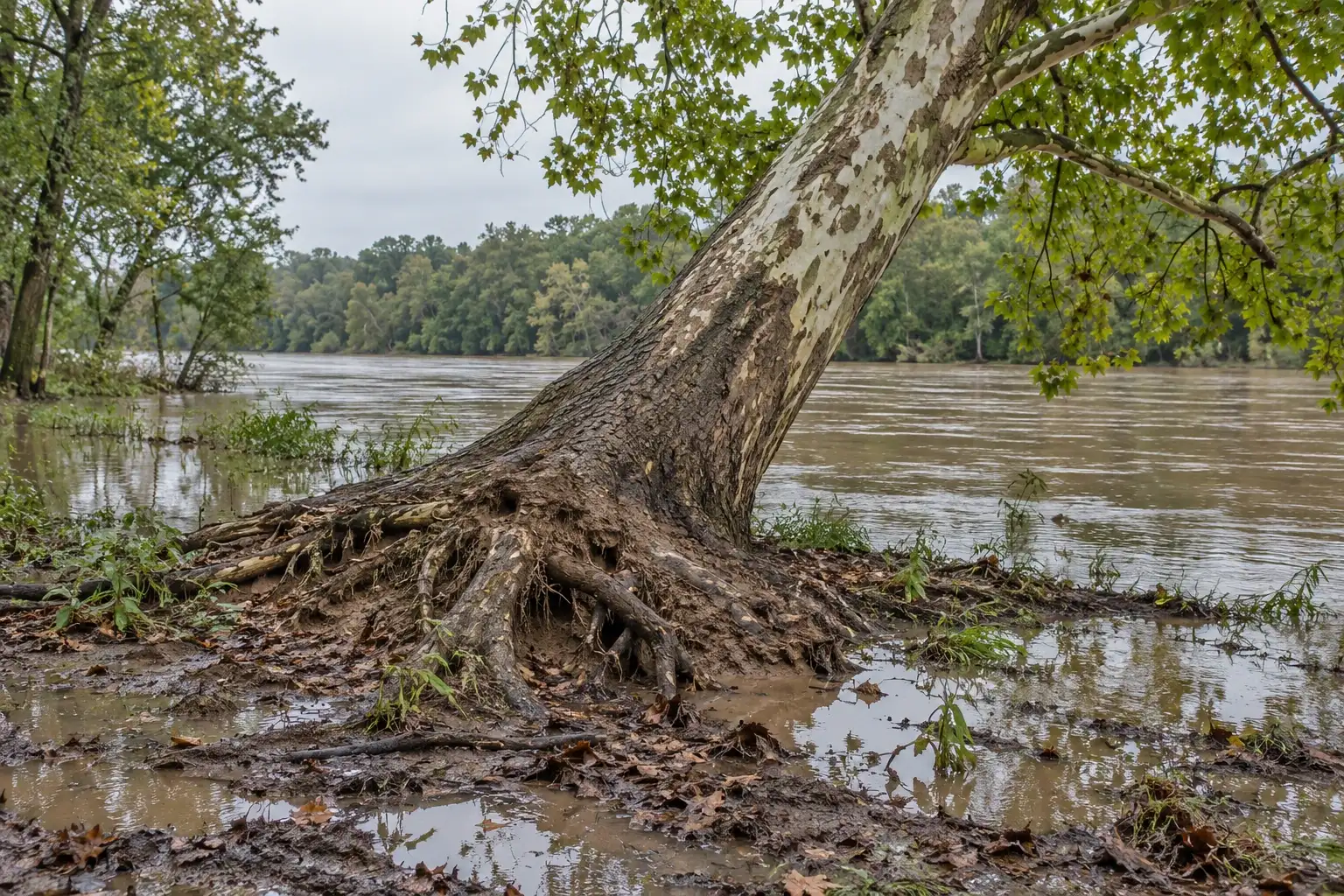
Wet ground loosens roots. When the Congaree is high and rain keeps falling, low-lying yards stay saturated for days. Trees with shallow or decaying roots can begin to lean, and the soil around their base goes soft. A new lean in a Cayce backyard after a wet week is a reason to call, not to wait.
Root rot. Trees that sit in wet soil for long periods are prone to root decay. Oaks and pines suffer most; river birch, sycamore and bald cypress handle wet feet better. Root problems often show up as a thinning crown, dead branches or mushrooms at the base, sometimes a year or two after a flood.
Soft access. Heavy trucks sink in wet sandy soil. Ground mats, tracked machines and sometimes a few dry days make the difference between a clean job and a rutted lawn.
The Avenues and older Cayce
Cayce’s older neighborhoods, including the grid of streets known as the Avenues off Knox Abbott Drive and State Street, have the big oaks typical of Midlands towns built in the early and mid-twentieth century. Water oaks and laurel oaks there are now old enough that decay in the trunk and major limbs is common. The usual requests are deadwooding before storm season, roof and power-drop clearance, and removal of oaks that an assessment shows are failing.
Along the Cayce Riverwalk
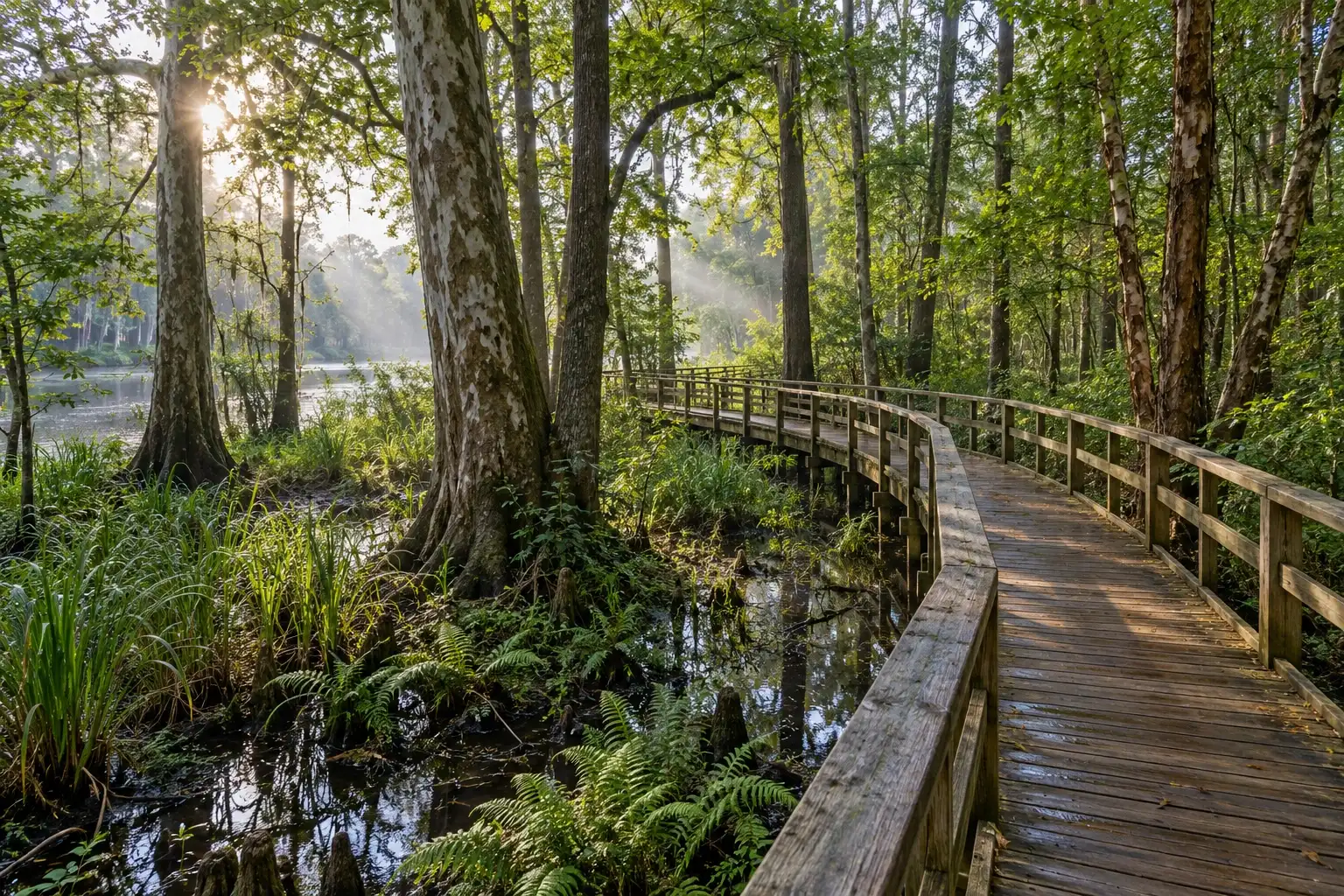
The Cayce Riverwalk, part of the Three Rivers Greenway, follows the Congaree through floodplain forest: sycamores, river birches, water oaks and sweetgums leaning toward the light over the water. Homes on the lowest ground near the river face the same issues on a smaller scale: trees leaning toward the water, roots loosened by floods and limbs dropping after storms.
Storms and the Congaree
Big storms bring both wind and water to Cayce. When Hurricane Helene crossed the Midlands on September 27, 2024, gusts up to 70 mph and heavy rain brought down trees across Richland and Lexington counties (WIS). In a river town, soaked ground plus wind is the combination that topples healthy trees, so storm preparation here focuses on trees near houses that already lean or show root problems.
Local cost notes
Most single tree removals in the Columbia area cost about $400 to $1,800 (HomeBlue, 2026). Cayce jobs on firm ground with good access sit in the middle of that range. Soft, wet backyards that need mats or hand-carrying, and big old oaks over houses, push the price up. Stump grinding in Cayce’s sandy soil is usually quick. See the tree removal cost guide.