A tree that leafs out late, drops branches or looks thin can leave you wondering: is it dead, dying or just having a bad year? These nine checks will tell you most of what you need to know. If several point the same way, or the tree is big and near your house, get it looked at.
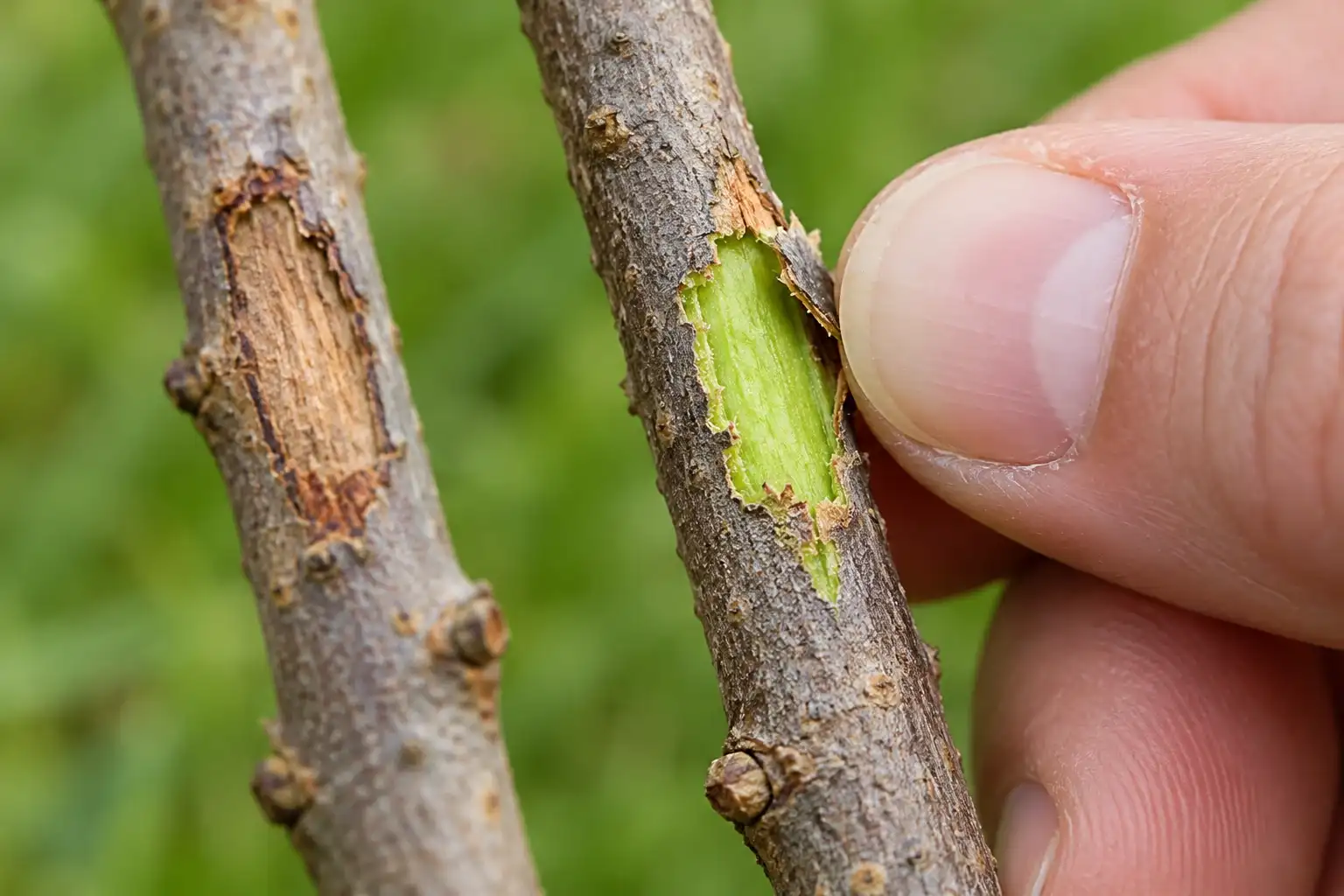
1. The scratch test
The quickest check. Use your thumbnail or a pocketknife to scrape a little bark off a twig or thin branch.
- Green and moist underneath: that part of the tree is alive.
- Brown and dry: that part is dead.
Test several branches on different sides and at different heights. A tree can be dead in one section and alive in another. If you find green only low down, the top may be dying back.
2. Brittle twigs that snap
Bend a few twigs. Living twigs bend; dead ones snap cleanly. Many brittle twigs across the crown is a bad sign.
3. Bark falling off
Bark that peels away in sheets, especially with bare, dry wood underneath, often means the cambium beneath is dead. On water oaks and willow oaks around Columbia, patches of bark falling away to reveal a crusty tan, grey or black layer can mean hypoxylon canker, a fungus that takes hold in badly stressed oaks (Clemson HGIC).
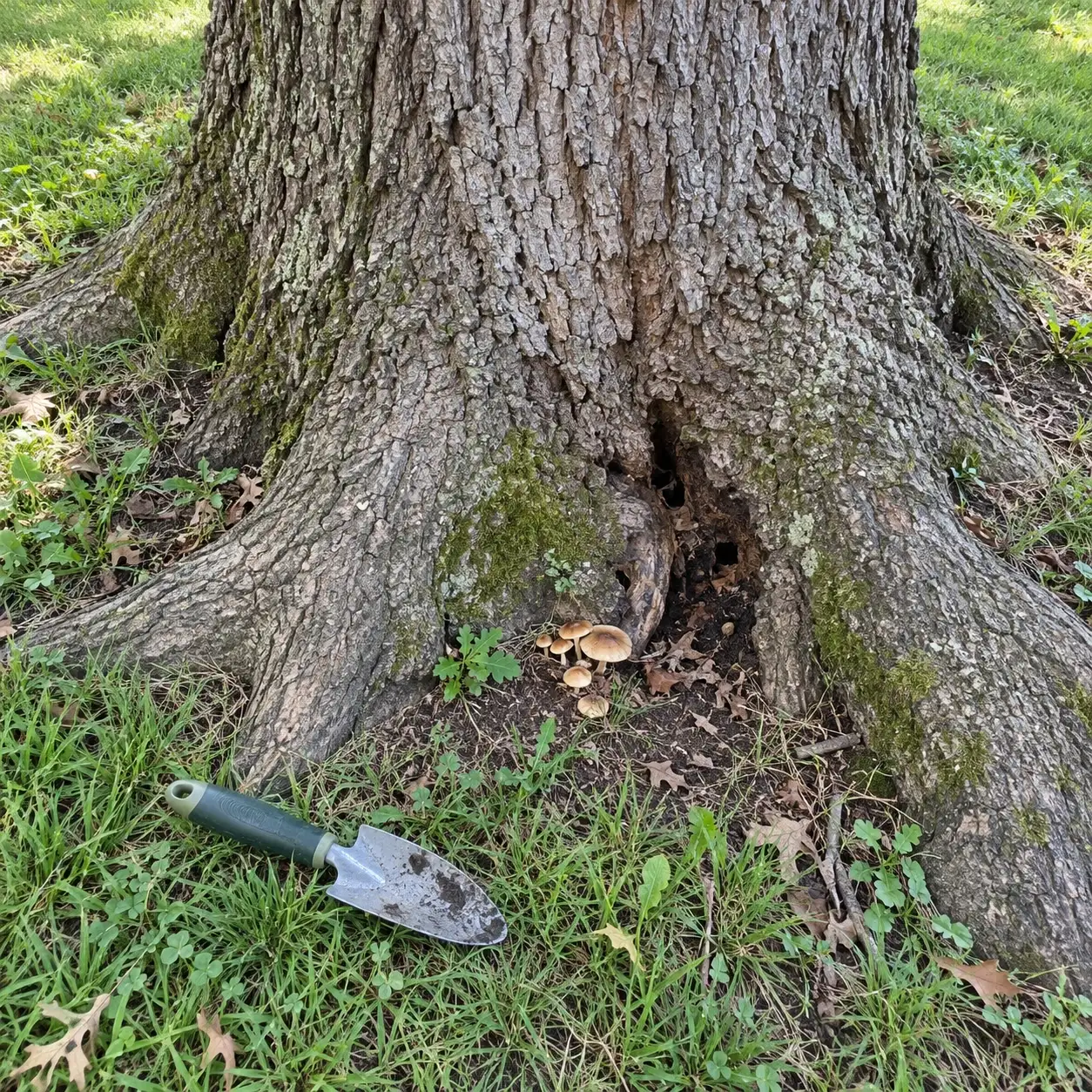
4. Mushrooms and conks
Mushrooms at the base or shelf-like conks on the trunk usually mean decay in the roots or trunk. The tree may still have leaves, but the wood holding it up may be rotting.
5. No buds or leaves in spring
Healthy trees have plump buds at the branch tips in late winter and leaf out on schedule in spring. If the tree is bare when its neighbors are green, or only a few branches leaf out, it is dead or in serious decline.
6. A new or growing lean
A tree that has always leaned is often fine. A new lean, or one that is getting worse, with soil cracking or heaving on the far side, means roots are failing. In Columbia’s red clay north of the Fall Line, this often happens after days of heavy rain. Keep people away from the fall zone and call promptly.
7. Cracks and splits
Look for vertical cracks in the trunk and splits where two stems meet, especially V-shaped unions with bark pinched inside. Cracks that open and close in the wind are serious.
8. Root rot and root damage
Signs include mushrooms around the root zone, soft or crumbly roots, a thin crown, and trees that decline after construction, trenching or grading near them. Root problems often show up two to five years after the damage.
9. On pines: beetle signs and red needles
For loblolly and other pines, check for pitch tubes (popcorn-sized blobs of resin on the bark), reddish boring dust in the crevices, and a crown turning yellow-green, then red-brown. Once the needles are red, the pine is dead. Southern pine beetles can have four to six generations a year in South Carolina, so act quickly to protect nearby pines (Clemson HGIC). See pine beetles in Columbia.
Dead, dying or just stressed?
| What you see | Likely meaning |
|---|---|
| Green under the bark everywhere, thin leaves after a dry summer | Stressed; water deeply and watch it |
| Green low, brown high; dead branches in the top | Dying back from the top; get it assessed |
| Brown under the bark everywhere, no buds, bark peeling | Dead |
| Healthy leaves but mushrooms or conks at the base | Possible hidden decay; get it checked |
| Pine with red-brown needles | Dead; remove promptly |
What to do next
- Keep people and cars away from a dead or leaning tree, especially in wind.
- Take photos of the whole tree, the base, any cracks and what it is near.
- Get it checked if the tree is large or near a house. An arborist visit gives a clear verdict.
- Remove dead trees sooner rather than later. Dead wood becomes brittle within months, and a tree that can be climbed safely now may need a bucket truck or crane next year. See dead and hazardous tree removal.
- Check permits if you are in Forest Acres, where governed trees need a permit even when dead. See the permit guide.
If you are still unsure after these checks, photos of the whole tree, the base and any damage are usually enough for a first opinion.
Questions? Send them with your photos.